10
Loading video...

By Amanda Castro
Associate News Editor
0
Share
Newsweek is a Trust Project member
See more of our trusted coverage when you search.Prefer Newsweek on Googleto see more of our trusted coverage when you search.
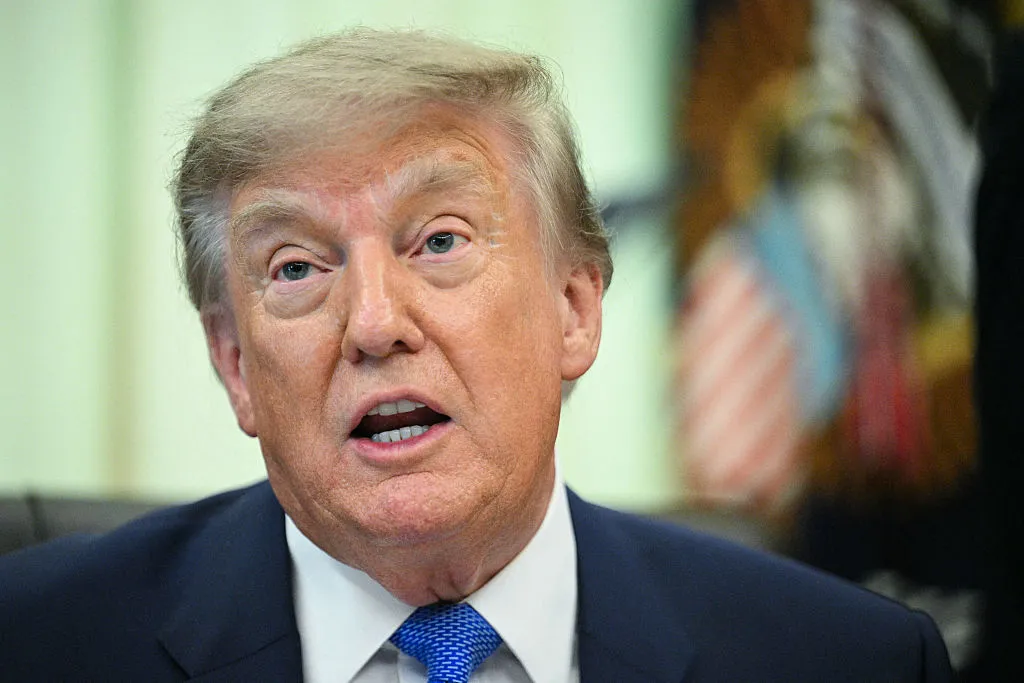
President Donald Trump on Monday signed a sweeping executive order establishing new “Gold Standard Childhood Vaccine Recommendations,” a policy that restructures which vaccines the federal government recommends for children and how they should be administered. The move accelerates the administration’s push to realign U.S. vaccine guidance with what it calls “best practices” from peer nations, while reviving a politically charged debate over childhood immunization ahead of the midterms.
Families, pediatricians and state health systems could soon face new rules, more appointments and shifting requirements as federal agencies reassess the entire childhood vaccine schedule.
The order declares that the United States currently recommends more childhood vaccines than any peer nation and directs the Department of Health and Human Services to reevaluate vaccine timing, sequencing and product options within 90 days. It also states that the combined MMR vaccine should be split into three single‑disease shots once available domestically and that “to the maximum extent feasible,” all childhood vaccines should be administered at separate medical visits.
Read More on U.S.
As he prepared to sign it, Trump said the recommendations relate to “many subjects but including autism in particular,” despite the order itself not referencing autism.
...
What Is the MMR Vaccine?
The MMR vaccine is a long‑standing cornerstone of childhood immunization, designed to protect against measles, mumps and rubella—three highly contagious viral infections that can cause severe complications, including pneumonia, brain inflammation, blindness, hearing loss and, in rare cases, death.
For more than 60 years, the combined shot has dramatically reduced the circulation of these diseases in the United States, becoming one of the most effective tools in modern public health.
The vaccine contains weakened live viruses that train the immune system to recognize and fight off infection. According to the Cleveland Clinic, two doses are 97 percent effective at preventing measles and rubella and 86 percent effective at preventing mumps.
Children typically receive one dose between 12–15 months and a second between ages 4–6, though additional doses may be recommended during mumps outbreaks or for adults with uncertain vaccination histories.
Related Story

FDA Approves New Flu Shot Using COVID-Era Tech—Here’s Who Can Get It
What Is Trump’s New Infant Vaccine Schedule?
The executive order establishes a new federal framework that divides childhood immunizations into three categories: vaccines recommended for all children, vaccines recommended only for high‑risk groups, and vaccines offered through shared clinical decision‑making.
Under this structure, vaccines such as RSV monoclonal antibodies, hepatitis A and B, meningococcal B, meningococcal ACWY and dengue are moved into the high‑risk category, narrowing routine access.
The order also directs HHS to reassess the “ideal timing and sequencing” of all core childhood vaccines and adjust the federal schedule based on what it calls “gold‑standard science.”
Within 90 days, the HHS Task Force on Safer Childhood Vaccines must present plans to expand single‑disease vaccine options—starting with MMR—and evaluate alternative adjuvants, comparative safety data and improved monitoring systems.
The administration says these steps are intended to align U.S. recommendations with peer nations while preserving parental choice.
What Changes Under Trump’s New Pediatric Vaccine Policy?
One of the most significant changes is the directive that the combined MMR vaccine be administered as three separate shots once manufacturers can produce them domestically.
The order further states that “to the maximum extent feasible,” all childhood vaccines should be given at separate medical visits, a shift that would require families to schedule more appointments and pediatric practices to overhaul long‑standing workflows.
The order also encourages states and territories to review their school‑entry immunization laws and consider updating them in light of the new federal recommendations. It emphasizes parental authority, religious liberty and informed consent, and instructs the Department of Justice to support legal challenges to state laws that conflict with those principles.
These provisions revive earlier administration efforts to reduce the number of recommended childhood vaccines—efforts that courts froze earlier this year—and attempt to bypass those delays through executive action.
Pediatric Experts Warn Splitting MMR Shots Leaves Children Exposed Longer
Dr. Melissa Stockwell, Division Chief of Child and Adolescent Health at Columbia University, told Newsweek that there is “no scientific or public health rationale for splitting the MMR vaccine into three separate shots,” warning that the change “adds unnecessary extra burden for families” and “raises the risk of missed and delayed doses, leaving the child unprotected for longer.”
She stressed that measles, mumps and rubella “are not benign childhood illnesses,” noting that measles can cause “pneumonia and encephalitis,” mumps can lead to “hearing loss and reproductive complications,” and rubella poses “particular risk during pregnancy.”
Stockwell added that the combined MMR shot “has been extensively studied and used for decades” and that “there is no established clinical or immunologic benefit to separating out the MMR vaccine.”
Stockwell also pushed back on claims that children are being overloaded with vaccines. “The volume of immunizations children receive is actually quite small,” she said. “Using current combination vaccines, the total volume of routine early childhood immunizations is about two teaspoons.”
Even across all childhood and adolescent vaccines, she said, “the total amount is still only one tablespoon.” She added that the immune system encounters far more antigen during common infections: “One single bacterium can contain thousands of these antigens.”
She warned that delaying or spacing out vaccines “unnecessarily increases the time a child is most at risk,” especially amid “the largest resurgence of measles in decades.” Many families, she said, will be “more confused than ever” if the schedule requires extra visits, which would “place a significant burden on families” and strain pediatric practices.
Patsy Stinchfield, MS, PNP, Executive Director of the Measles Collaborative, said the MMR vaccine has been safely administered as a combined shot since 1971 and remains “a live combination vaccine that prevents measles, mumps, and rubella—all serious infectious diseases.”
She told Newsweek that single‑antigen measles vaccine “is not available in the U.S., and there is likely little incentive for a manufacturer to make one.”
“The vaccine works well,” she said. “More than 99% of people who receive two doses after their first birthday develop protective antibodies that are generally considered to provide lifelong immunity.” Mild fever or rash can occur in some children, she said, and febrile seizures are “very rare,” occurring in about “1 in 3,000 to 4,000 children.”
Stinchfield said splitting the MMR shot “is not an evidence‑based recommendation” and “makes no difference to the immune system—it recognizes the individual or the three together the same.”
But dividing the doses, she warned, “creates additional risks and burdens for families,” including more clinic visits, more needle pokes, higher costs and added strain on pediatric practices.
“With a national measles outbreak that has reached nearly 2,500 cases—more than all of 2025—we should be doing everything possible to increase vaccination uptake, not decrease it,” she said. “It is difficult to imagine a parent, clinician, or public health expert supporting a recommendation to divide the MMR vaccine into three separate shots and visits.”
Public Health Groups Say Order Is 'Not Grounded in New Evidence'
The Partnership to Fight Infectious Disease (PFID) said the executive order is “not anchored to an actual problem,” noting that “there have been no new safety signals, no new clinical findings, no reduced risk from vaccine‑preventable disease that would justify rewriting vaccine recommendations for America’s children.”
PFID said the ongoing measles outbreak — the worst in more than 30 years — shows the consequences of misinformation lowering vaccination rates.
“Repeating false and misleading information about the recommended childhood vaccine schedule, vaccine ingredients, and the safety and effectiveness of recommended vaccines does not make our children healthier or safer,” the group said. “It will only leave more American children vulnerable to preventable illness.”
The group warned that recommending multiple appointments “will only add to the strain on American families,” including time off work, added costs and greater exposure to illness in crowded waiting rooms.
“Families deserve consistency and clear, evidence‑based guidance,” PFID said. “They get that from family physicians, nurses, and pharmacists in their community.”
Sen. Bill Cassidy Condemns Trump’s Vaccine Order
Sen. Bill Cassidy, a Louisiana Republican and physician, sharply criticized Trump’s executive order, arguing that splitting the measles, mumps and rubella vaccines into three separate appointments would undermine children’s safety rather than improve it.
In a post on X, Cassidy said the president “does not have the expertise to make these changes,” stressing that childhood vaccines are safe, effective and not linked to autism. He warned that requiring additional visits for the same level of protection would heighten hesitancy and leave children exposed to preventable diseases for longer.
Cassidy’s objections come as the administration continues its broader effort to reduce the number of routine childhood vaccines — a push that began with a January HHS proposal later halted by a federal judge.
The senator has repeatedly clashed with the administration over vaccine policy, including during the confirmation process for Erica Schwartz to lead the CDC, when he pressed her on whether she could shield the agency from political interference. Although he ultimately supported her nomination, Cassidy has remained vocal about what he sees as persistent pressure on federal health agencies.
Contact Newsweek editors on this story: Samantha Beech and Sam Wilson.
View 0 Comments
Submit Correction
View Editorial & AI Guidelines