...

By Gabe Whisnant
News Editor
0
Share
Newsweek is a Trust Project member
See more of our trusted coverage when you search.Prefer Newsweek on Googleto see more of our trusted coverage when you search.
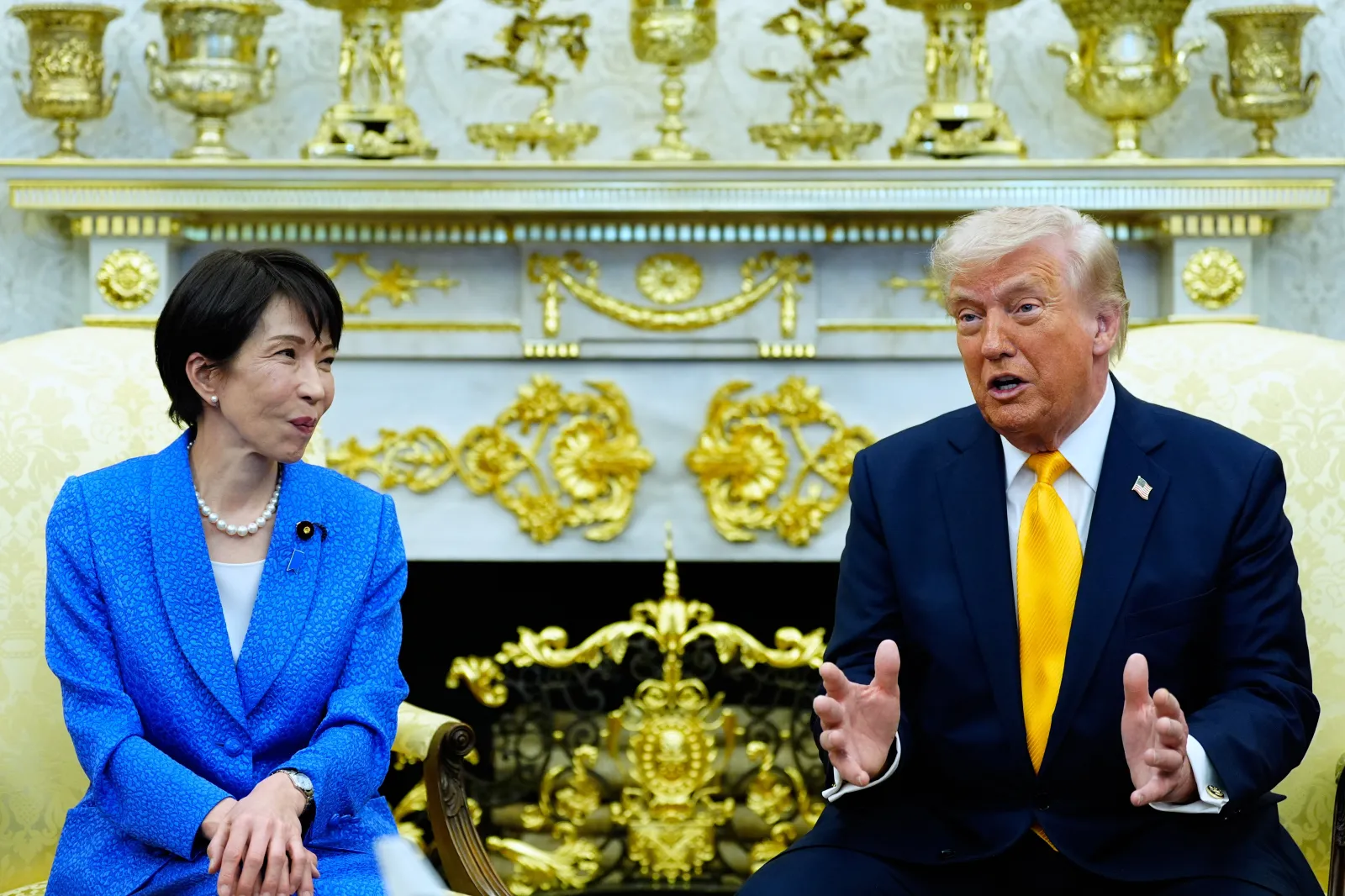
President Donald Trump invoked Japan’s 1941 attack on Pearl Harbor while defending the secrecy of U.S. strikes on Iran, making the remark during a White House appearance alongside Japanese Prime Minister Sanae Takaichi.
What Did Trump Say About Pearl Harbor?
Asked why U.S. allies were not informed ahead of the attack, Trump said advance notice would have undermined the element of surprise. “One thing you don’t want to do is signal,” he said. “We went in very hard. We didn’t tell anybody about it because we wanted surprise.”
Read More on World
Turning toward Takaichi as he spoke in the East Room, Trump added, “Who knows better about surprise than Japan? Why didn’t you tell me about Pearl Harbor? He's asking me - no, you believe in surprise, I think, much moreso than us."
The comment drew laughter from some in attendance during the press briefing. Takaichi didn't laugh and instead glanced at her advisers.
Purpose of Trump, Japanese PM Sanae Takaichi Meeting
Trump met with Takaichi at the White House as the war with Iran dominated the agenda, overshadowing what had initially been expected to focus on trade, energy cooperation and regional security issues in Asia. The visit came amid heightened U.S. pressure on allies to help secure the Strait of Hormuz, a critical shipping lane for global oil supplies that has been disrupted by the conflict.
Trump has publicly urged Japan and other allies to contribute more to protecting maritime traffic in the region, arguing that countries dependent on Middle Eastern energy supplies should shoulder a greater share of the burden. Japan, whose constitution restricts the use of military force abroad, has so far stopped short of committing naval assets to the U.S.-led effort, a stance that has fueled tension ahead of the meeting.

...
Takaichi acknowledged before and during the visit that the talks would be difficult, as she sought to balance Japan’s security relationship with the United States against domestic political constraints and economic concerns. She warned that the Iran conflict is likely to deliver a major blow to the global economy, particularly through rising energy costs, while reaffirming Japan’s support for the U.S.-Japan alliance.
“Iran’s development of nuclear weapons must never be allowed,” she said, speaking through an interpreter. “That is why we, Japan, have been urging them and also reaching out to other partners in the world.”
How Many People Died in Pearl Harbor?
Japan’s surprise attack on Pearl Harbor on Dec. 7, 1941, killed 2,403 Americans, including military personnel and civilians, and wounded more than 1,000 others, according to historical records. The attack led the United States to enter World War II the following day.
What People Are Saying
CNN's Jake Tapper posted on X, "FWIW Prime Minister Takaichi was born 20 years after Pearl Harbor."
Eric Daugherty, a conservative commentator, posted on X, "JUST IN: The whole WORLD realized President Trump is a comedic masterclass after he dropped a World War 2 zinger with Japan in the Oval Office."
Democratic strategist Jon Cooper posted on X, "I can’t believe that Trump just joked about Pearl Harbor while sitting next to Japan’s prime minister at the White House. What an absolute embarrassment!"
Updates: 3/19/26, 6:47 p.m. ET: This article was updated with new information and remarks.
In a polarized era, the center is dismissed as bland. At Newsweek, ours is different: The Courageous Center—it's not "both sides," it's sharp, challenging and alive with ideas. We follow facts, not factions. If that sounds like the kind of journalism you want to see thrive, we need you.
When you become a Newsweek Member, you support a mission to keep the center strong and vibrant. Members enjoy: Ad-free browsing, exclusive content and editor conversations. Help keep the center courageous. Join today.


View 0 Comments
Submit Correction
View Editorial & AI Guidelines