10
Loading video...

By Steve Mollman
News Editor
0
Share
Newsweek is a Trust Project member
See more of our trusted coverage when you search.Prefer Newsweek on Googleto see more of our trusted coverage when you search.
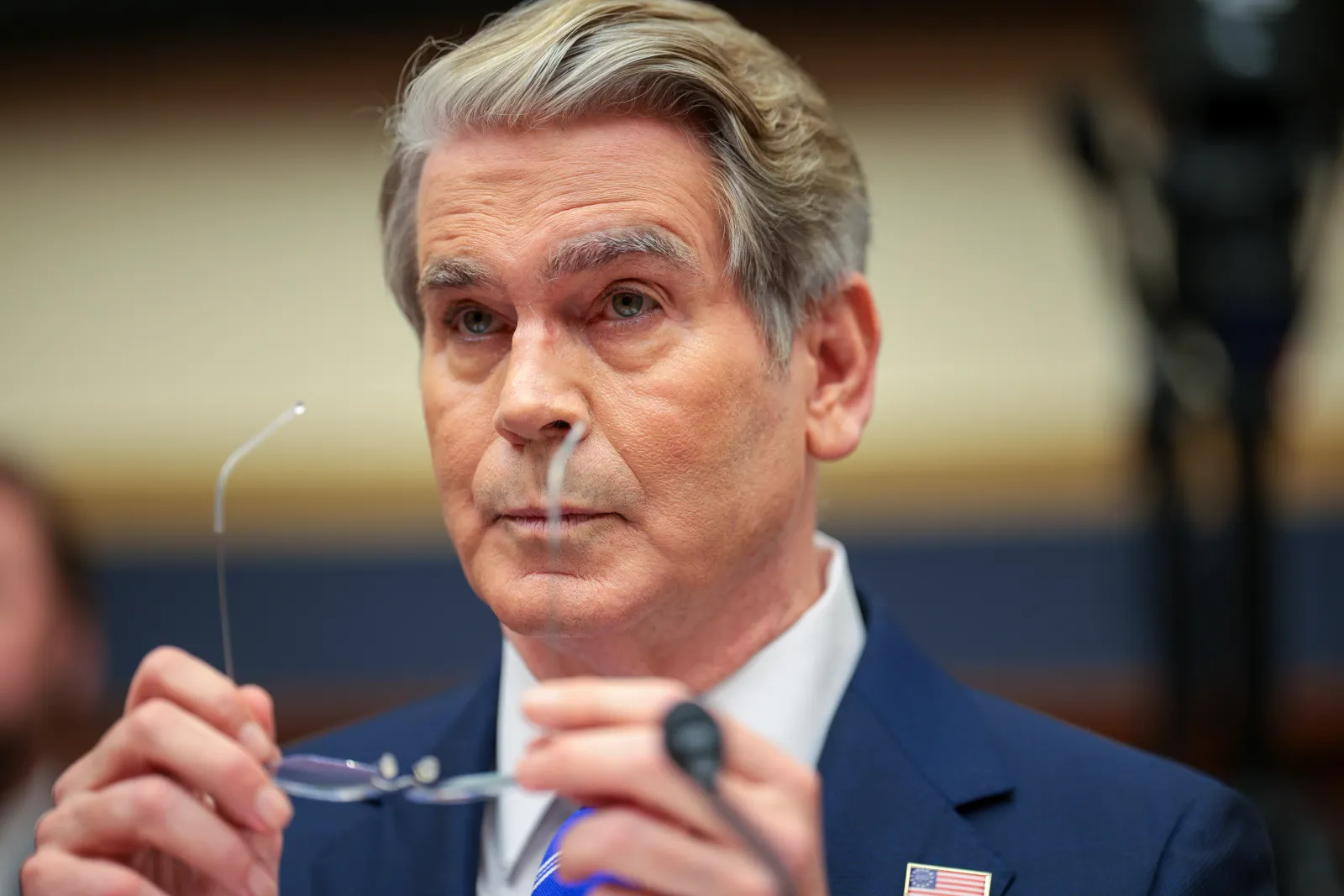
Treasury Secretary Scott Bessent warned Ukrainian President Volodymyr Zelensky to “be very careful” after he said U.S. intelligence sharing with Ukraine was temporarily interrupted during Russian ballistic missile attacks.
The exchange unfolded in separate interviews on NBC News' Meet the Press on Sunday, amid an escalating public dispute between Zelensky and President Donald Trump’s administration over U.S. support for Ukraine and Trump’s approach to Russia.
Zelensky told moderator Kristen Welker that U.S. intelligence sharing “was blocked for some period of time” before being restored.
Read More on News
“We are very thankful for this. Now it works,” he said.
But the Ukrainian president said the interruption left Ukraine without U.S. intelligence during three days of Russian ballistic missile attacks.
Ukraine received intelligence from European countries and other partners during the interruption, he added, but “only United States has this unique intelligence to tell our side when Russia uses ballistic missiles.”
Bessent, interviewed separately by Welker, strongly challenged the suggestion that the Trump administration was responsible for the disruption.
“President Trump and [State] Secretary [Marco] Rubio have categorically said that no one in the Trump administration did that,” Bessent said. “And I think it is very reckless for President Zelensky to make such a charge.”
Pressed by Welker on how the disruption had occurred, however, Bessent said he didn't know.
“Again, I don't know anything about that, but we've been very clear,” Bessent said. “President Zelensky should be very careful about making statements like this that aren't true.”
Newsweek reached out to the White House, Pentagon and the Ukrainian Embassy on Sunday for comment.
US Intelligence Plays Critical Role in Ukraine’s Missile Defense
The dispute centers on intelligence capabilities that remain particularly important to Ukraine as other forms of American support have declined amid the Russia-Ukraine war that began in February 2022.
Ukraine relies on U.S. intelligence for warnings of incoming Russian missile attacks. European allies can provide some intelligence, but U.S. capabilities remain particularly important for detecting ballistic and cruise missile launches.
Reports of disruptions had already emerged before Sunday's interviews.
Ukrainian officials said last week that Kyiv had received no advance warning from its partners for two waves of missile attacks on Tuesday and Wednesday, according to The New York Times. The newspaper said it was unclear why Ukraine did not receive the warnings, noting that the missiles may have been S-400s, which can leave little time for advance warning.
The Wall Street Journal reported Sunday that Zelensky learned while traveling from Kyiv to Poland that Russian missiles had struck Kyiv without the usual U.S. launch warning for the second consecutive day. The newspaper also reported that Ukrainian officials said senior U.S. military leaders had previously warned their counterparts that intelligence cooperation was at risk if Ukraine continued strikes against Russian oil refineries.
Ukraine has repeatedly targeted Russian oil and gas facilities in an effort to reduce energy revenue available to Moscow.
U.S. officials denied making such a threat and said intelligence sharing was continuing.
The accounts remain in conflict. The Pentagon referred Newsweek to Trump’s comments, saying the president had said there was no pause in intelligence. Bessent rejected the suggestion that anyone in the Trump administration ordered a disruption but said he did not know what had caused the apparent interruption Zelensky described.
Related Story
Newsweek Webinar: How the Politics of AI Could Shape Midterms
Bessent and Zelensky Deflect Direct Questions on US Alliances
On Sunday, Welker also asked Bessent directly whether the United States considered Ukraine an ally.
Rather than answer yes or no, Bessent pointed to the support Washington continues to provide.
“We provide three different things to Ukraine. So that's what you do for an ally,” he said. “We're not providing those to Russia.”
Welker pressed again: “So does that mean the United States sees Ukraine as an ally? Can you say one way or another definitively?”
“Again, I'm not the secretary of state. I'm not the president,” he replied.
Zelensky was similarly cautious when asked whether he still believed Trump was an ally of Ukraine.
“Hope so,” he said. “I hope so, yeah.”
Asked if he trusted Trump, Zelensky said: “Of course we trust America. We trust bipartisan support, and we trust President of the United States. We want to trust him, and I hope that he will change his decisions.”
...
Zelensky Says US Government Was Behind Starlink Limits
The disagreement extended beyond intelligence sharing.
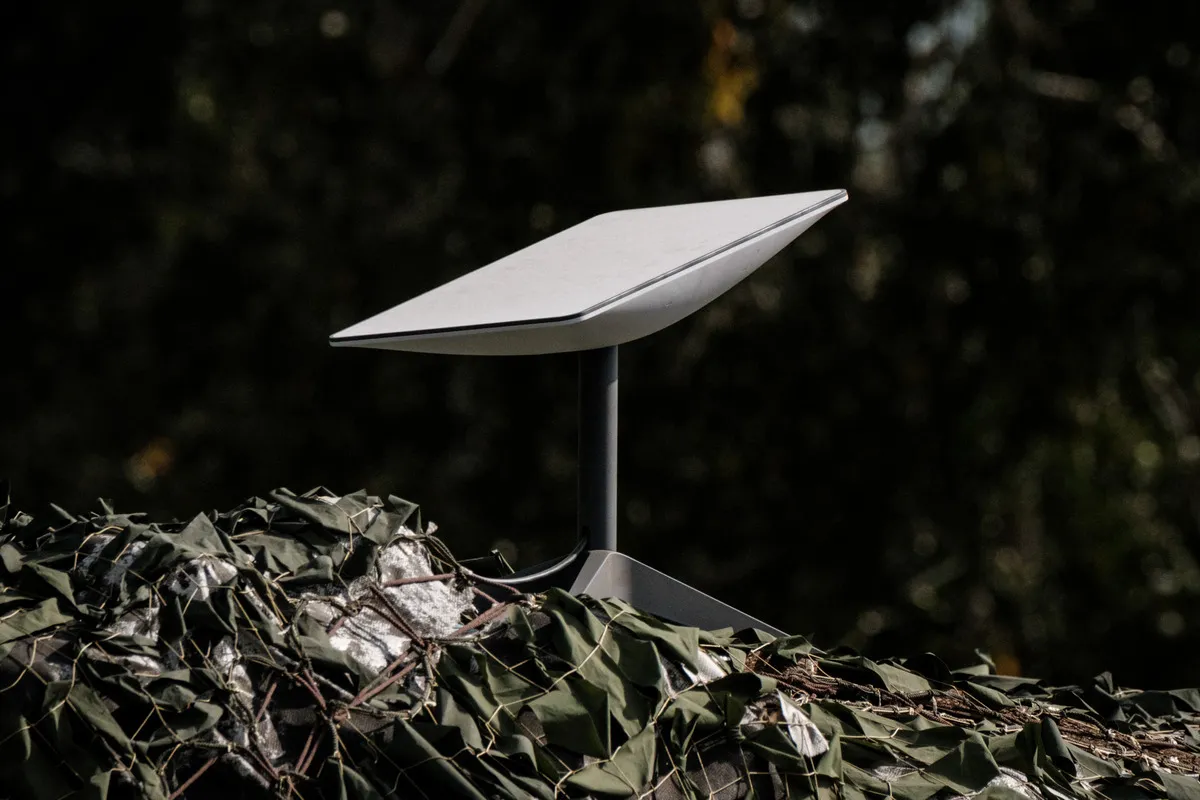
Zelensky also alleged on Sunday that a restriction affecting Starlink, the Elon Musk-owned satellite network used by Ukrainian forces, resulted from a U.S. government decision.
Zelensky said his country was facing a Starlink speed restriction that was affecting its ability to use some interceptor drones against fast-moving Russian drones.
“It’s limited because it’s a decision,” he said.
Asked who he believed was responsible, Zelensky said he did not know which part of the administration had made the decision but believed it originated with the U.S. government.
“The message came from government,” Zelensky said. “I don't know from whom, what cabinet, and et cetera.”
He added: “It was a message from American government to limit the speed. And technically, SpaceX did it.”
Zelensky said the limitation remained in effect and made a direct appeal for it to be removed.
“Just give us back Starlink,” he said.
Trump has denied that he was involved. Asked whether anyone in the administration had ordered restrictions, Bessent said Trump and Secretary of State Marco Rubio had “categorically” said that no one in the administration had done so.
"No one at the White House ordered anyone to slow down internet or slow down speeds so that certain drones couldn't use it," Rubio told reporters on Saturday.
The secretary of state added: "It sort of happened, but my understanding is it's been restored. It's back to where it was before."
Related Story
Who Controls Starshield? DOD Faces Questions as Musk Points Finger at Trump
Trump-Zelensky Rift Deepens Over Russia
The intelligence dispute arrives during a broader deterioration in relations between Trump and Zelensky as the two leaders clash over Russia, energy policy and efforts to end the nearly five-year war.
Trump has recently criticized Zelensky and said the Ukrainian leader is more difficult to deal with than Russian President Vladimir Putin.
“No, I'm not a big fan of Zelensky,” Trump said in remarks played by NBC. “I find Zelensky to be more difficult to deal with than Putin.”
Zelensky told Welker that his willingness to challenge Trump reflected his determination to speak openly when he believed U.S. decisions benefited Russia.
“I'm very honest with the President of the United States, and very clear, and very supportive of America because we are strategic partners,” Zelensky said.
He added: “I can't applaud any decisions or any words of one or another leader if they go against Ukraine, if they are supportive for Russia, and directly for Putin.”
The relationship has been further strained by Trump's recent moves to ease some economic pressure on Moscow. Trump announced an agreement with Putin this month intended to increase Russian diesel supplies to U.S. and global markets, and on Friday used waiver authority contained in the Lindsey O. Graham Sanctioning Russia and Iran Act of 2026 to suspend the application of several new sanctions, restrictions and tariffs.
Trump has said increasing Russian diesel supplies would help ease rising fuel prices. “We need oil for the world, and this is diesel, which is what we need, so we're very happy to get it,” Trump told reporters when announcing the agreement.
Bessent defended the administration's approach Sunday, saying, “The only thing that has been lifted is the diesel embargo.”
Newsweek’s reporters and editors used Martyn, our AI assistant, to produce this story. Learn more about Martyn here. Contact Newsweek editors for this story: Steve Mollman and Anthony Murray.
View 0 Comments
Submit Correction
View Editorial & AI Guidelines