...

By Hugh Cameron
Reporter
0
Share
Newsweek is a Trust Project member
See more of our trusted coverage when you search.Prefer Newsweek on Googleto see more of our trusted coverage when you search.
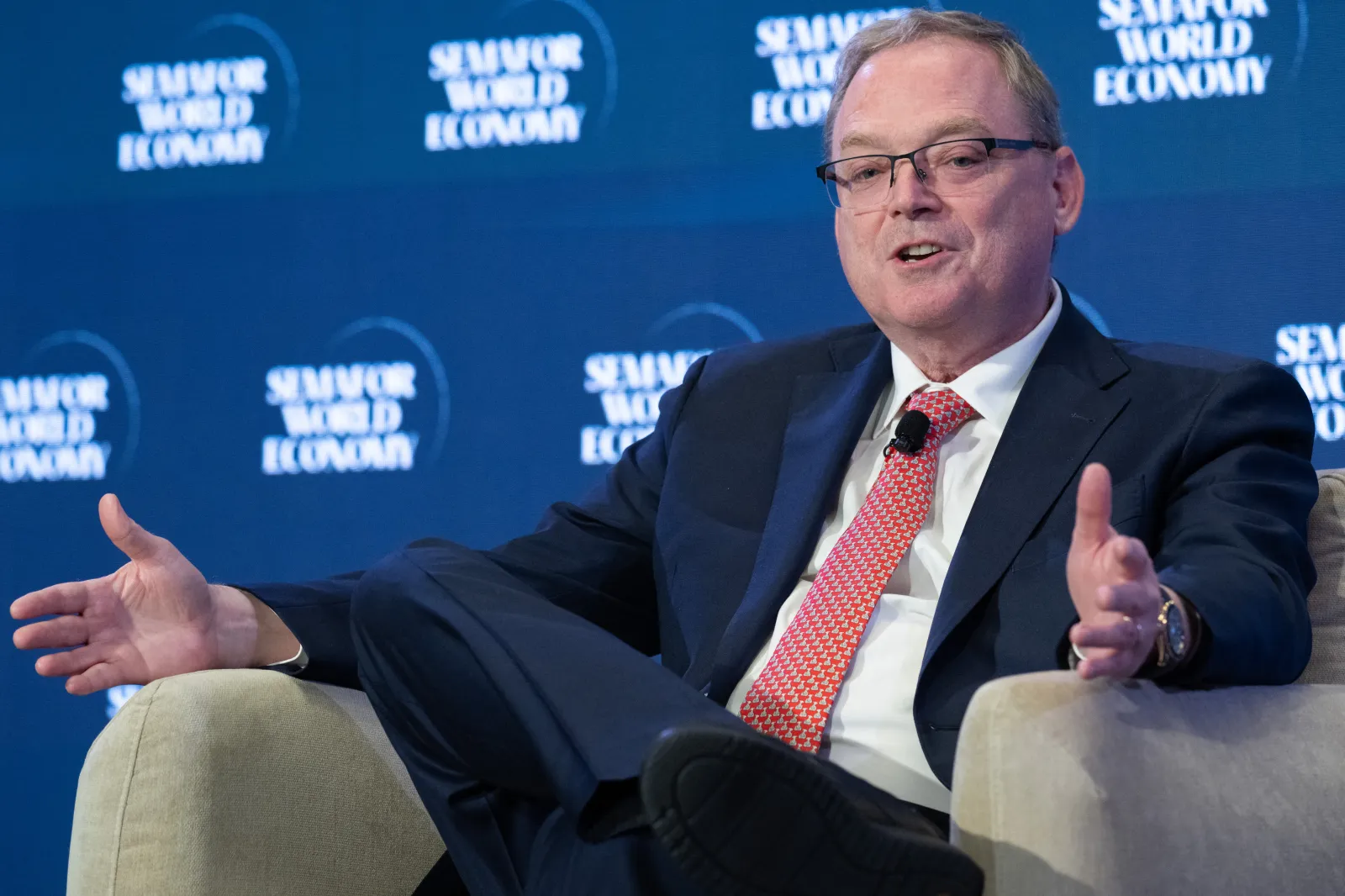
One of President Donald Trump’s top economic advisers has said the soaring energy costs currently straining Americans’ budgets could ease in time for the midterm elections—though this depends on the United States and Iran reaching a resolution in the current war.
Speaking to Fox News on Sunday, Kevin Hassett, director of Trump’s National Economic Council, said that U.S. businesses and consumers would feel the effects of rising oil prices “in the short run."
However, he said that once transits through the Strait of Hormuz return to normal, these would drop “relatively quickly and certainly ahead of the election.”
Read More on U.S.
Why High Prices Matter Going Into the Midterms
Gas prices and broader rising costs are considered major influences on voting behavior in the U.S. Even before the Iran war began on February 28, Americans’ affordability concerns were seen as a key vulnerability for the administration—and an issue both parties would likely prioritize when appealing to voters come November.
However, consumers are now “taking it on the chin,” as one economist recently told Newsweek, with soaring oil prices pushing domestic pump prices to their highest level since 2022 and bleeding into broader consumer inflation data.
When Does the Administration Think Prices Will Come Down?
On Sunday, Hassett said he had received assurances from Trump that the “war is close to being over," and told Fox News the expected reopening of the Hormuz Strait would mean “a gusher of oil [is] released from the Gulf,” which would drive down costs at home.
However, this upbeat forecast is at odds with remarks from other administration officials.
...
In March, Energy Secretary Chris Wright told NBC News that gas prices could drop back to prewar levels by the summer. On Sunday, however, Wright told the network that he “can’t make predictions” about where prices will be by mid-June.
Wright told CNN in April that prices falling below $3 “might not happen till next year,” while Trump has said gas "could be" lower, "or the same, or maybe a little bit higher” by November.
Last week, analysts at JPMorgan Chase warned that "the risk of $5 gasoline can no longer be dismissed" after the price crossed the $4.50 mark.
Karen E. Young, a political economist and senior research scholar at Columbia University’s Center on Global Energy Policy, told Newsweek that it will be “quite some time” before oil markets—and the prices for downstream products like jet fuel and gasoline—begin to ease.
Additionally, Tom Kloza, chief energy adviser at Gulf Oil, said that while the public regards soaring gas prices as “the Great Satan,” the rising cost of diesel and petrochemical feedstock—raw material hydrocarbons used to make plastics, rubber and fertilizer—will have an equally significant impact on consumer prices and “haunt inflation for many months to come.”
The administration has considered and pursued several ways to address the issue on the home front, including releasing supplies from its strategic reserves, while also attempting to solve the matter at its source.
Last week, Trump launched “Project Freedom” to provide military escorts for merchant vessels attempting to pass through the Strait of Hormuz. However, the president paused the plan days later after concerns were raised by other nations and amid what he said was progress in negotiations with Tehran.
On Sunday, Wright said the U.S. was now focused on using its “economic leverage” to bring Iran to the negotiating table and to extract key concessions—namely, the abandonment of its nuclear program.
But despite the unclear path for the Strait and global oil prices, Hassett said he was optimistic that the economy was on a “historical” trajectory.
He told Fox News that tax cuts enacted as part of Trump’s Big Beautiful Bill, combined with record levels of capital spending—heavily driven by artificial intelligence investments—could push the country’s gross domestic product (GDP) to multi-decade highs.
“I think we really could be looking at numbers north of four, north of five, north of even six because there’s so much capital stock growth right now,” Hassett said, when asked about growth forecasts for this year. Outside the post-pandemic rebound, the last time the economy grew by more than 6 percent was in 1984.
What Happens Next
Tuesday will see the release of the Labor Department’s inflation report for April.
Analysts have forecast another energy-driven acceleration following March’s spike, with the headline annual rate expected to rise from 3.3 percent to 3.7 percent for the first time since September 2023. Annual core inflation—excluding food and energy—is expected to quicken slightly from 2.6 to 2.7 percent.
View 0 Comments
Submit Correction
View Editorial & AI Guidelines