
10
Loading video...

By Alice Gibbs
Senior Reporter
0
Share
Newsweek is a Trust Project member
See more of our trusted coverage when you search.Prefer Newsweek on Googleto see more of our trusted coverage when you search.
President Donald Trump's decision to give close aide Natalie Harp a $45,000 cash gift has sparked debate among experts, with a former White House ethics lawyer arguing the payment violates a federal criminal statute that restricts outside compensation for government employees.
Financial disclosure records show Harp reported receiving a "$45,000 cash gift for holidays" from Trump. Richard Painter, who served as chief White House ethics lawyer under former President George W. Bush, told Newsweek he believes the payments violate federal law and could ultimately carry both legal and political consequences, including impeachment.
The disclosure has prompted questions about whether the payment was simply a personal gift from the president or could be viewed as supplementing a federal employee's government salary.
Read More
Trump Accused of Using Freedom 250 Data To Track Citizens7 min read

Trump Trolled With New Signs in British Columbia4 min read

Homeland Security Unveils New Seal: What Has Changed4 min read

How Much Was the Staff Gifted?
Harp was not the only White House employee to receive money from Trump. Financial disclosures show communications adviser Margo Martin and White House aide Chamberlain Harris each reported receiving a $45,000 cash gift from the president. Oval Office operations director Walt Nauta disclosed a separate $20,000 gift.
All three aides had longstanding relationships with Trump before joining the current administration. Harp joined Trump's political operation in 2022 before later moving into the White House, while Martin worked in Trump's first administration and remained with his post-presidential staff in Florida. Harris also served in Trump's first administration and later worked for his political organizations before returning to the White House in 2025.

...
Painter said those prior working relationships are central to his concerns.
"Employers and employees don't have gift-giving relationships," he told Newsweek. "I think that's a classic case of supplementation of government salary where the private sector employer says, 'You're now going into government, you make less in government, we'll supplement your salary.'"
The gifts were substantial when compared with the aides' annual salaries. Harp, Martin and Harris each earn about $150,000 per year, meaning the $45,000 payments amounted to roughly 30 percent of their annual compensation.
The White House told Newsweek: "The President has a longstanding practice of giving Christmas gifts to people in his orbit, including at times employees and aides, both in government and in his time in the private sector. The gifts at issue here have nothing to do with any of these individuals’ official government duties, and therefore are entirely permissible under relevant legal and ethical standards."
Related Story
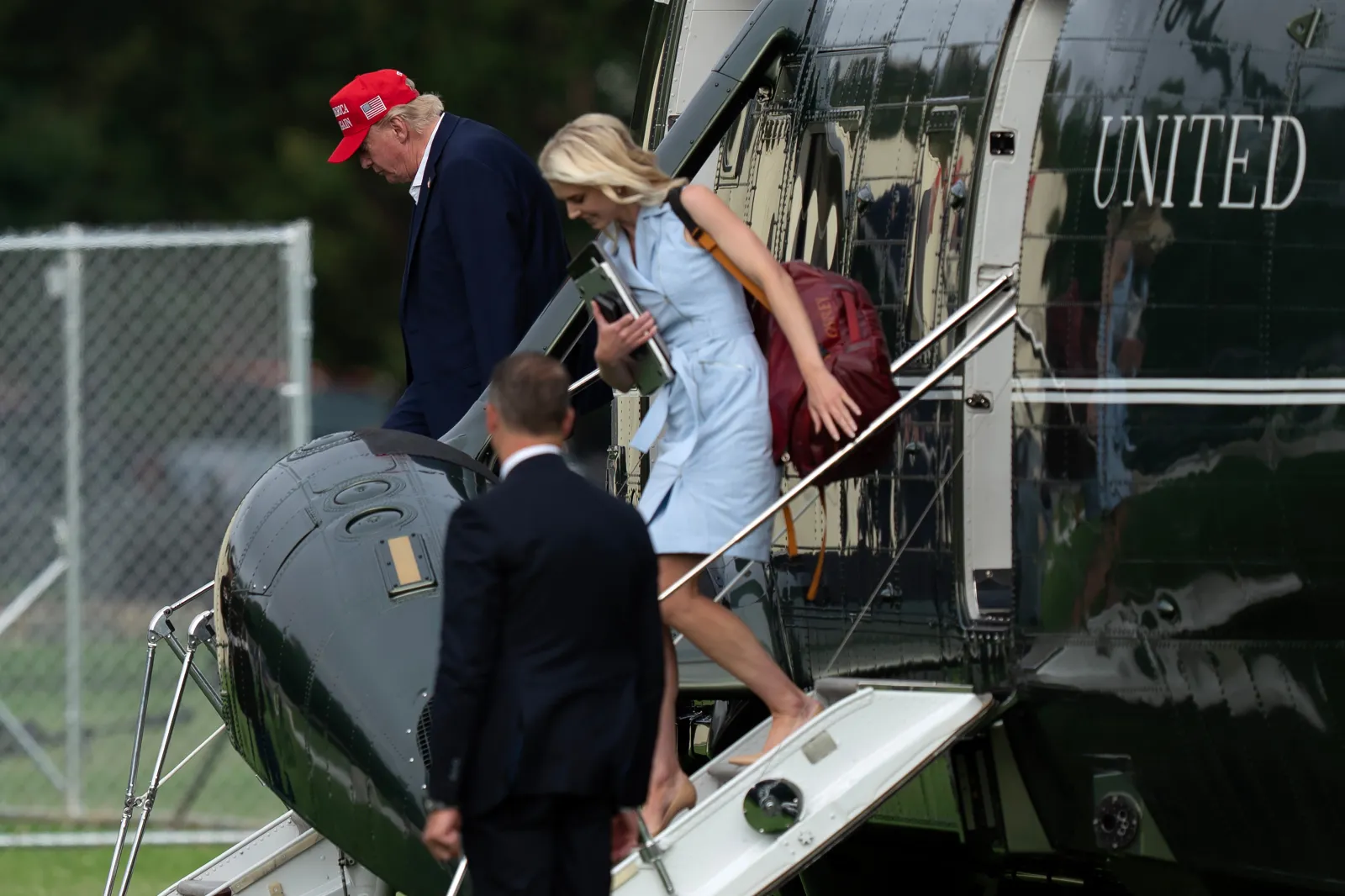
Ex-White House Staffers Weigh in on Natalie Harp’s Rise in Trump Admin
What Does the Law Say?
The law at the center of the controversy is 18 U.S.C. § 209, titled "Salary of Government officials and employees payable only by United States." The statute generally prohibits executive branch employees from receiving compensation, or a supplement to their salary, from a source other than the federal government for their services as government employees.
The statute does not prohibit all financial benefits federal employees receive. Among other exceptions, it allows employees to continue participating in bona fide retirement, insurance and other benefit programs maintained by former employers and contains carve-outs for several specific government programs and circumstances.
The central question in disputes involving Section 209 is often whether money was provided as compensation for government service or for some other reason. The law specifically targets salary payments and salary supplementation connected to an employee's official duties.
Painter argued that the payments fit the type of conduct the law was designed to prevent. "If your employer gives you $50,000 at the end of the year, that's not a gift, that is salary," he said.
If authorities determined that the law had been violated, the people involved could face financial penalties or, in more serious cases, criminal consequences. Federal law allows for fines, civil penalties and prison sentences of up to one year or up to five years for willful violations. The Justice Department can also seek court orders to stop conduct found to violate the statute.

...
Painter explained that both the people who received the money and the person who made the payments could potentially face criminal liability if authorities ultimately concluded the law had been violated.
"Both the employee and the person who makes the payments could be criminally charged under 18 United States Code 209," he said, while also suggesting that the issue could have political ramifications, adding: "President Trump could get himself impeached for it."
Trump was impeached by the House of Representatives twice in his first term, in 2019 and 2021, but was acquitted by the Senate.
Beyond today, Painter said the issue could even remain legally relevant beyond Trump's current term.
"I think there's a five-year statute of limitations," he said, adding that a future administration could still examine the payments. "A future Justice Department can come along and say this was an illegal gift, a violation of 18 U.S.C. 209."
What Is Natalie Harp's Net Worth?
Harp is one of Trump's closest aides and currently serves as a special assistant and executive assistant to the president. She became widely known during Trump's 2024 campaign for carrying a portable printer and supplying him with printed news articles and social media posts, earning the nickname "human printer."
A precise estimate of Harp's net worth is not publicly available. Her federal salary is reported to be approximately $150,000 annually, and publicly available financial disclosures do not provide enough information to calculate her overall assets or personal wealth.
The newly disclosed $45,000 gift from Trump has nevertheless placed Harp at the center of a debate over presidential gifts, ethics rules and the limits of outside compensation for federal employees.
Contact Newsweek editors on this story: Rebecca Flood and Sam Wilson.
View 0 Comments
Submit Correction
View Editorial & AI Guidelines