10
Loading video...

By Matthew Tostevin
0
Share
Newsweek is a Trust Project member
See more of our trusted coverage when you search.Prefer Newsweek on Googleto see more of our trusted coverage when you search.
Search the archives and it’s hard to find records of President Donald Trump using the expression “international law” in a positive sense.
The forcible removal of Venezuelan President Nicolás Maduro to face trial before a court in the United States does not so much mark the death of international law as underline the fact that in a world in which raw power wins, it was already meaningless without the force to back it up—and Trump will do all he can to demonstrate America’s raw power.
- Perspective: Marjorie Taylor Greene’s Next Act Could Fracture the Right
- Uncommon Knowledge: AI Boom Risks a Universal Basic Income Trap
Read More on News
“No one should be shedding tears for Maduro, but if Trump can strike a country without authorization and rendition its president, one has to wonder whether there are any limits at all,” Noah Barkin, senior adviser at Rhodium Group, an independent research and analysis firm, wrote Saturday. “This will be seen as a green light for authoritarians around the world to use force and ignore international law.”
Other powers were already either paying lip service to international law or carrying out unilateral actions in its name. Russia, with its invasion of Ukraine, but also China as it seeks to enforce extensive maritime claims against neighbors in the South China Sea. Beijing justifies its threats to take over self-ruling Taiwan on the grounds that it would be a domestic issue.
The U.S. domestic charges of narco-terrorism as America struggles with a deadly drug use epidemic sidestepped questions of international legality.
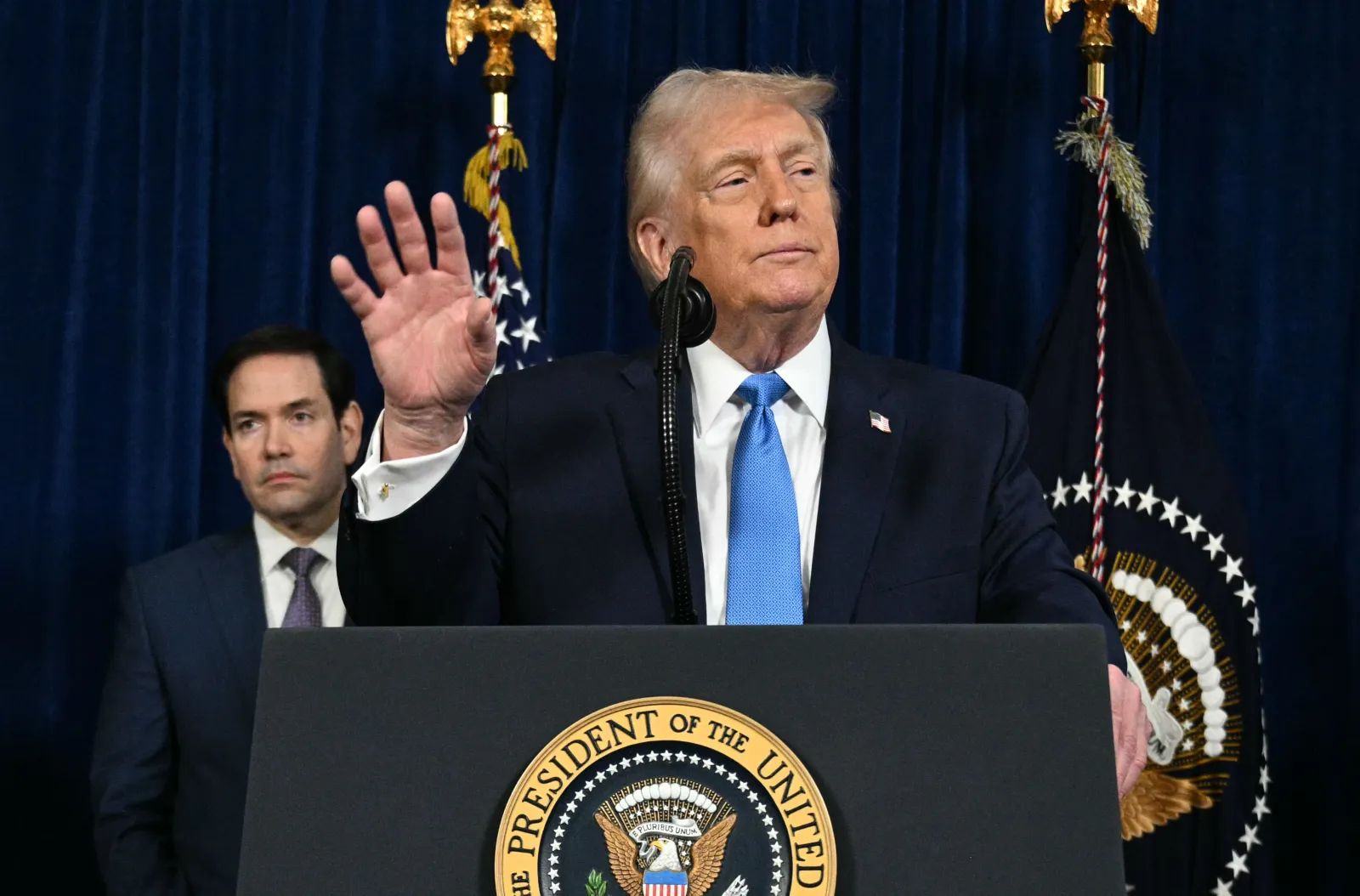
"We will defend our citizens against all threats, foreign and domestic," Trump said Saturday.
...
Chinese Condemnation
China was quick to invoke international law in its condemnation as world leaders reacted with shock.
“Such hegemonic acts of the U.S. seriously violate international law and Venezuela’s sovereignty,” the foreign ministry said.
Russia’s foreign ministry didn’t cite international law, although it did condemn the attack as “an act of armed aggression”.
The response from European Union (EU) foreign affairs representative Kaja Kallas was somewhat equivocal. “Under all circumstances, the principles of international law and the UN Charter must be respected,” she said, but without indicating whether she thought they had been respected. She added that Maduro “lacks legitimacy.”
Not all international law is in as much contention. International laws still ensure mail travels between countries, that airlines can fly and that trade takes place—if increasingly precariously given tariff wars under Trump.
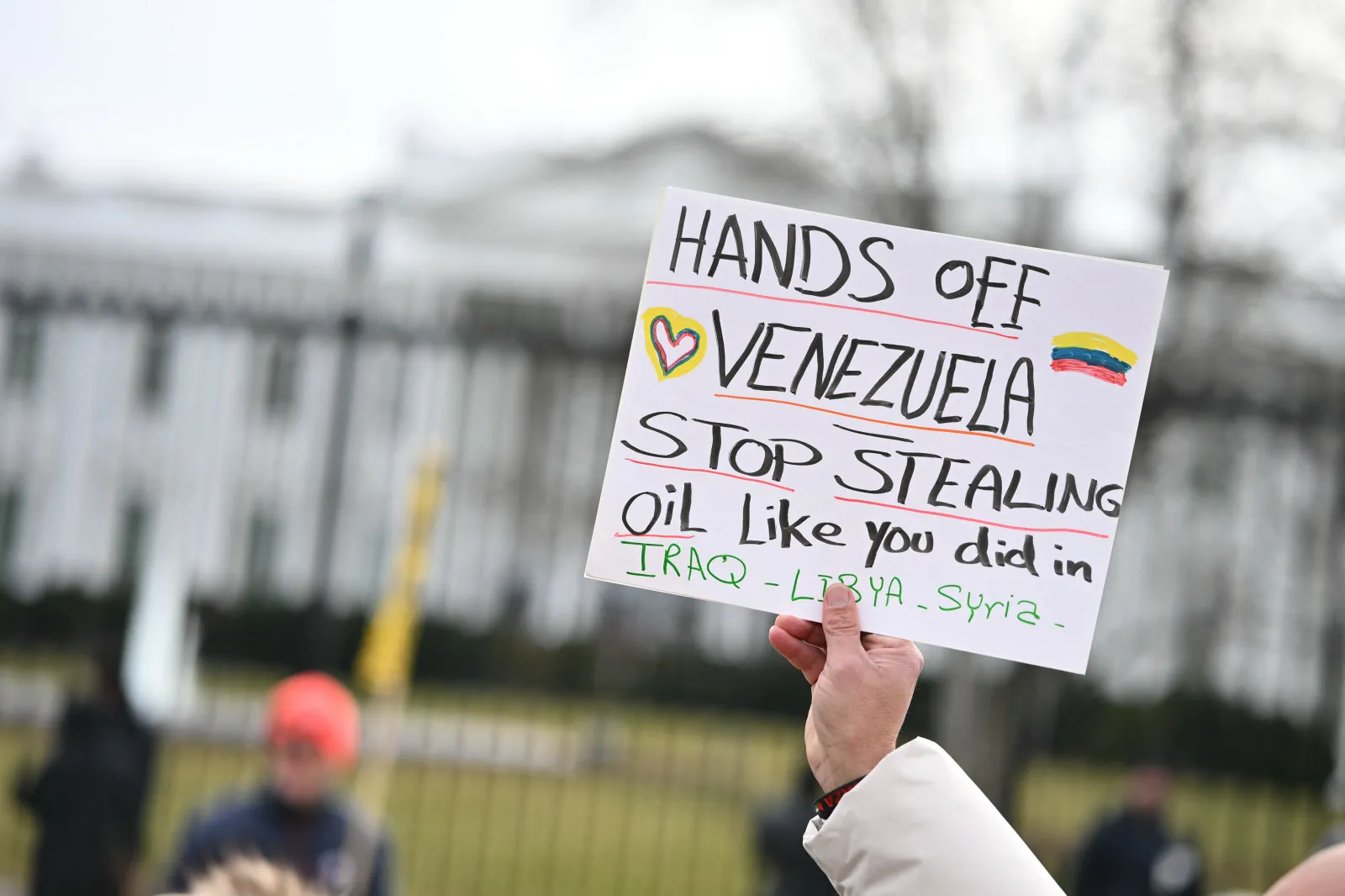
But long before Trump’s time, actions by the U.S. and its allies had challenged the validity of international law on questions of conflict. There was the 2003 invasion of Iraq without a U.N. Security Council mandate—a war which was pronounced illegal by late U.N. Secretary General Kofi Annan, although his view was disputed by the war’s defenders.
Before that, was the 1999 NATO bombing of Serbia in the name of protecting Kosovo’s Albanians and splitting the territory away. An independent international commission concluded the air strikes were “illegal but legitimate.” Russian President Vladimir Putin cited them in his justification for his entry into Ukraine in 2022.
Big power relationships have always been shaped by power rather than right and wrong, but after prevailing over the Soviet Union in the Cold War, leaders in America and its allies all too often appeared to equate victory with having been “on the right side” rather than having been stronger—and thus being able to decide what international law should be.
Then, American hegemony declined during the disastrous wars in Iraq and Afghanistan. China rose and became strongly assertive under President Xi Jinping, which in turn helped embolden Russia and Iran under Supreme Leader Ali Khamenei. The capture of Maduro, shown as a prisoner in a humiliating image released by the White House, sent a different message from Trump's America.
...
'American Deterrence'
“This is fundamentally about American deterrence, which underpins any credible national security strategy at a time when Putin, Xi Jinping and Khamenei are closely working together and are working on expanding their power share,” a research fellow at the Hudson Institute's Center for Peace and Security in the Middle East, told Newsweek.
“Maduro posed a threat not only to his own people, but to regional stability and U.S. interests, actively contributing to refugee flows, drug trafficking networks, and the empowerment of criminal cartels. Regimes of this kind do not respond to warnings or rhetorical pressure. In this case, U.S. action reinforced deterrence which was missing for decades.”
The move against Maduro shows the importance of Trump’s recent National Security Strategy. That is most obviously the line about enforcing a “Trump Corollary” to the 19th century Monroe Doctrine designed to limit foreign influence in the Americas. Maduro had received a Chinese delegation on Friday.
“The big story overhanging all of this is that US government is deadly serious in its stated plans to dominate and control the western hemisphere. Take the threats against Greenland very seriously indeed,” Phillips P. Obrien, professor of Strategic Studies at the University of St Andrews, wrote on X and referring to Trump's talk of taking Greenland from NATO ally Denmark.
The implications go far beyond the Americas. The removal of Maduro gives more credibility to Trump’s recent threat to Iran’s leaders if they violently suppress protesters. U.S. forces are highly unlikely to mount a raid in Iran, but more targeted air strikes cannot be ruled out after American planes joined Israel last year in bombing nuclear targets.
"Nicolás Maduro had his chance, just like Iran had their chance—until they didn't and until he didn't. He F'd around and he found out," Defense Secretary Pete Hegseth said Saturday.
Maduro’s capture will also send a message of Trump’s seriousness about a deal on whatever terms he deems reasonable in Ukraine as it continues its war against Russia and even as that shapes up to involve concessions of territory that Kyiv and its European allies would argue are in flagrant violation of international law.
The other big flashpoint is Taiwan. On the one hand, some argue that the seizure of Maduro could be a blueprint for China to take unilateral action against Taiwan. That was debated excitedly by Chinese netizens. On the other hand, the raid was another demonstration of Trump’s predictable unpredictability and might give China more cause for biding its time.
“In Trump, Xi and Putin, we have three strongmen who believe that might makes right,” Barkin told Newsweek. “All are willing to use force or coercion to get their way. Against this backdrop, respect for international law is being seriously eroded. The U.S. was an imperfect guardian of these norms for decades. Now it is complicit in their destruction.”
View 0 Comments
Submit Correction
View Editorial & AI Guidelines