Getty Images

By David Averre
0
Share
Newsweek is a Trust Project member
See more of our trusted coverage when you search.Prefer Newsweek on Googleto see more of our trusted coverage when you search.
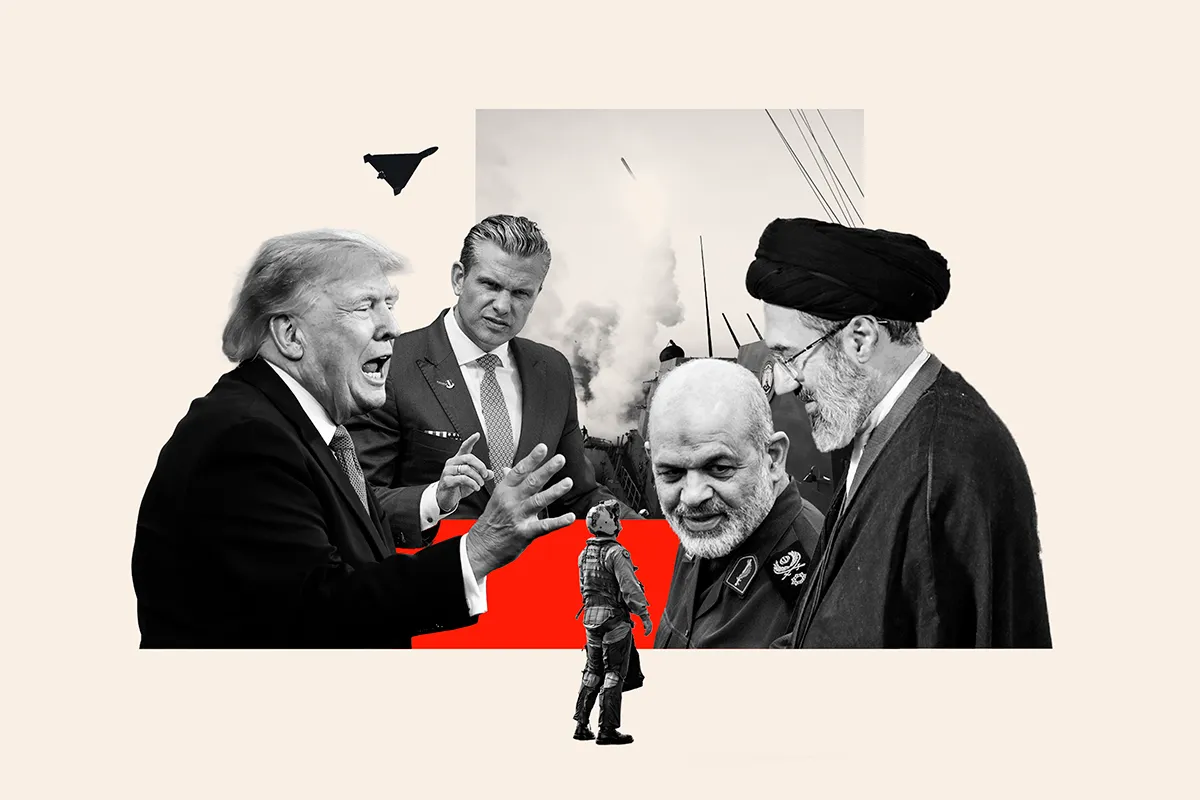
Six months ago today, the United States launched Operation Epic Fury, bringing the full weight of America’s military might to bear on Iran.
Initially, the code name, which sounds like it was dreamed up by a group of 13-year-olds, was actually rather apt. The opening U.S.-Israeli salvo killed Ayatollah Ali Khamenei and a swathe of Iran’s political and security elite, battered its air defenses, missile forces and navy, and left much of its military infrastructure in ruins.
For a time, Trump even appeared to believe he could bring down the Islamic Republic altogether, telling Iranians to "take over your government."
Read More on Analysis
Six months on, though, the operation seems neither especially epic, nor particularly furious.
The Islamic Republic survived, the Revolutionary Guards tightened their grip on power, and Tehran turned the Strait of Hormuz into its greatest bargaining chip. Washington is now negotiating over Iranian demands and concessions that would have been almost unthinkable when the first bombs fell—and the International Atomic Energy Agency still can’t establish the size, composition, or whereabouts of Tehran’s enriched-uranium stockpile.
So, where does a war go when the world’s most powerful military can inflict extraordinary destruction, but can’t impose an ending? With the help of experts on Iran, sanctions, energy and military strategy, Newsweek explores five possible scenarios and their unique consequences.
Baby Steps and Bargains
Iranian and Omani foreign ministers met in Tehran this week to discuss a temporary shipping corridor through Hormuz and joint mine-clearing, with talks expected to continue toward a permanent navigation arrangement despite President Donald Trump threatening last week to "bomb the s*** out of them" if Oman "gets in the way."
"A narrow Hormuz agreement remains the most plausible route towards a wider negotiation," Andreas Krieg, a Middle East security expert at King’s College London, told Newsweek. "Iran does not need formal control over the Strait to claim success. It needs recognition that it is an indispensable security actor that can’t be excluded from managing Hormuz.
"Washington, meanwhile, needs to be able to say that it restored freedom of navigation and prevented Iran from imposing unilateral control. There is a viable compromise somewhere between those positions."

...
The Islamabad Memorandum, signed in June by Trump and Iranian President Masoud Pezeshkian, remains the most concrete template for any future talks, even though its 60-day framework has since expired. But its key terms remain difficult for both sides to swallow.
Anthony Cowden, a former Navy captain, naval strategist and managing director of Stari Consulting, called it "essentially a surrender document," adding that Washington "will have trouble not looking like it has suffered a strategic loss in any ‘final’ agreement."
Tehran is divided, too.
"On one side are (chief negotiator) Mohammad Bagher Ghalibaf and President Masoud Pezeshkian, who still speak positively about the MOU as a framework worth returning to," Tehran-based analyst Peiman Salehi said. "On the other side, the IRGC and security council chief Mohsen Rezaei seem to view it less as an end in itself and more as a temporary bridge toward achieving Iran’s broader objectives."
In other words, the least painful scenario asks Trump to accept a deal that all but his staunchest supporters will call a defeat, Iranian hard-liners to surrender leverage they believe they won, and both sides to bridge a yawning chasm with no trust after their last bargain collapsed.
Good luck!
Economic D-Day and Different Kind Of Siege
On Monday, the U.S. launched a new kind of blockade beyond Hormuz when U.S. Treasury Secretary Scott Bessent unveiled Operation Economic Outcast, casting America’s sanctions net even wider to inflict yet more damage on Iran’s creaking economy.
The new sanctions will focus on digital assets, technology, gold, aviation and shipping; areas the Treasury has identified as Tehran’s remaining economic lifelines that need to be severed. Bessent waxed lyrical on how the sanctions would "end the Iranian threat" by enforcing a "zero-leakage approach" while threatening other countries supporting Iran with "removal from the U.S. dollar system."
But experts said the efficacy of sanctions will hinge on whether the U.S. is willing to get serious on confronting Iran’s principal benefactor.
"The expansion of secondary sanctions risk across five sectors gives Washington much greater scope to target the foreign actors that keep servicing Iran. The real test will be whether Washington is willing to use these new authorities against major companies and financial institutions in countries such as China. Until then, the rhetoric is considerably more ambitious than the economic impact," Gonzalo Saiz Erausquin, a sanctions expert at RUSI, told Newsweek.
"Many of these other channels—gold, crypto, and informal financial networks—allow Iran to move and store money… Oil allows Iran to make money. You can’t isolate a state and make it an economic outcast if you don’t deter its main patron, and China has accounted for roughly 80% of Iran’s sanctioned oil exports."
Michael Montgomery, a former U.S. diplomat who worked on previous rounds of Iranian sanctions, believes Operation Economic Outcast has an ulterior motive.
"We've sanctioned Iran for 40-plus years and Cuba for more than 60 years and neither of those countries has made major changes in policy, let alone in their systems of government," he said.
"Sanctions can, however, be very useful in U.S. domestic politics; they are compelling and seemingly severe actions short of military action that can be done when U.S. administrations feel pressure to do something but have no good options available."

...
A collapsing rial, falling oil revenues and soaring inflation would prove Iran is hurting, but not that the sanctions are working. A sudden change in Iran’s position over Hormuz, and defections or resignations among the elite, will constitute telltale signs that Economic Outcast is having the desired effect.
But sanctions don’t come for free. "The harder Washington squeezes Iran, the greater Tehran's incentive to impose costs on the U.S. and its partners through Hormuz," Saiz Erausquin said. That leads us to the next scenario.
Iran Exports The Pain Abroad
Following Trump’s warning of economic D-Day last week, Iranian security chief Rezaei threatened retaliation via strikes on more energy infrastructure to ensure "not a single drop of oil will be exported… from anywhere in the Persian Gulf," adding that "Iran will regard any country’s participation in or support for America’s economic war against the Iranian people as an act of war."
Several experts said that such strikes could push the likes of the UAE, Saudi Arabia and Oman—countries whose hydrocarbon-based economies have little tolerance for prolonged disruption—to withdraw any support for U.S. sanctions.
Related Story

Trump Says Mojtaba Khamenei Is Alive. Either Way, His Ghost Rules Iran
"Nearby states will accept periodic small strikes without making a major response. Other than Israel, nobody in that region wants to fight Iran if they can possibly avoid it," Montgomery said.
But Tehran is walking a tightrope.
"Energy infrastructure is critical not only to Gulf economies but also to the durability of the governments," Yagiz Sullu, Ph.D., political risk and energy policy analyst, told Newsweek: "If Iranian attacks caused prolonged production disruptions, very expensive repairs, or serious economic and domestic pressure, Gulf governments would have little choice but to move more firmly toward Washington. They have every right to defend themselves."
Krieg added: "Tehran’s optimal strategy is calibrated disruption: enough to demonstrate that the cost of the war can’t be confined to Iran, but not enough to convince the Gulf that coexistence is impossible."
The War Gets Hot Again
If there’s one thing we know for certain, it’s that the U.S. military knows how to make things go bang.
By the time an initial ceasefire was announced on April 7, U.S. forces had expended 13,629 munitions, according to CENTCOM Commander Admiral Brad Cooper, while CENTCOM said more than 13,000 targets had been struck. More than 850 Tomahawk missiles were launched in the first four weeks, and CSIS later estimated that more than 1,000 were used during the first 38 days of the campaign.
Yet one of the central questions that helped drive the war remains unresolved. The International Atomic Energy Agency still cannot establish the current size, composition or whereabouts of Iran’s enriched-uranium stockpile, or verify whether enrichment has stopped.
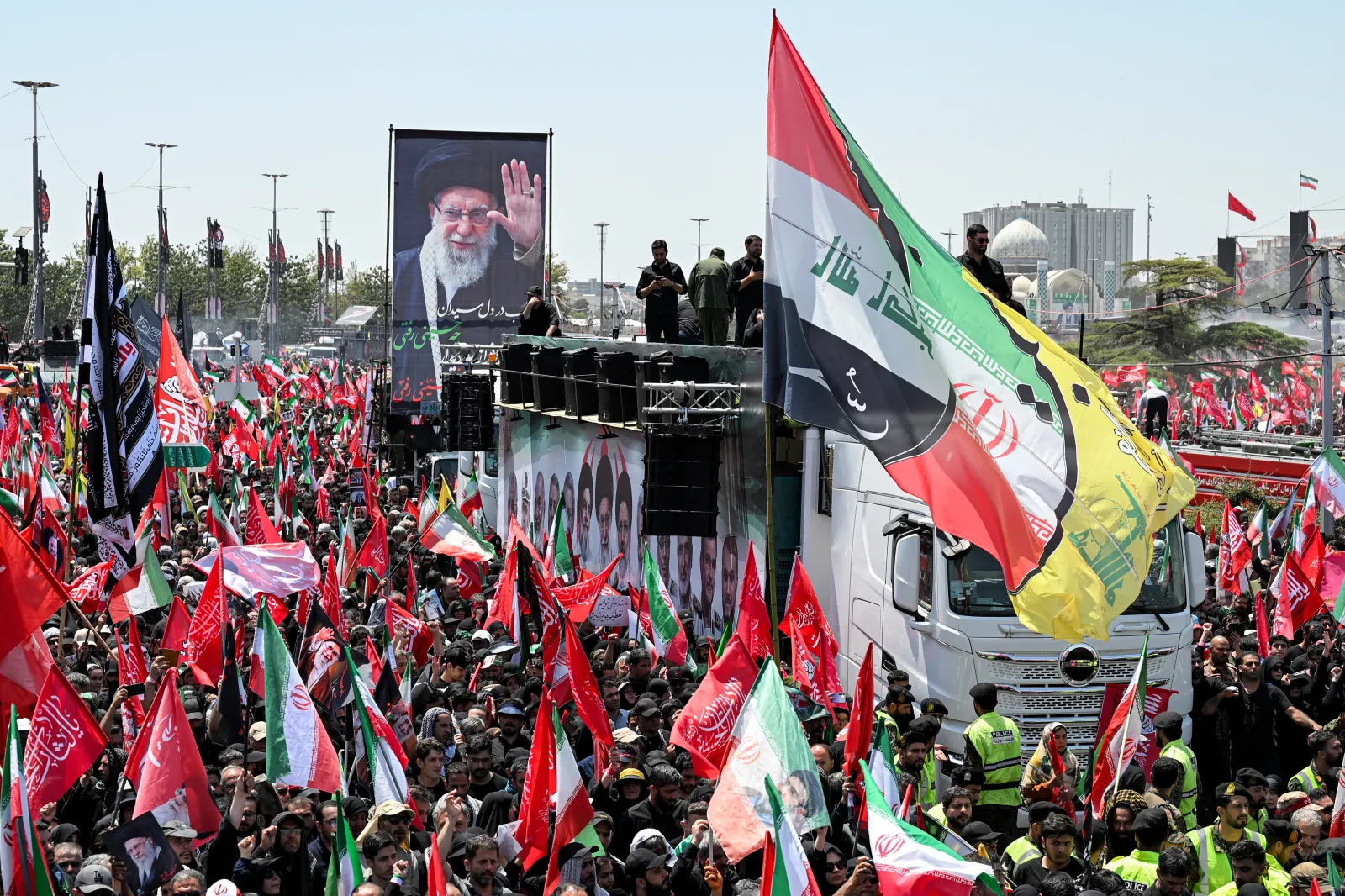
Nor has the destruction forced Tehran to capitulate. According to Khosro Isfahani, research director at the National Union for Democracy in Iran, that’s simply because Washington stopped short.
...
"In the last round of the campaign, multiple military targets were left untouched, and Washington held Israel back from striking key political actors who have since stabilized the regime," he said. "There is one solution: the absolute annihilation of the regime, or forcing it into total surrender."
Krieg reached almost the opposite conclusion.
"Washington and Israel can destroy more infrastructure and kill more commanders. What they cannot do through air power alone is manufacture an Iranian political decision to surrender," he said.
In this way, Operation Economic Outcast could serve as a prelude to another major military campaign down the line, should U.S. officials believe the dire economic realities could render kinetic strikes more effective.
"For a new U.S.-Israeli air campaign to generate concessions that previous strikes did not, something fundamental would have to change inside Iran first," Peiman Salehi, a Tehran-based political analyst, told Newsweek. "Military pressure would have to coincide with a genuine internal breakdown: severe fractures within the leadership, or a collapse in the state’s ability to govern and provide basic services."
The U.S. would also need to decide how many more missiles it wants to use.
Trump insisted earlier this month that America still had "massive amounts" of munitions after reports that depleted stocks were constraining his options. But CSIS estimated in late July that Patriot interceptor inventories had fallen below 1,000 and THAAD stocks to roughly 250, with replenishment of some weapons likely to take years. Former Navy captain Cowden added: "In addition to the ammunition stockpile issue, the Navy, Air Force, and Marines are stretched pretty thin."
America can bomb Iran again; whether it can bomb its way to a different political outcome is another question
A War That Just Keeps Going
This brings us to the most likely scenario: all of the above, over and over again.
A shipping deal opens Hormuz a little. Sanctions tighten, talks breakdown, Iran retaliates, Washington launches another limited round of strikes. "In six months, things will stand pretty much where they stand now, stalemate with occasional outbreaks of violence," Montgomery predicted.
Krieg agrees. "For now, Iran is caught between needing an agreement and believing it still has leverage to improve one. Washington faces the same contradiction," he said.
"That is why a protracted conflict remains the most likely outcome. The war is becoming narrower, more maritime and more economic, but not necessarily closer to ending."

...
This would not mean Iran is winning. Its economy is buckling, its conventional military has been battered and prolonged hardship could eventually exhaust the regime. But Cowden believes Iran has good reason to "stick things out until January when the new Congress is seated, to see how that might change things on the U.S. side."
The U.S. has problems of its own, according to Burcu Ozcelik, Senior Research Fellow for Middle Eastern Security at the RUSI think tank, chief among which is a simple lack of clarity around exactly what it wants to achieve from this war.
"Since the start of the operation on 28 February, the U.S. has been hamstrung by a fundamental mismatch between its stated war aims. These have oscillated over time, as have the resources and level of military commitment required to achieve them," she said.
"America remains the strongest power in the system, but it is less able to dictate the shape of the outcome," Krieg concluded. "That, in my view, is Washington’s biggest strategic loss from the war."
America may therefore find itself trapped in that most familiar of Middle Eastern predicaments: too invested to walk away, but unable to impose an ending.
View 0 Comments
Submit Correction
View Editorial & AI Guidelines