

By David Averre
0
Share
Newsweek is a Trust Project member
See more of our trusted coverage when you search.Prefer Newsweek on Googleto see more of our trusted coverage when you search.
President Donald Trump is preparing to unleash an "ECONOMIC D-DAY" on Iran—his latest attempt to bully the Islamic Republic to relinquish control over the Strait of Hormuz and agree on a deal.
In a Truth Social post last night, he promised "THE MOST CRUSHING ECONOMIC OPERATION EVER" and warned that any country found to be aiding Tehran will also find itself in the White House’s crosshairs.
A bold choice of words on the day that America’s national debt tipped $40,000,000,000,000.
Read More on Analysis
As Trump gears up for the next phase of conflict in the Middle East, the average American is feeling squeezed; at the grocery store, at the kitchen table, and especially at the pump. Yet, if you were born before Christ and spent a million dollars every single day in today’s money, you still wouldn’t have spent as much as the federal government does in a year, just to cover the interest on its debt.
Waging war on Iran does not come for free. With the economy firmly the number one issue on voters’ minds less than three months from the midterms, Republicans face an increasingly awkward question: how much economic pain can Trump dish out abroad before voters decide they have had enough of it at home?
Damned If You Do
The latest Bureau of Labor Statistics (BLS) figures offer a fairly good tour of the American household budget, and it does not make for pleasant reading.
Firstly, there has been a notable cost rise in pretty much all the areas that matter to the average American. Overall consumer prices for goods were 3.5 percent higher in June than a year earlier. Food prices were up 3 percent. Food eaten at home rose 2.7 percent. Eating out cost 3.4 percent more. Electricity was up 4 percent. Motor vehicle maintenance and repair rose 7 percent.
Then, there’s gasoline.
BLS found gas prices in June were 26.7 percent more expensive than a year earlier. Fuel oil was up 42.9 percent. Airline fares were up 26.5 percent. Energy overall cost 15.7 percent more.
Few economic indicators are more elegantly designed to ruin a politician’s popularity than the price displayed in six-foot numerals outside a gas station.
Preliminary data from the University of Michigan’s Consumer Sentiment Index showed a 7.6 percent decline in a single month from July to August, with sentiment falling across the political spectrum.
The sharpest deterioration was among lower-income people, older Americans and those without college degrees—groups that constitute key parts of Trump’s political coalition.
An analysis by the progressive Center for American Progress estimates that the Iran conflict has pushed long-term interest rates about half a percentage point higher than they otherwise would have been. On its calculations, that means an extra $4.6 billion in borrowing costs for households, $12.7 billion for businesses and $30.8 billion for the federal government this year alone.
In the run-up to his November 2024 election victory, Trump campaigned on ending "endless wars," cutting wasteful spending and bringing down prices.
With war in Iran, Trump is neatly killing several campaign promises with one stone. His party will likely suffer for it.
Related Story
Why a Blood Feud Will Test Trump’s Donroe Doctrine
...
A Rially Bad Situation
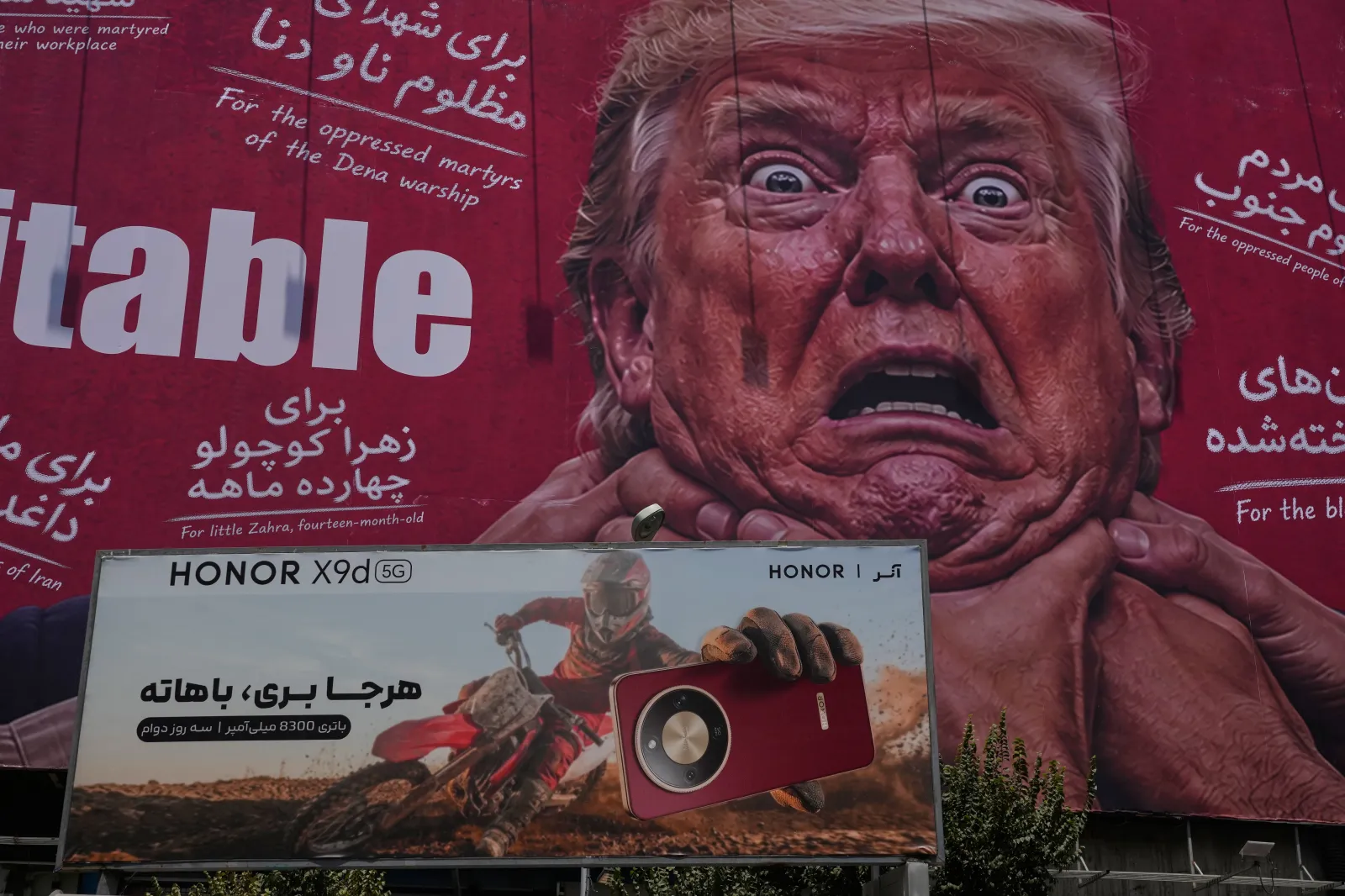
As bad as it is in America, spare a thought for the poor Iranians.
The rial hit a record low of 1.8 million to the U.S. dollar in April. By July, Iranian consumer prices were about 88 percent higher than a year earlier, according to official figures, while food inflation had climbed into triple digits.
America is also the only nation on Earth that can get away with enacting such sustained economic pressure on an adversary while itself continuing to spend, spend, spend. The dollar’s dominant role in global finance gives Washington an extraordinary advantage: investors still want U.S. debt, while banks and companies around the world still depend on access to dollars and American markets.
But there are limits even to American exceptionalism with a credit card. The Congressional Budget Office projects that public debt will rise from 101 percent of U.S. GDP this year to 120 percent in the next decade, with annual net interest costs more than doubling to $2.1 trillion.
There is another problem with Trump’s eagerness to inflict pain.

...
The Islamic Republic has had decades of practice dealing with sanctions and economic punishment, and the killing of Ayatollah Ali Khamenei did not produce regime change or trigger a revolution as the White House had hoped. Instead, Iran’s institutions held, succession happened quickly, and the general consensus among analysts is that power is now concentrated even more deeply within the security establishment and hard-liners.
If Trump thinks economic pressure will cause the leadership to crack, he’ll be waiting a very long time.
Voters Have Their Priorities Set
The phrase "Economic D-Day" probably sounds quite good when you’re typing it out in the Oval Office, or lying in the White House’s presidential suite.
It doesn’t have the same ring in the grocery store checkout line while you’re trying to stave off an anxiety attack over what the bill will come to.
Related Story

Iran’s Defeat by Trump in 3 Devastating Charts—and What Happens Next
When Pew Research Center asked registered voters in July what one issue they most wanted congressional candidates to talk about during the midterm campaign, 29 percent picked the economy—more than any category by far. Fifteen percent specifically named the cost of living or affordability.
The same poll found that a majority of the electorate considers their vote in the midterms as an endorsement or condemnation of Trump, versus those who said Trump doesn’t really factor into their voting intentions.
The electoral warning lights are already blinking. Marquette Law School’s latest national poll has Democrats ahead 51 percent to 45 percent among likely midterm voters, while 35 percent of respondents named inflation and the cost of living as the country’s most important issue.
If most Americans were focused on literally anything other than how far their money goes ahead of November, GOP lawmakers might have cause for cautious optimism. They are not.
View 0 Comments
Submit Correction
View Editorial & AI Guidelines