10
Loading video...

By Gabe Whisnant
News Editor
0
Share
Newsweek is a Trust Project member
See more of our trusted coverage when you search.Prefer Newsweek on Googleto see more of our trusted coverage when you search.
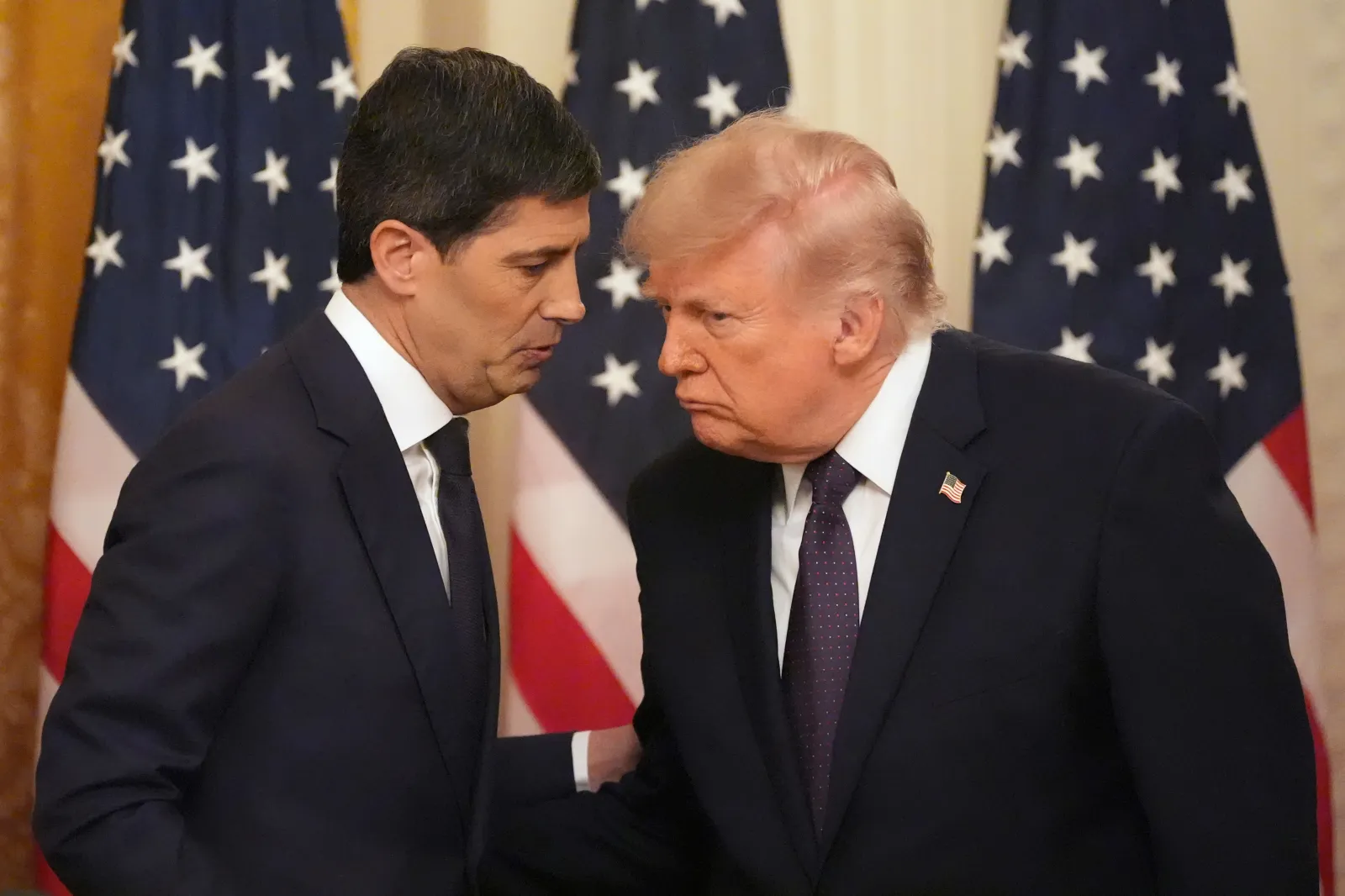
President Donald Trump on Friday said he wants the Federal Reserve to operate independently under new chair Kevin Warsh, despite months of publicly pressuring the central bank to cut interest rates.
“I really mean this. This is not said in any other way,” Trump said. “I want Kevin to be totally independent. I want him to be independent and just do a great job.”
“Don’t look at me, don’t look at anybody. Just do your own thing and do a great job, OK?” he added.
Read More on Politics
The comments come as Warsh was sworn in at the White House and pledged to prioritize price stability and employment, invoking past Fed leadership as a model. Trump’s remarks seek to reassure markets and policymakers after repeated criticism of outgoing chair Jerome Powell raised concerns about political influence over the Fed's monetary policy.
Warsh, meanwhile, emphasized independence and economic stability as core to the Fed’s mission.
“Our mandate at the Fed is to promote price stability and maximum employment. When we pursue those aims with wisdom and clarity, independence and resolve—inflation can be lower; growth, stronger; real take-home pay, higher,” Warsh said.
Warsh will take over the central bank at a time when policymakers are confronting persistent inflation pressures, volatile markets and political scrutiny of interest‑rate decisions. He has argued for a more aggressive tightening posture and has criticized the Fed for keeping monetary policy “too loose for too long.”
“During Federal Reserve Chairman Kevin Warsh’s historic swearing-in ceremony, President Trump reaffirmed his desire for the Fed to be ‘totally independent’ and set monetary policy based only on what the data show. The President, however, maintains his First Amendment right as an American citizen and duty as Commander in Chief to call out policy mistakes that undermine America and the American people," White House spokesman Kush Desai told Newsweek via email.
Where Do Interest Rates Stand?
The Fed’s benchmark interest rate currently sits in a range of 3.50 percent to 3.75 percent after officials paused cuts earlier this year, keeping borrowing costs relatively elevated as they assess inflation trends. Policymakers’ latest projections suggest only modest easing ahead, with the median forecast pointing to rates around 3.4 percent by the end of 2026, indicating limited room for cuts.
The outlook comes after months of pressure from Trump on Powell to lower borrowing costs—a campaign that raised concerns about the central bank’s independence. While some economists still expect one or two cuts later this year, recent inflation data has complicated that path, prompting markets to scale back expectations and even price in the possibility that rates could remain higher for longer or increase modestly.
The leadership transition comes at a volatile economic moment shaped in part by the war with Iran, which has pushed up gas prices, rattled financial markets and fueled inflation concerns across the country. Those pressures have raised questions about whether Warsh will follow Trump’s long-standing calls for lower borrowing costs or prioritize efforts to control inflation.
Economists say Warsh faces a difficult balancing act. Rising inflation, driven in part by higher energy costs tied to geopolitical conflict, could limit the Fed’s ability to cut rates, even as Trump continues to favor looser monetary policy to boost growth.
Eric Sims, professor of economics at the University of Notre Dame, told Newsweek via email that "the Fed is in an unenviable spot right now."
He continued: "We're facing external price pressures related to energy prices, and there is significant medium-term uncertainty about employment risk. Getting things right is going to be a challenge. A rate increase or two in the next several months would be noteworthy and a real signal of independence."
Warsh's Fed tenure also comes as Republicans’ disapproval of Trump’s handling of the economy reached a new high of 37 percent in an AP/NORC poll released Wednesday, a major red flag for the GOP ahead of this year's midterm elections.
Trump expressed confidence in Warsh’s approach to economic policy. “Thankfully, unlike some of his predecessors, Kevin understands that when the economy is booming, it is, that’s a good thing,” the president said, adding that it was not necessary “to go crazy. Just let it go. We want it to boom.”
...
Who Is Kevin Warsh and How Will He Run the Fed?
Warsh, 56, served as a Federal Reserve governor from 2006 to 2011, where he became known for his skepticism of the Fed’s emergency bond‑buying programs during the financial crisis, according to Federal Reserve History. Before joining the central bank, he worked at Morgan Stanley and later served as a White House economic adviser under President George W. Bush.
Since leaving the Fed, he has been a frequent commentator on monetary policy, arguing that the central bank should move more decisively to curb inflation and reduce its balance sheet.
Warsh, for his part, pledged to overhaul the Fed while maintaining its core mandate. “I will lead a reform-oriented Federal Reserve, learning from past successes and mistakes, both escaping static frameworks and models and upholding clear standards of integrity and performance,” he said after taking the oath.
He also emphasized the central bank’s dual mission, saying the Fed’s mandate “is to promote price stability and maximum employment. When we pursue those aims with wisdom and clarity, independence and resolve, inflation can be lower; growth, stronger; real take home pay, higher and America can [be] more prosperous.”
Warsh acknowledged the challenges ahead, telling Trump that “these years can bring unmatched prosperity that will raise living standards for Americans from all walks of life. And the Fed has something to do with it."
View 0 Comments
Submit Correction
View Editorial & AI Guidelines