10
Loading video...

By Billal Rahman
Immigration Reporter
0
Share
Newsweek is a Trust Project member
See more of our trusted coverage when you search.Prefer Newsweek on Googleto see more of our trusted coverage when you search.
A former U.S. Citizenship and Immigration Services (USCIS) official told Newsweek that the Trump administration’s plan to strip naturalized Americans of their citizenship is "virtually impossible" to implement at the scale being proposed.
Internal guidance obtained by The New York Times shows that USCIS field offices have been asked to provide the Justice Department with 100—200 denaturalization cases per month during the 2026 fiscal year. By comparison, just over 120 cases were filed between 2017 and 2025.
Denaturalization applies only to people who obtained U.S. citizenship after immigrating, not to those who were citizens from birth.
Read More on News
It can occur only through a formal legal process and requires a ruling by a federal court. It cannot be carried out solely through administrative action.
Under federal law, citizenship may be revoked only under narrow circumstances, such as fraud during the naturalization process or certain criminal behavior. Each case requires a civil or criminal trial, and proving wrongdoing in federal court is difficult and resource-intensive.
'Extremely High Standard'
Ricky Murray, founder and partner at immigration law firm Jet Global Solutions and a former USCIS Chief of Staff for Refugee and International Operations, told Newsweek that the plan would require immense resources and strain the USCIS.
"People who've been working on denaturalization programs and who worked in the field office recognize that the standard is extremely high, and the idea of actually being able to process anywhere near that number is just virtually impossible," Murray told Newsweek in a phone interview on December 18.
"USCIS could send more cases to the Justice Department by lowering the threshold, but the DOJ’s burden and the standard required by the DOJ to bring these cases in federal court haven't changed. So I don't see how there's going to be significantly more cases brought for denaturalization by the DOJ to the federal courts."
Morgan Bailey, a partner at Mayer Brown and former senior official at DHS, told Newsweek, "The debate around denaturalization really centers on balancing the government’s interest in addressing fraud or criminal activity and the threshold for when and what kinds of cases warrant this type of review."
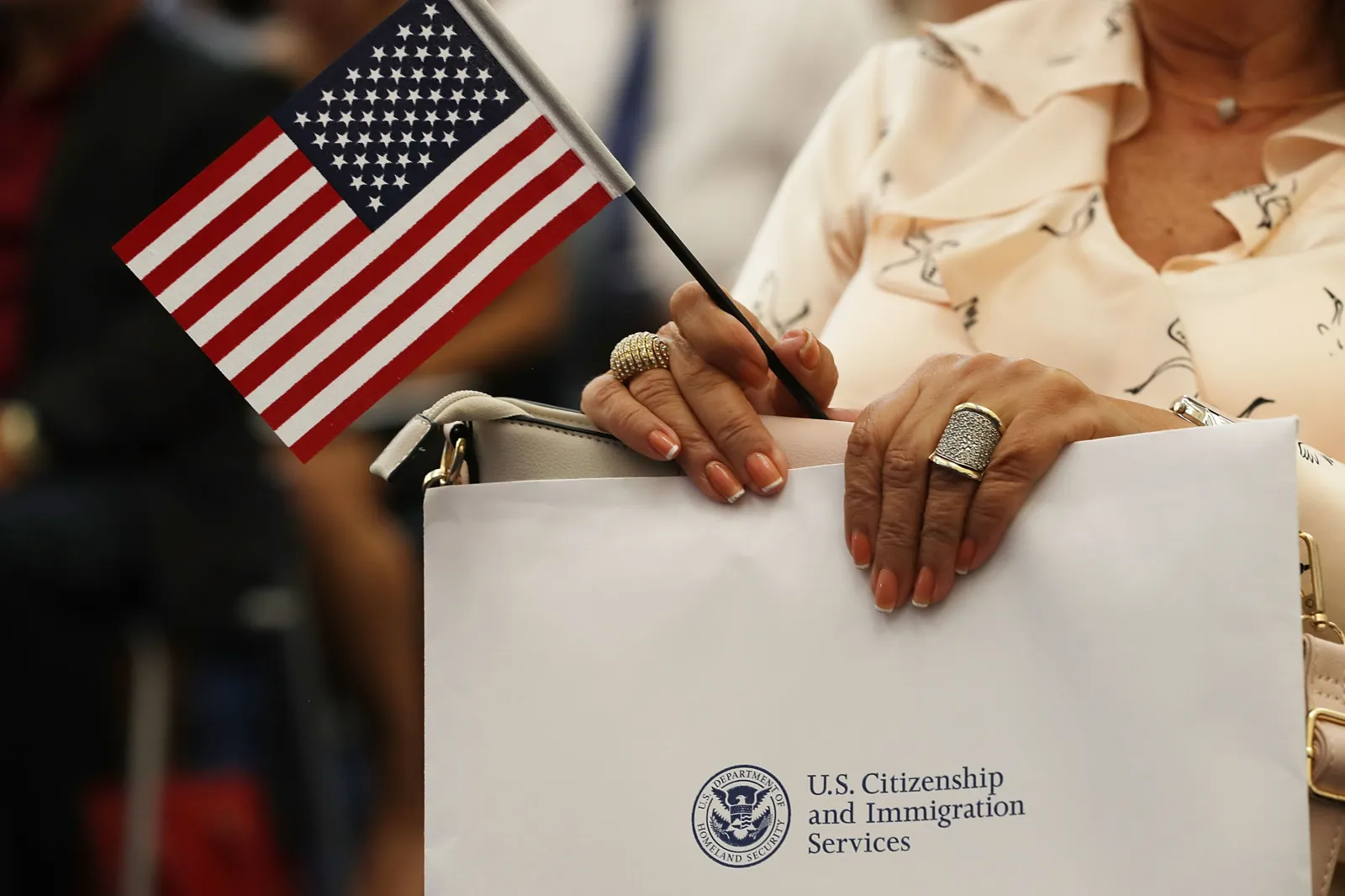
...
The administration’s push comes amid broader efforts to tighten immigration enforcement, including travel bans targeting predominantly Muslim and African countries. Critics warn that the denaturalization campaign could unfairly affect law-abiding Americans and create fear in immigrant communities.
Murray also noted potential legal implications if the administration's move backfires.
"If there's racial profiling or there's other things that are used in the analysis to put people up for denaturalization, if they are targeting specific groups or targeting specific races, religions, things like that, there are potential legal implications there.
"It’s no secret that U.S. Citizenship and Immigration Services’ war on fraud includes prioritizing those who’ve unlawfully obtained U.S. citizenship—especially under the previous administration," Matthew J. Tragesser, a USCIS spokesperson, said in a statement sent to Newsweek. "We will pursue denaturalization proceedings for those individuals lying or misrepresenting themselves during the naturalization process. We look forward to continuing to work with the Department of Justice to restore integrity to America’s immigration system."
With 26 million naturalized Americans in the U.S., experts caution that the ambitious goals of this plan may strain resources and face legal hurdles, making its full implementation extremely challenging.
View 0 Comments
Submit Correction
View Editorial & AI Guidelines