
10
Loading video...
By Emma Marsden
Reporter
0
Share
Newsweek is a Trust Project member
See more of our trusted coverage when you search.Prefer Newsweek on Googleto see more of our trusted coverage when you search.
President Donald Trump has claimed he spoke to Google about renaming a body of water after himself, saying the technology company rejected the idea because oceans border multiple countries.
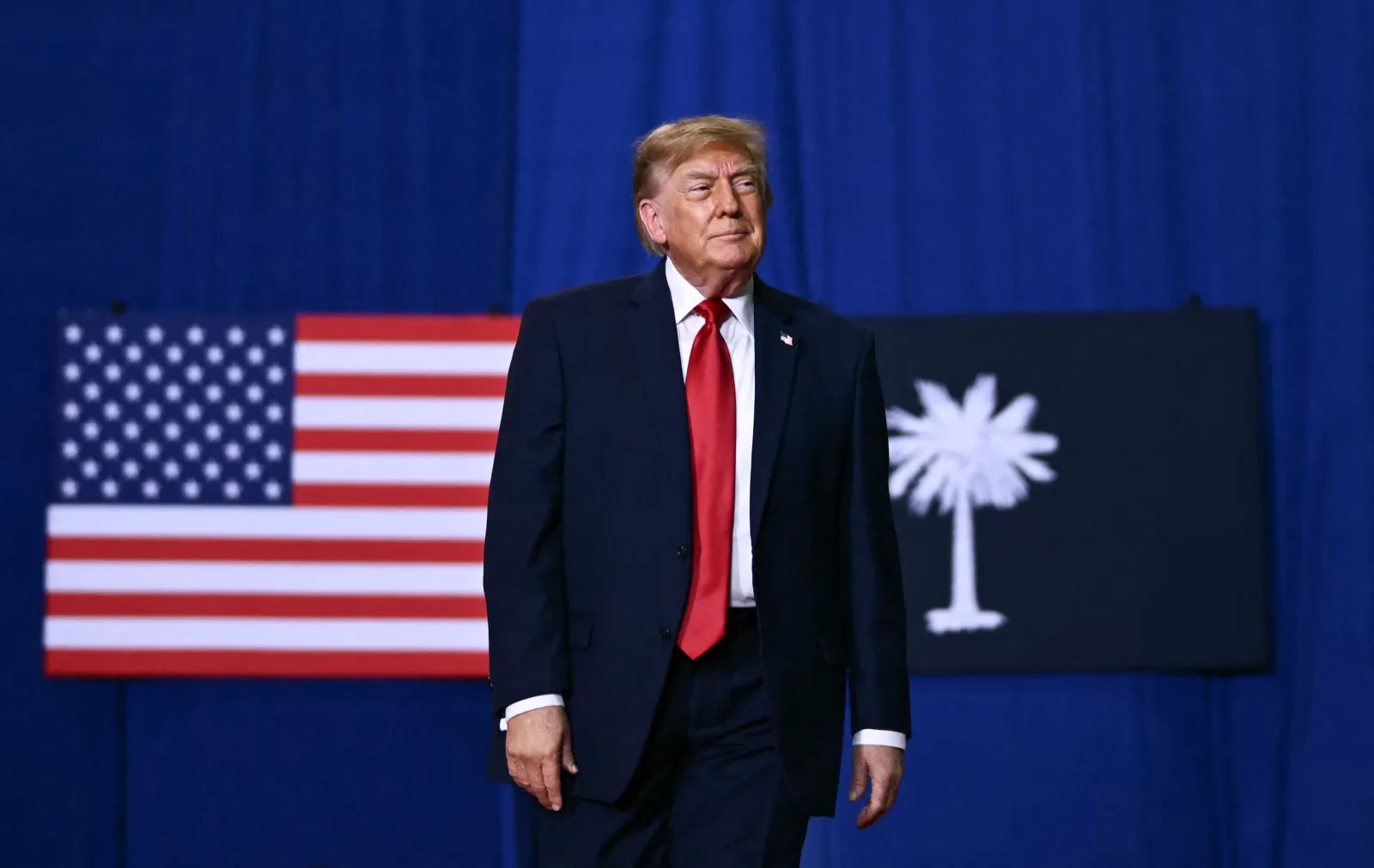
Trump told supporters at Wednesday's rally in South Carolina that he asked Google CEO Sundar Pichai to suggest renaming either the Atlantic or Pacific Ocean the “Trump Ocean,” but was told it could not because oceans span numerous countries.
Trump said he had contacted Pichai after Google updated its maps to reflect the renaming of the Gulf of Mexico as the Gulf of America for U.S. users.
Read More on News
...
“We seriously looked at the Atlantic Ocean, I called Google Maps who were really great with the lake, really great and I spoke to a brilliant guy, Sundar, he heads all of Google, he's a brilliant guy, Sergey and Sundar, totally brilliant guys,” Trump said.
He then recounted asking Pichai whether Google could handle another geographical name change.
“And I said Sundar I'm thinking of the Atlantic Ocean can you handle it?” Trump said.
According to Trump, Pichai rejected the idea.
“‘No, no, no this time I'm not doing it,’ he said,” Trump recounted, laughing. “'Oceans are different, sir, they cover really a lot of countries please don't ask us to do that.'”
Trump said he would likely abandon the proposal, asking the crowd whether he should leave the Atlantic Ocean's name unchanged.
“So I’ll probably pass it, should I pass? I think let's keep it the Atlantic Ocean, right?” he said.
Google has not publicly confirmed that the conversation took place.
Newsweek contacted Google via email on Thursday for comment.
Trump’s Push to Rename Geographic Landmarks
The president’s comments follow several efforts to change the names of prominent geographical features during his second term.
In January 2025, Trump signed an executive order directing the renaming of the Gulf of Mexico as the Gulf of America for U.S. federal use. Google subsequently updated its maps to reflect the change for users in the United States, while the original name remained in use elsewhere.
In August 2026, Trump signed another executive order directing the renaming of Lake Ontario as Lake America. Google updated its maps accordingly, with U.S. users seeing Lake America and Canadian users continuing to see Lake Ontario.
The company has said its mapping policy reflects name changes recorded in official government sources, including the U.S. Geographic Names Information System.
The president has also floated renaming the Strait of Hormuz the “Trump Strait,” adding to his suggestions for rebranding internationally recognized geographical landmarks.
As reported by Newsweek, earlier this month at a rally in Tennessee, Trump said he wanted to add a river and an ocean to the list of places he would rename before leaving office.
"We've got the Gulf, we've got a beautiful lake, and now somebody said, 'You need a river,'" Trump told supporters.
Trump suggested either the Atlantic or Pacific Ocean could eventually receive a new name.
"So I was thinking either the Atlantic or the Pacific," he said, floating "Trump Ocean" or "Ocean of the Americas" as possibilities.
However, as recent name changes have shown, any U.S. decision to rename a geographical feature for federal use does not automatically mean other countries or international organizations will adopt the same name.
The U.S. Board on Geographic Names (BGN), established in 1890 and reorganized by Congress in 1947, is responsible for standardizing geographical names for use across the federal government.
It generally discourages changing existing names without a compelling reason, and its domestic naming policies require proposals to be assessed on a case-by-case basis, taking into account local usage, public input and recommendations from relevant government bodies.
The board’s standard domestic policy also prohibits naming geographical features after living people, although names established by presidential executive order or Congress may be handled differently.
Newsweek reached out to the White House via online form and BGN via email on Thursday for comment.
Contact Newsweek editors on this story: Alabama Jackson and Emma Lee-Sang
View 0 Comments
Submit Correction
View Editorial & AI Guidelines