
...


By Hollie Silverman and Gabe Whisnant
0
Share
Newsweek is a Trust Project member
See more of our trusted coverage when you search.Prefer Newsweek on Googleto see more of our trusted coverage when you search.
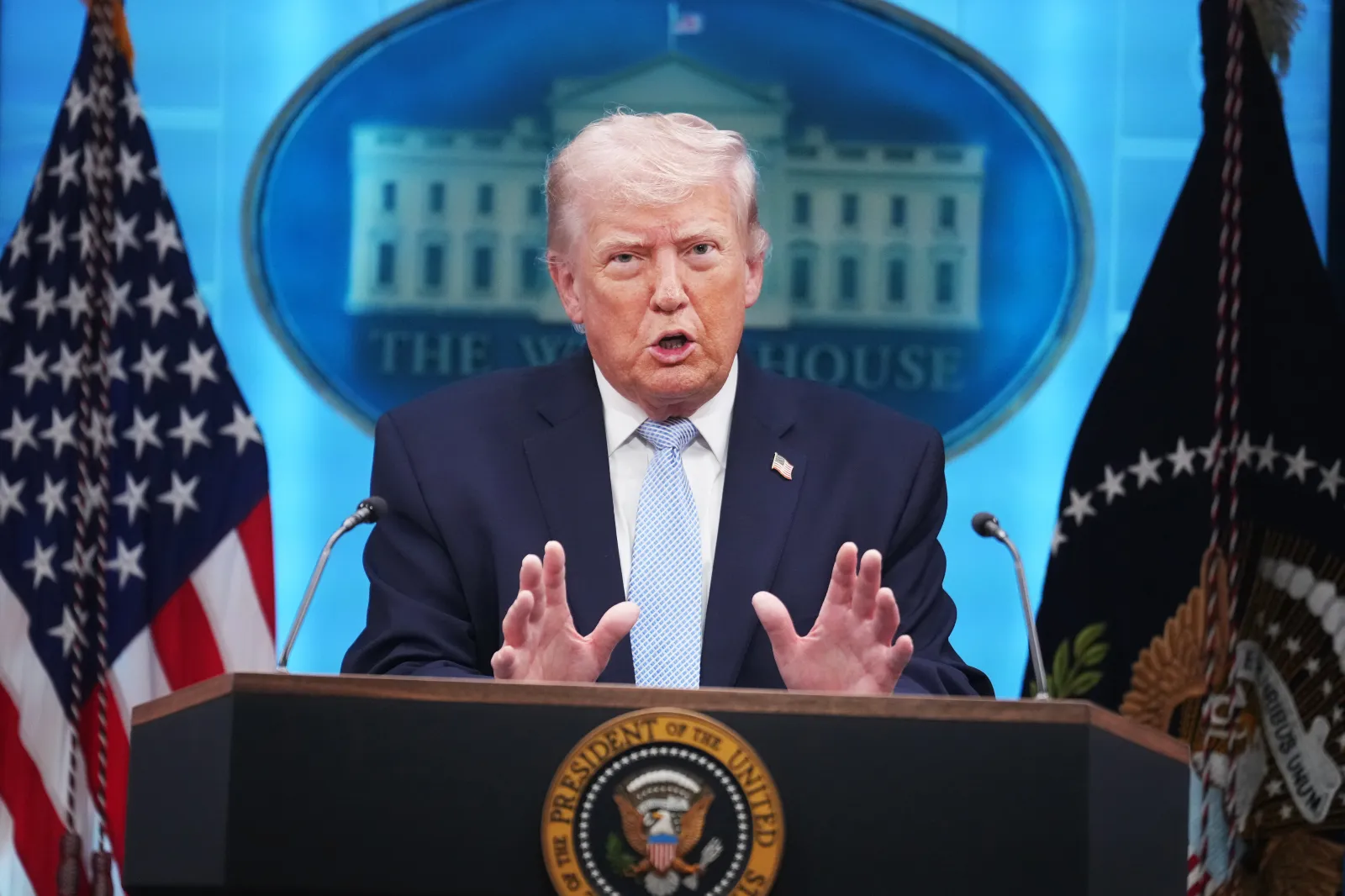
President Donald Trump said Tuesday night that he would pull back from earlier threats to expand U.S. attacks in Iran to include bridges, power plants and other civilian targets, provided Iran agrees to a two‑week ceasefire and reopens the Strait of Hormuz.
In a post to his Truth Social platform, Trump said Iran must agree to the “COMPLETE, IMMEDIATE, and SAFE OPENING of the Strait of Hormuz,” after which he would “suspend the bombing and attack of Iran for a period of two weeks.”
Iran accepted the ceasefire within a half hour of the announcement, according to a report from The New York Times citing three Iranian officials who said the new supreme leader, Ayatollah Mojtaba Khamenei, approved the deal.
Read More on U.S.
...
The Context
The Strait of Hormuz typically carries nearly a fifth of the world’s oil and natural gas; its closure after U.S. and Israeli strikes in late February has driven up fuel prices, heightened recession risks and intensified pressure on Washington to reach a negotiated end to the six-week conflict, multiple outlets reported.
Casualties have mounted across the Middle East, with more than 5,000 killed in nearly a dozen countries, including over 1,600 civilians in Iran, according to tallies cited by Reuters.
What To Know
Trump set a Tuesday 8 p.m. EDT deadline for Iran to allow traffic through the strait and warned Iran could be “taken out” in one night, adding that “every bridge” and “every power plant” in Iran would be destroyed if Tehran refused.
Less than two hours before the deadline, Trump announced the ceasefire in a Truth Social post, saying in part, "Based on conversations with Prime Minister Shehbaz Sharif and Field Marshal Asim Munir, of Pakistan, and wherein they requested that I hold off the destructive force being sent tonight to Iran, and subject to the Islamic Republic of Iran agreeing to the COMPLETE, IMMEDIATE, and SAFE OPENING of the Strait of Hormuz, I agree to suspend the bombing and attack of Iran for a period of two weeks," adding, "This will be a double sided CEASEFIRE!"
Pakistani Prime Minister Shehbaz Sharif had advanced a framework calling for an immediate ceasefire followed by negotiations to finalize a broader peace deal within 15 to 20 days, according to Reuters. He publicly urged Trump to extend his deadline by two weeks and asked Iran to open the strait for the same period as a goodwill gesture.
Tehran had previously rejected a short-term ceasefire and said it would not reopen the Strait of Hormuz under deadline pressure, while saying it had outlined a 10-clause response covering an end to conflicts in the region, safe passage protocols in Hormuz, lifting of sanctions and reconstruction, Iran’s IRNA and Reuters reported Monday, with a senior Iranian official telling Reuters that Washington was not ready for a permanent ceasefire.
What People Are Saying
Trump, also on Truth Social Tuesday night: "... We have already met and exceeded all Military objectives, and are very far along with a definitive Agreement concerning Longterm PEACE with Iran, and PEACE in the Middle East. We received a 10 point proposal from Iran, and believe it is a workable basis on which to negotiate. Almost all of the various points of past contention have been agreed to between the United States and Iran, but a two week period will allow the Agreement to be finalized and consummated. On behalf of the United States of America, as President, and also representing the Countries of the Middle East, it is an Honor to have this Longterm problem close to resolution. Thank you for your attention to this matter! President DONALD J. TRUMP"
Esmaeil Baghaei, spokesperson for Iran’s Foreign Ministry, at a news conference, per CNBC's Monday report: “Negotiations were incompatible with ultimatums and threats to commit war crimes.”
What Happens Next
The ceasefire will take immediate effect and last for two weeks, the Associated Press reported.
Regional militaries remained on high alert as U.S. and Israeli strikes continued and Iran threatened further retaliation, while energy markets and commercial shipping gauged the risk of continued closure of the Strait of Hormuz.
Update 4/7/26, 7:10 p.m. ET: This article has been updated with further information.
View 0 Comments
Submit Correction
View Editorial & AI Guidelines