...

By Andrew Stanton
Reporter
0
Share
Newsweek is a Trust Project member
See more of our trusted coverage when you search.Prefer Newsweek on Googleto see more of our trusted coverage when you search.
President Donald Trump may be siding with progressive Senators Bernie Sanders and Elizabeth Warren on credit card interest rates.
Newsweek reached out to spokespersons for Warren and Sanders for comment via email.
Why It Matters
Trump announced support for a one-year cap of 10 percent on credit card interest rates, writing in a Truth Social post on January 9 that Americans are being “ripped off” by credit card companies “charging Interest Rates of 20 to 30%, and even more.”
Read More on Politics
Such a proposal has bipartisan support in Congress, with Sanders, a Vermont independent, and Warren, a Massachusetts Democrat, being among the most vocal proponents for a cap. Agreement on this issue represents a rare moment when progressives and conservatives may come together to advance legislation, though it’s unclear whether this proposal has broader support in Congress.
...
What To Know
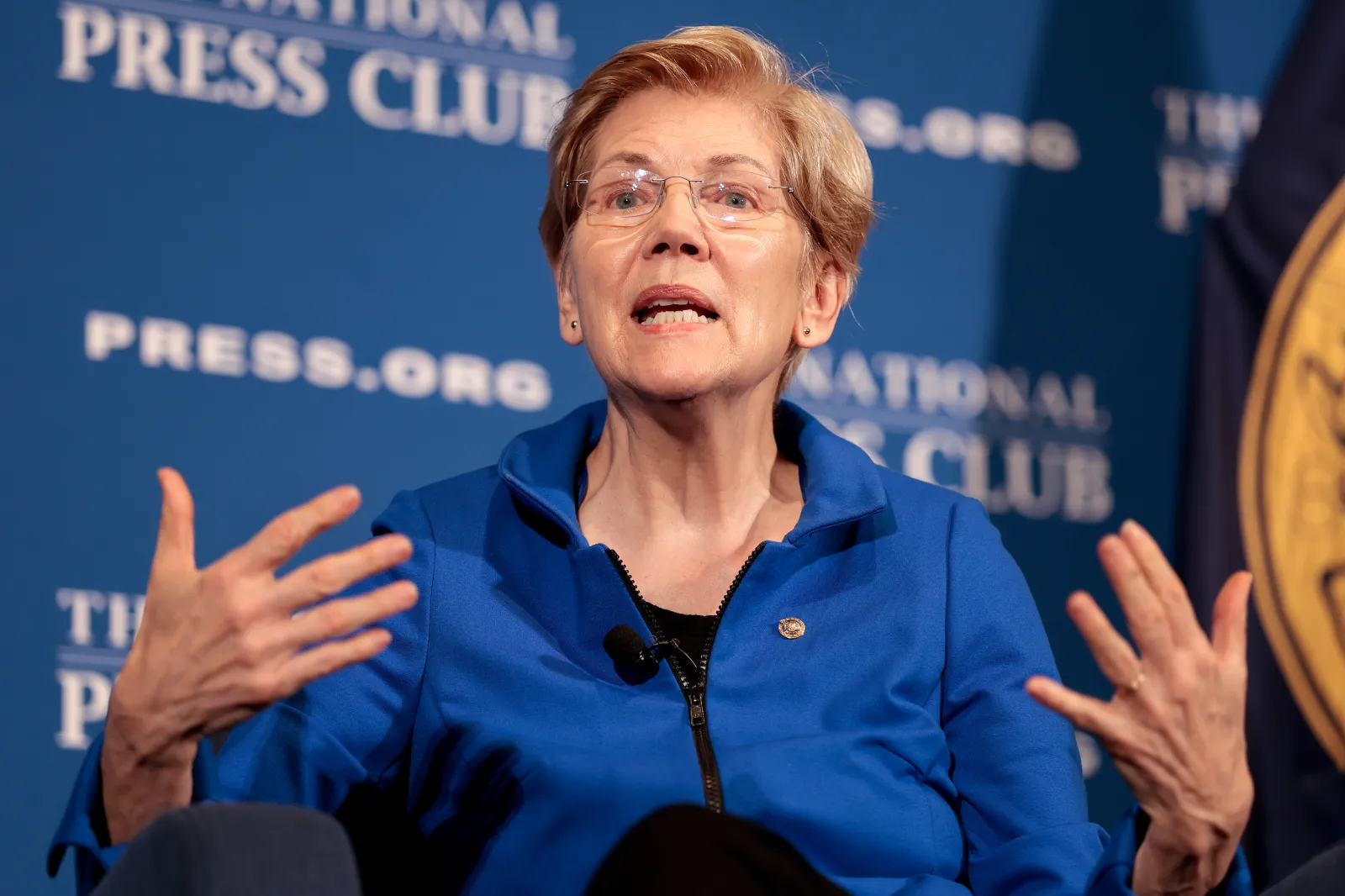
Warren received a call from Trump after giving a speech criticizing Trump’s economic agenda and accusing him of not doing enough to lower costs for Americans, the senator said in a statement released Monday.
“After my speech, the President called me, and I delivered this same message on affordability to him directly,” Warren wrote. “I told him that Congress can pass legislation to cap credit card rates if he will actually fight for it. I also urged him to get House Republicans to pass the bipartisan ROAD to Housing Act, which passed the Senate with unanimous support and would build more housing and lower costs.”
A White House spokesperson confirmed to Newsweek that Trump and Warren had a “productive call about credit card interest rates and housing affordability for the American people.”
Robert Y. Shapiro, a professor of political science at Columbia University, told Newsweek that the alliance is not as surprising as one may think because “this is a consumer protection issue for which they both think credit card interest payments are too high.”
Ross K. Baker, distinguished professor emeritus of political science at Rutgers University, told Newsweek that just talking about credit card interest has political value.
“It’s after Christmas," he said. "It’s a time when people are sensitive to the fact that the Christmas tree is out the door, the presents have all been opened and either used or returned, and now the bill comes from Visa or from any of the other credit card companies, so people are very focused on that."
Trump may be trying to signal that he is concerned about the well-being of Americans and view Warren as an "avenue to those Americans," Baker added.
Sanders has introduced a bill alongside Senator Josh Hawley, a Missouri Republican, that would cap credit card interest rates at 10 percent for five years.
“Of course, this flies in the face of Trump wanting to close Consumer Financial Protection Bureau (CFPB), which Warren has long championed,” Shapiro said.
They introduced that bill in February 2025, highlighting Trump’s support for it in a statement released at the time. Sanders accused credit card companies of “extortion and loan sharking,” rather than working to make credit available.
Proponents of capping credit card interest rates argue that credit card companies have allowed Americans to become buried in debt by charging such high interest rates. Critics, however, raised concerns about whether such a policy would make it more difficult for Americans to be approved for credit cards.
The Federal Reserve Bank of New York found in March 2025 that 74 percent of Americans have at least one credit card. Those cards “serve as the main method of payment for most individuals” and are the “primary source of unsecured borrowing,” the report found. The average credit card interest rate is about 19.65 percent, according to Bankrate.
Progressive lawmakers like Warren and Sanders rarely side with Trump. Warren has continued to rebuke Trump following their phone call, criticizing his approach to Venezuela in a social media post on Tuesday morning.
Sanders, meanwhile, has been skeptical about whether Trump’s proposal. He told Punchbowl News that Trump is an “opportunist.” He said that while Trump says he supports capping interest rates now, “tomorrow will be something else.”
Whether the proposal gains traction in Congress remains to be seen.
Historically, Republicans may be influenced by the banking industry on this sort of issue, but have also been hesitant to push back against Trump policies, Shapiro said.
“Here, however, Trump, knowing the Republican opposition, may just be posturing on this to gain public credit for his position, even if it might have little chance of passing. On the other hand, passing legislation would not require many Republican votes, assuming all Democrats would support it. Then we would see if Trump's position is sincere,” Shapiro said.
Democrats may be able to push this issue if they reclaim control of Congress in the midterms, he said.
Eric Swanson, an economist at the University of California, Irvine, told Newsweek that the cap would “force credit card issuers to change their business model in order to avoid losing money on the business,” as high default rates contribute to credit card companies being low-margin businesses.
“The main way they would probably do this is by raising annual fees on their credit cards," he said. "Many credit cards today have no annual fee, and that would have to change.
They could also increase fees to merchants, but that would lead to resistance as merchants would likely have to raise prices or implement their own credit fee, he said.
What People Are Saying
Marc Short, former chief of staff to former Vice President Mike Pence, on X: “When Bernie Sanders, Elizabeth Warren and Donald Trump are on the same economic page, something is wrong.”
Representative Alexandria Ocasio-Cortez, a New York Democrat, in a March 2025 statement announcing a similar bill to Sanders' in the House: “Credit cards with high interest rates regularly trap working people in endless cycles of debt. At a time when families are struggling to make ends meet, we cannot allow big banks to shake down our communities for profit. During his campaign, President Trump pledged to cap credit card interest rates at 10%. We're making that pledge more than a talking point by introducing legislation to protect working people from remaining trapped under mountains of debt.”
The Bank Policy Institute, American Bankers Association, Consumer Bankers Association, Financial Services Forum and Independent Community Bankers of America, in a joint statement: "We share the President’s goal of helping Americans access more affordable credit. At the same time, evidence shows that a 10 percent interest rate cap would reduce credit availability and be devastating for millions of American families and small business owners who rely on and value their credit cards, the very consumers this proposal intends to help."
What Happens Next
Trump has said he would like to see a cap in place by January 20, which would mark one year after his second term began. But it’s yet to be seen whether Congress will move to advance this proposal over the coming week.
Update 1/13/26, 2:15 p.m. ET: This story was updated with additional information.
In a polarized era, the center is dismissed as bland. At Newsweek, ours is different: The Courageous Center—it's not "both sides," it's sharp, challenging and alive with ideas. We follow facts, not factions. If that sounds like the kind of journalism you want to see thrive, we need you.
When you become a Newsweek Member, you support a mission to keep the center strong and vibrant. Members enjoy: Ad-free browsing, exclusive content and editor conversatiopns. Help keep the center courageous. Join today.
Help keep the center courageous. Join today.


View 0 Comments
Submit Correction
View Editorial & AI Guidelines