...

By Jasmine Laws
Reporter
0
Share
Newsweek is a Trust Project member
See more of our trusted coverage when you search.Prefer Newsweek on Googleto see more of our trusted coverage when you search.
The Trump administration has re-emphasized its warnings to states over a widely used practice that involves children in foster care losing their Social Security benefit checks.
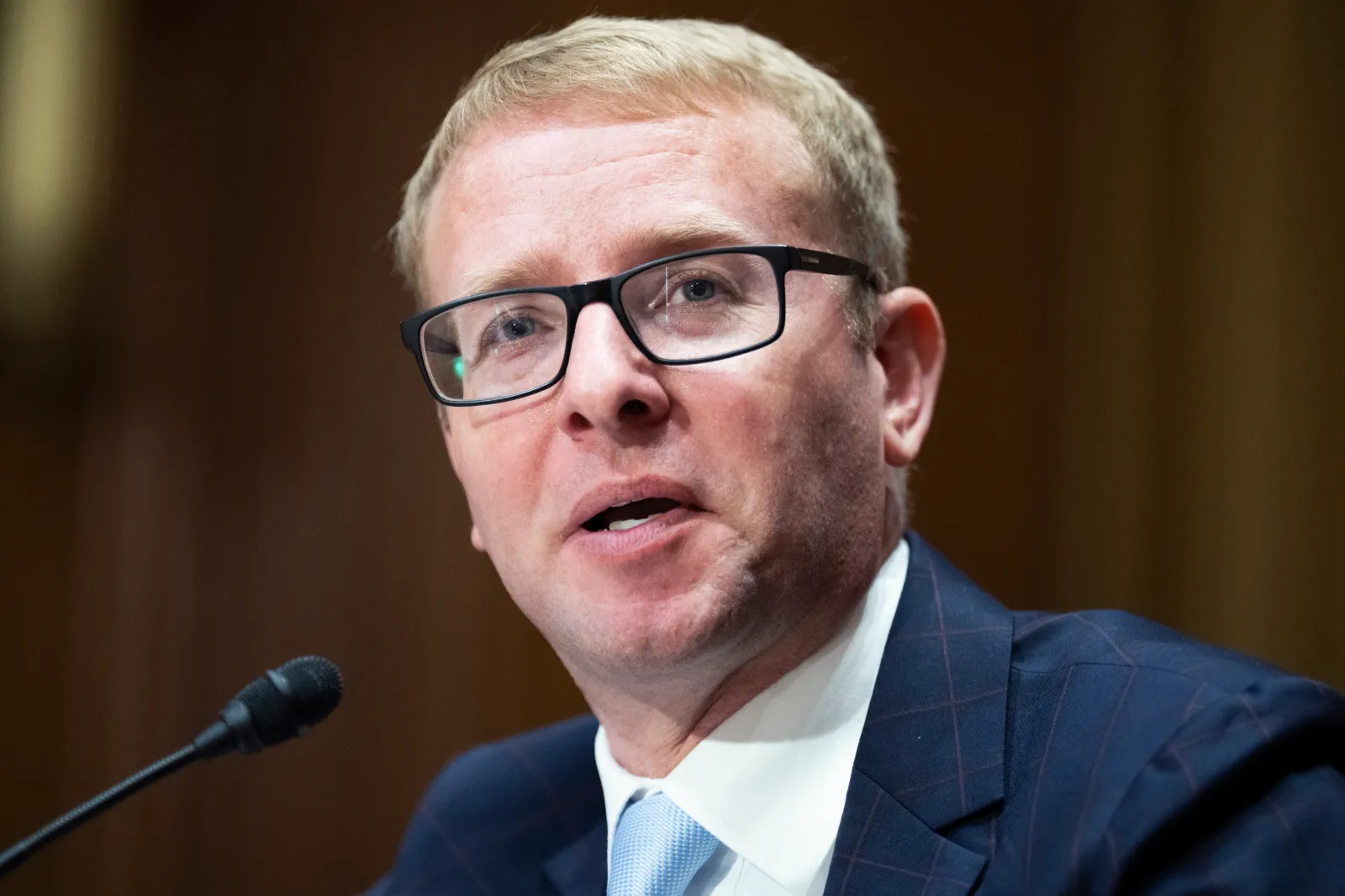
In an interview with NPR, an assistant secretary of the U.S. Department of Health and Human Services (HHS) Alex Adams said that these benefits "might be the last resources that your deceased parents could leave behind for their children."
"It's morally shocking to me and it's morally corrupt," he added.
Read More on News
This comes after HHS said in December that the Administration for Children and Families (ACF) had sent letters to 39 governors telling them to end the practice of state child welfare agencies intercepting the Social Security survivor benefits of children in foster care. It is not clear which states the letters were sent to.
A HHS spokesperson told Newsweek that the ACF is "responsible for protecting the best interest of children nationwide. To that end, ACF notified 39 governors back in December, encouraging them to take immediate action to end the practice of diverting foster youth’s earned Social Security survivor benefits."
They added that since the ACF’s initial notification, New Jersey has signed legislation stopping the practice, although they did not name any of the other states contacted.
"ACF, in coordination with the Social Security Administration, is working with other states to update their policies and provide resources and technical assistance to help states ensure these benefits are preserved to support foster youth as they transition out of state care," the spokesperson said.
Why It Matters
The warning has implications for around 5 percent of children in foster care, as around 27,000 children in foster care receive Social Security or Supplemental Security Income benefits, according to a Social Security Advisory Board report.
The most recent Adoption and Foster Care Analysis and Reporting System report indicates that there are more than 300,000 children in the U.S. child welfare system.
Children receiving Social Security survivor benefits have lost a parent, and the financial support is designed to help cover costs of housing, food and other essential needs when they no longer have the income of the parent supporting them.
...
What To Know
Social Security survivor benefits, which are earned on a parent’s work record, belong to the child. However, if the child cannot manage the benefits directly, a representative payee can be appointed.
The payee must only use the benefits for the child's wellbeing and interests, and any unused monthly benefits should be saved for future costs, such as education fees, accommodation fees and larger purchases like a car for example.
Children generally receive 75 percent of the parent's benefit, although, there is a limit to how much a family can receive. The average monthly payment for children of deceased workers, based on a June 2025 Social Security Administration report, was just over $1,100.
The process is designed so that the child receives federal support directly, without the money reaching third parties. But, according to HHS, state child welfare agencies often intercept the benefits and "uses these funds to reimburse their own costs."
In his interview with NPR, Adams described this process as an "orphan tax" and said that "there is no moral justification for why orphans should have to pay their own way."
"They are not in foster care by any fault of their own. And they certainly should not be asked to pay their own bill," he added.
Adams heard the story of a boy (now an adult) who was affected by this very practice. Justin Kasieta, 25, lost his father to cancer when he was 13, and the survivor benefits supported his family for some time, according to NPR.
However, when his mother's health deteriorated, Kasieta and his four siblings went into foster care, and over the course of three years, Kasieta said the state child welfare agencies claimed $18,000 of his checks.
While Kasieta said that he was "really the exception to the rule," as he got scholarships to go to college and now has a corporate investment job in Atlanta, he said most children "will become homeless. They won't go to college. They will be unemployed."
What People Are Saying
HHS Secretary Robert F. Kennedy Jr. said in a statement: "At HHS, our guiding principle is simple: every child deserves a home and a fair chance to thrive. But when state agencies stack the deck against children, we step in. In the Trump Administration, we are committed to ensuring every child in America has the chance to reach their full potential."
What Happens Next
In his role as Idaho's Department of Health and Welfare director, Adams brought in a directive in May 2025 to end the practice in the state, and now hopes to stop the practice happening in the 37 states recently contacted by the ACF.
View 0 Comments
Submit Correction
View Editorial & AI Guidelines