...

By Gabe Whisnant
News Editor
0
Share
Newsweek is a Trust Project member
See more of our trusted coverage when you search.Prefer Newsweek on Googleto see more of our trusted coverage when you search.
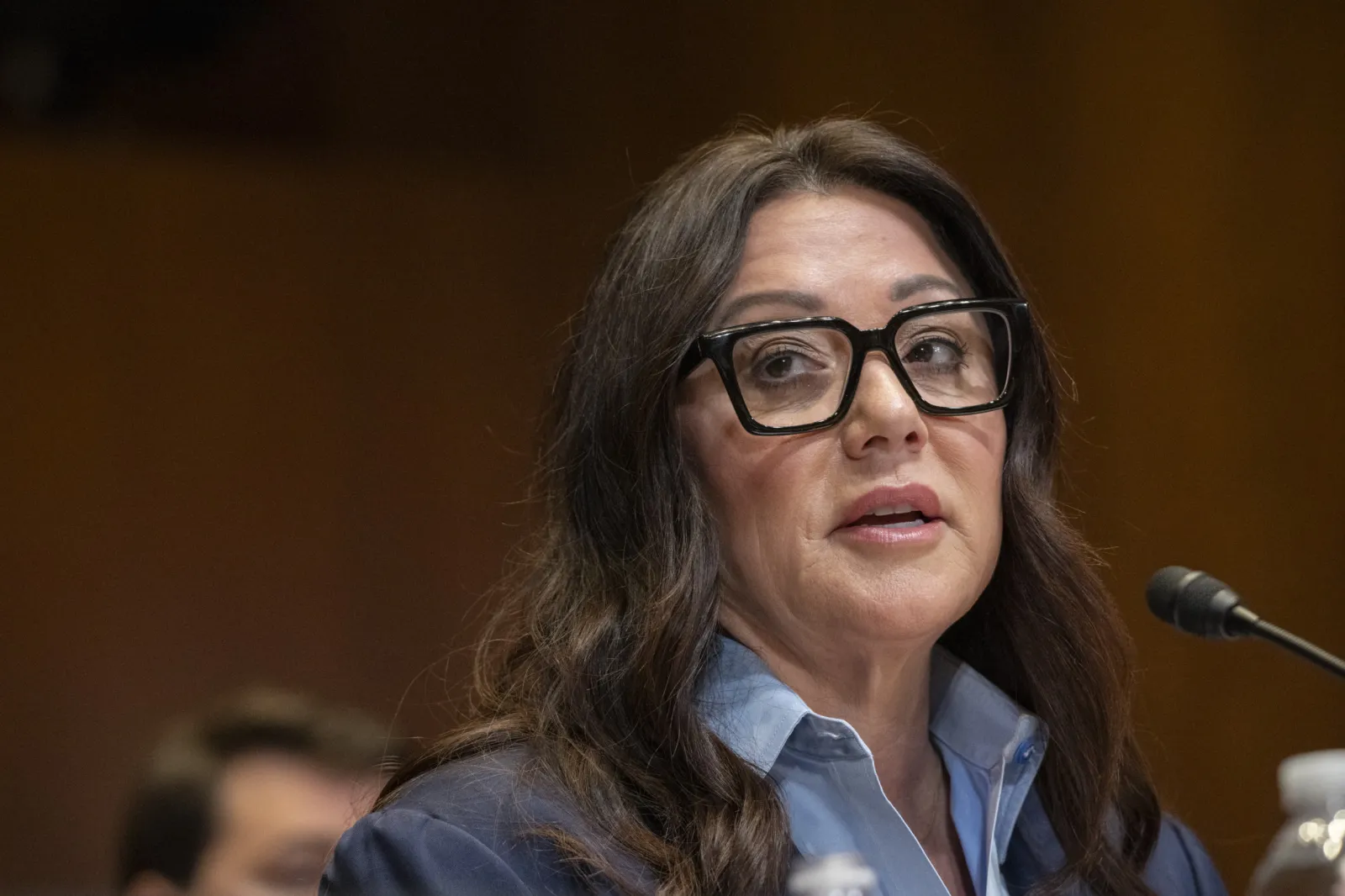
Secretary of Labor Lori Chavez-DeRemer blamed data collected during President Joe Biden's administration after a report Tuesday showed that the U.S. job market was much weaker in 2024 and early this year than originally reported.
U.S. employers added 911,000 fewer jobs than initially reported in the 12 months ending in March 2025, the Labor Department said Tuesday.
The report comes just days after the Bureau of Labor Statistics (BLS) said the economy created only 22,000 jobs in August, fueling concerns that President Donald Trump's unpredictable economic policies — particularly steep, erratic tariffs on imports — are discouraging businesses from hiring.
Read More
Amy Coney Barrett Responds to Concern Supreme Court Protecting Donald Trump3 min read

Donald Trump Reacts to Image of Alleged Epstein Birthday Note4 min read

ICE Detained Dad in US Since Age 7 as He Dropped His Son Off at School4 min read

President Donald Trump's Labor Secretary posted on X, "Today's massive downward revision gives the American people even more reason to doubt the integrity of data being published by @BLS_gov. It's imperative for the data to remain accurate, impartial, and never altered for political gain. Leaders at the bureau failed to improve their practices during the Biden administration, utilizing outdated methods that rendered a once reliable system completely ineffective and calling into question the motivation behind their inaction.
Her post continued, "@POTUS and the Administration are putting a stop to years of neglect. We're committed to finding solutions to these problems, including by modernizing to improve transparency and deliver more accurate and timely data for American businesses and workers."
...
Bureau of Labor Statistics Jobs Report: What We Know
The update showed sharp downward adjustments across several sectors: leisure and hospitality — including hotels and restaurants — added 176,000 fewer jobs than first reported, professional and business services 158,000 fewer, and retailers 126,000 fewer.
White House press secretary Karoline Leavitt said in a statement, "Today, the BLS released the largest downward revision on record proving that President Trump was right: Biden's economy was a disaster and the BLS is broken. This is exactly why we need new leadership to restore trust and confidence in the BLS's data on behalf of the financial markets, businesses, policymakers, and families that rely on this data to make major decisions. Much like the BLS has failed the American people, so has [Federal Reserve Chair] Jerome 'Too Late' Powell — who has officially run out of excuses and must cut the rates now."
Sal Guatieri, senior economist at BMO Capital Markets, told the Associated Press the revisions painted "a much weaker portrait of the job market than initially thought." While the revisions don't speak directly to conditions since March, he noted, they suggest the labor market had less momentum heading into the trade war. Recent figures indicate it has weakened further, with monthly job creation averaging just 53,000 since March.
A similar revision last year, which showed 818,000 fewer jobs in the year through March 2024, drew sharp criticism from then-presidential candidate Donald Trump. He accused officials of "rigging" the numbers to disguise economic weakness and benefit Democrats ahead of the election, though he did not explain why the government would release the revised data just weeks before voters went to the polls. The final revisions, published in February 2025, were less severe but still negative, lowering payrolls by 589,000 compared with earlier estimates.
The latest downgrade is expected to intensify pressure on the Federal Reserve to cut interest rates at its meeting next week in an effort to bolster growth. James Knightley, an economist at ING, anticipates additional cuts in both October and December.
In a commentary, Knightley argued that Labor Department estimates are often most inaccurate at economic turning points: "In the early stages of a downturn, they tend to overstate job creation from new start-ups — so-called 'births' — and underestimate losses from failing small businesses." The revisions, he said, point to job growth slowing from "an even weaker starting point than originally thought," and suggest even this year's poor results may be overstating labor market strength.
The political stakes remain high. After a weak July jobs report, Trump dismissed the economist overseeing the data and nominated a loyalist to replace her, angered in particular by revisions that subtracted 258,000 jobs from May and June payrolls.
Behind the scenes, government economists continue to grapple with a sharp drop in employer survey responses, a challenge that complicates job market estimates. Still, most economists and analysts maintain that the official payroll figures remain broadly reliable.
US Jobs Market Report: How is it calculated?
The Labor Department's monthly jobs report is based largely on two surveys: one of employers, measuring payrolls, and another of households, gauging employment status and participation. Because not all businesses respond and because new firms open while others close, the Bureau of Labor Statistics issues annual "benchmark revisions" to align the estimates with more comprehensive unemployment insurance tax records. These revisions often reveal that job growth was either overstated or understated in real time. Final revisions will be published in February 2026, giving a more complete picture of the labor market's true trajectory.
Why was BLS commissioner Erika McEntarfer fired?
President Trump dismissed BLS Commissioner Erika McEntarfer in August after a series of disappointing jobs reports and downward revisions that subtracted hundreds of thousands of positions from prior months' totals. Trump, angered by a July report that removed 258,000 jobs from May and June payrolls, accused McEntarfer of overseeing flawed data that undermined confidence in his economic policies. He swiftly replaced her with a loyalist, a move critics said risked politicizing the traditionally independent statistical agency.
Update: 9/9/25, 12:03 p.m. ET: This article was updated with new information and remarks.
Update: 9/9/25, 12:24 p.m. ET: This article was updated with new information.
This article includes reporting by the Associated Press.
View 0 Comments
Submit Correction
View Editorial & AI Guidelines