...

By Robert Alexander
Senior Crime & Court Reporter
0
Share
Newsweek is a Trust Project member
See more of our trusted coverage when you search.Prefer Newsweek on Googleto see more of our trusted coverage when you search.
Three major U.S. labor unions have filed a federal lawsuit against the Trump administration, alleging that it is using artificial intelligence and social media monitoring to suppress dissent among noncitizens living lawfully in the United States.
The United Auto Workers (UAW), Communications Workers of America (CWA), and American Federation of Teachers (AFT) filed the complaint in the Southern District of New York on October 16, 2025, accusing the Departments of State and Homeland Security of operating an unconstitutional “Challenged Surveillance Program,” according to reporting from Fox News and The Hill.
Why It Matters
At stake in the unions’ lawsuit is far more than immigration policy — it’s a test of how far the U.S. government can go in using artificial intelligence and social media surveillance to monitor political speech.
Read More on U.S.
The case raises core constitutional questions about whether noncitizens living lawfully in the United States enjoy the same First Amendment protections as citizens, and whether immigration enforcement can be used to silence dissenting viewpoints.
Its outcome could set national precedent for how digital surveillance, free expression, and government power coexist in an era when online speech increasingly defines public life.
...
What To Know
The Allegations: AI Surveillance And Chilled Speech
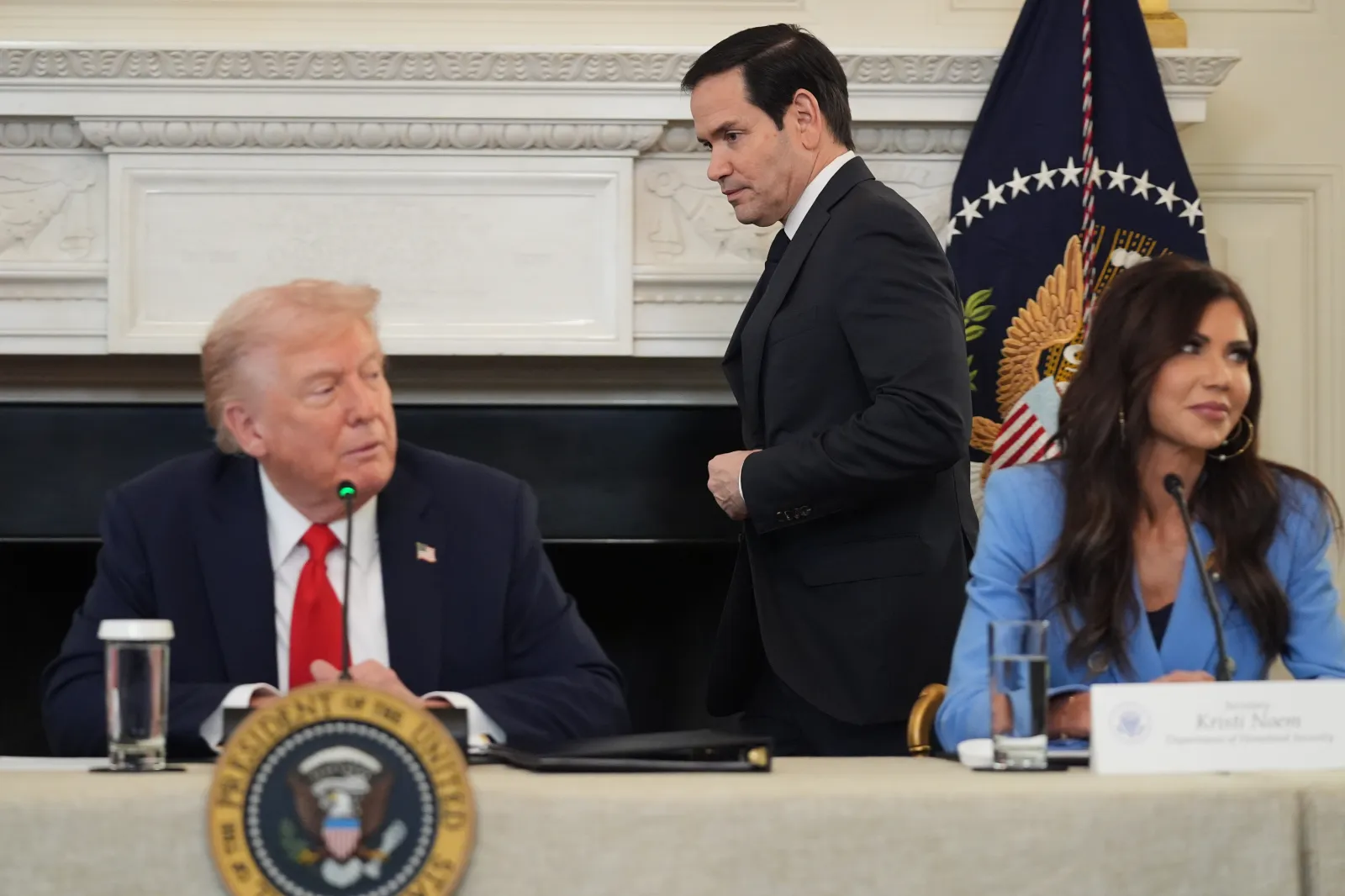
The suit names Secretary of State Marco Rubio and Homeland Security Secretary Kristi Noem, among others, claiming that the government is targeting visa holders and lawful permanent residents for expressing political views it disapproves of, including criticism of the United States, support for Palestine, or opposition to U.S. foreign policy.
According to the complaint, the program combines artificial intelligence with mass data collection to track social media activity, flagging “disfavored viewpoints” for immigration review.
Plaintiffs argue that federal officials have coupled this surveillance with a campaign of public threats — warning that noncitizens who post anti-American or anti-Israel content online risk deportation or visa revocation.
The unions claim these practices have had a “chilling effect” on lawful expression, with members self-censoring online and withdrawing from union and political activities out of fear of retaliation.
“Plaintiffs represent thousands of people whose speech is chilled by the threat of adverse immigration action if the government disapproves of anything they have expressed or will express,” the filing states.
The Broader Battle Over Free Speech And Vetting
The lawsuit follows Executive Order 14161, signed by President Trump on January 20, 2025, which directs federal agencies to ensure that foreign nationals “do not bear hostile attitudes toward [U.S.] citizens, culture, government, institutions, or founding principles.”
The order expanded interagency vetting programs to include enhanced social media screening and directed officials to “identify all resources” to exclude or remove individuals who present what the administration deems ideological or cultural threats.
Civil liberties groups and university associations have since argued that the order blurs the line between national security vetting and political censorship.
The unions allege that, under this policy, federal officials have revoked or denied visas based on online expression rather than credible security concerns.
In separate litigation, the American Association of University Professors and the Middle East Studies Association have presented evidence showing that the State Department and Immigration and Customs Enforcement (ICE) compiled social media reports on students and academics following campus protests related to the Israel-Gaza conflict.
In that case, a federal court in Massachusetts concluded that “non-citizens lawfully present here in the United States actually have the same free speech rights as the rest of us,” rejecting the administration’s argument that such protections apply only to citizens.
The plaintiffs in the New York suit seek a declaration that the surveillance program is unconstitutional, an injunction halting its operation, and an order requiring the government to purge any records derived from online monitoring.
The unions say the policy has harmed their ability to organize and advocate, as members have withdrawn from leadership roles and reduced participation in union communications.
“This loss of engagement has harmed the plaintiffs’ ability to further their organizational missions,” the complaint states.
The Departments of State and Homeland Security have not yet commented on the litigation.
The administration has defended its online monitoring efforts as a necessary component of “enhanced vetting” to protect national security.
The case—International Union, United Automobile, Aerospace and Agricultural Implement Workers of America et al. v. United States Department of State et al.—is expected to test the limits of the First Amendment’s protections for lawful noncitizens in the context of digital surveillance and immigration enforcement.
What People Are Saying
Tommy Pigott, State Department principal deputy spokesperson, said on October 17, 2025: "The United States is under no obligation to allow foreign aliens to come to our country, commit acts of anti-American, pro-terrorist, and antisemitic hate, or incite violence. We will continue to revoke the visas of those who put the safety of our citizens at risk.”
UAW/EFF press release, October 16, 2025: “We seek to stop this unconstitutional surveillance program, which has silenced and frightened both citizens and noncitizens and hampered the ability of the unions to associate with their members.”
Golnaz Fakhimi, legal director of Muslim Advocates, said on October 16, 2025: “The administration is hunting online for an ever-growing list of disfavored viewpoints.”
What Happens Next
The next phase of the case will focus on whether a federal judge in New York grants a preliminary injunction to halt the government’s “Challenged Surveillance Program” while the lawsuit proceeds.
The administration is expected to seek dismissal, arguing that the unions lack standing and that the surveillance is a lawful security measure. If the case survives, it will move into discovery, potentially revealing how agencies have used social media data to monitor or penalize speech.
Any ruling on the injunction or dismissal will likely be appealed, and, given the case’s constitutional stakes, it could eventually reach the Supreme Court, shaping how U.S. law balances free speech and digital surveillance for years to come.
View 0 Comments
Submit Correction
View Editorial & AI Guidelines