...

By Dan Gooding
Associate News Editor
0
Share
Newsweek is a Trust Project member
See more of our trusted coverage when you search.Prefer Newsweek on Googleto see more of our trusted coverage when you search.
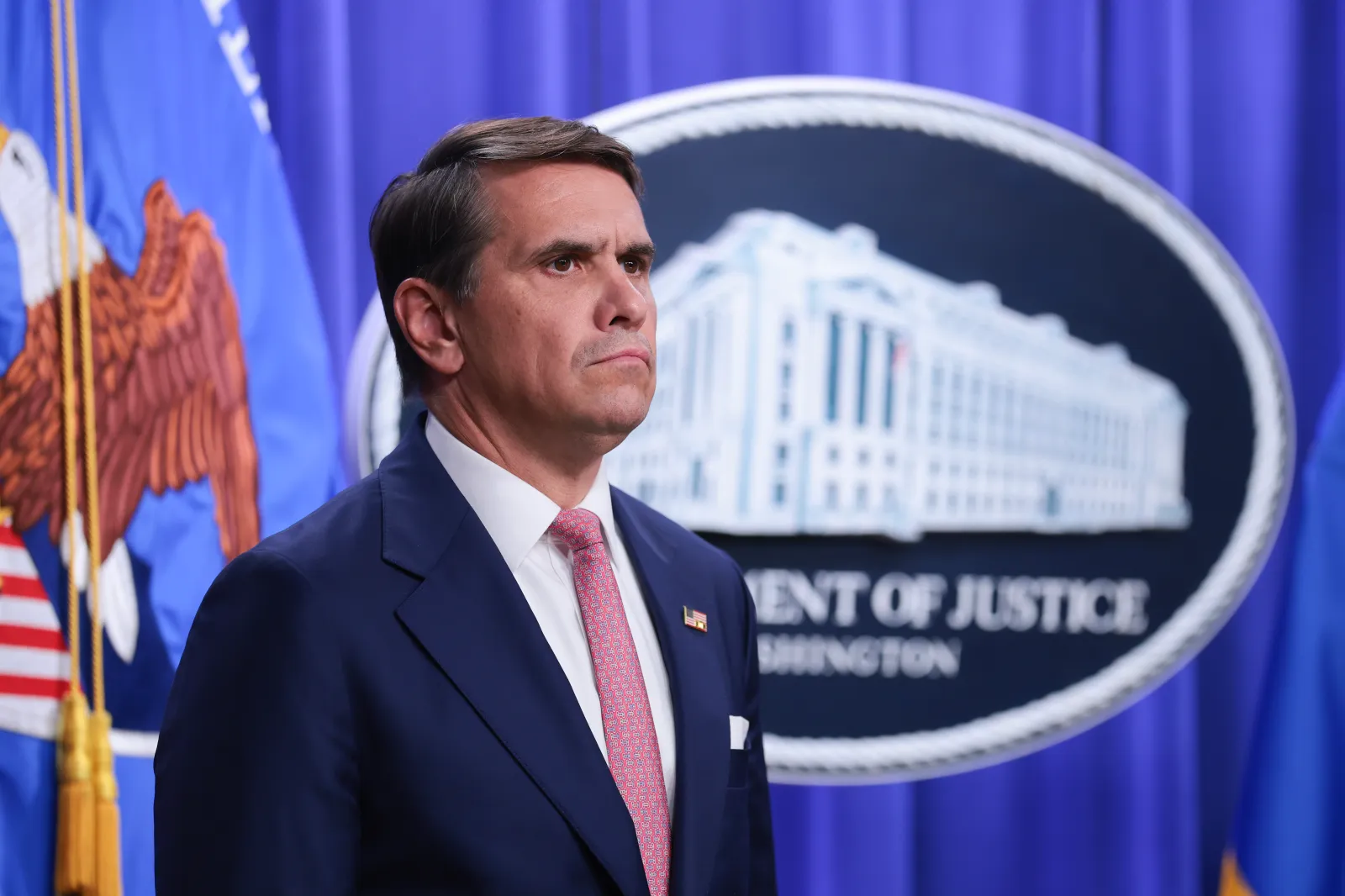
The United States will no longer honor extradition requests from the International Criminal Court (ICC) or participate in any of its investigations, acting Attorney General Todd Blanche said Thursday.
Blanche's letter to the president of the ICC appeared to be about the Trump administration restating and potentially hardening a longstanding U.S. position at a moment when the ICC has become increasingly active in politically sensitive conflicts, including the war between Israel and Hamas.
"Notwithstanding these well-established principles, the ICC has acted in an increasingly lawless and illegitimate manner," Blanche wrote. "It has repeatedly asserted jurisdiction over non-consenting countries, disregarded its own complementarity requirement, and pursued investigations that appear driven as much by political pressure and institutional self-interest as by legal merit."
Read More on World
The U.S. Department of Justice (DOJ) said the ICC has no jurisdiction over any U.S. citizens, wherever they are in the world.
"The U.S. has long taken this position that the international criminal court does not have jurisdiction over U.S. nationals, so while the sending of the letter is new, the position really isn’t," Jennifer Trahan, a clinical professor at NYU's Center for Global Affairs, told Newsweek.
"The international criminal court’s Rome Statute of course provides otherwise—if American nationals, or those of any state, not a party to the court, were to commit genocide, war crimes, or crimes against humanity in the territory of a state party. But the U.S. has long denied this."
Blanche argued that the U.S. Constitution vests judicial authority in American courts and that U.S. citizens should not be subjected to what he described as an unaccountable foreign tribunal. The letter also accused the ICC of selective enforcement and questioned the court's credibility and legitimacy.
Newsweek reached out to the ICC for comment via email Thursday afternoon.
...
What Is the ICC?
The ICC is the world's first permanent international criminal court. Based in The Hague, in the Netherlands, the tribunal investigates and prosecutes individuals accused of genocide, crimes against humanity, war crimes and the crime of aggression. The court was established by the Rome Statute, an international treaty that entered into force in 2002.
Unlike national courts, the ICC is designed to act as a court of last resort. Its mandate is to complement, rather than replace, domestic justice systems. The court generally intervenes only when national authorities are unwilling or unable to investigate and prosecute serious international crimes themselves.
More than 100 countries have joined the Rome Statute, but several major powers, including the United States, Russia, and China, are not members. The United States signed the treaty during the Clinton administration but never ratified it, and successive administrations have maintained varying degrees of skepticism toward the court.
What the DOJ Said: Read Todd Blanche's Letter
According to the DOJ, the United States will not cooperate with any ICC investigation, inquiry, summons, or proceeding involving U.S. persons. The department said it would oppose efforts to extradite or transfer Americans to the court and cited the American Servicemembers' Protection Act of 2002 as the legal basis for its position.
The law denies the ICC jurisdiction over U.S. personnel and authorizes measures to secure the release of Americans who might be detained under ICC authority, the DOJ said.
ECATS-2026-500687-ICC-Letter-Acting-AG-signed-6-29-2026-508.pdf.PDF
Why The Letter Is Significant
The announcement highlights a fundamental disagreement over the reach of international law and the power of international courts.
While the U.S. has never accepted the ICC's authority over its citizens, the court has maintained that it can investigate crimes committed on the territory of countries that are parties to the Rome Statute, regardless of the nationality of the accused. This dispute has long raised the possibility that American military personnel, government officials, or contractors could become subjects of investigations related to conflicts overseas.
The administration's declaration also reflects broader concerns among some U.S. policymakers that international institutions could be used to scrutinize American military operations or those of close allies. Supporters of the court, by contrast, have argued that international accountability mechanisms like the ICC are necessary when national governments are unwilling or unable to investigate allegations involving war crimes, crimes against humanity or genocide.
Stephen Rapp, a former U.S. Ambassador-at-Large for Global Criminal Justice during the Obama administration, told Newsweek that the letter represented, "a complete break from consistent bipartisan U.S. policy of supporting justice for the victims of mass atrocities in international courts where the affected states have given consent or where jurisdiction has been established by the UN Security Council."
Rapp said that the U.S. had been the leader in efforts to hold "the most powerful perpetrators" to account, from the Nuremberg trials through to post-Cold War tribunals. He added that the 2002 statute did allow for case-by-case basis assistance from the U.S. to the ICC.
""These are not cases where US courts have jurisdiction, or where there are other national courts with sufficient capacity or reach," Rapp said. "So, the effect of the Acting Attorney General's letter is to say to victims of the worst crimes known to humankind that we are no longer on their side."

...
What Controversies Have Surrounded the ICC?
The court has found itself at the center of disputes involving powerful countries that reject its authority.
Previous U.S. administrations objected to ICC investigations touching on U.S. military actions in Afghanistan, while Russia has rejected ICC actions related to the war in Ukraine. More recently, tensions have escalated over the court's investigations and arrest warrants connected to the Israel-Hamas conflict, prompting fierce opposition from Israeli officials and many of their supporters in Washington.
Another longstanding controversy concerns jurisdiction itself. Critics argue that the ICC should not be able to investigate nationals of non-member states that never consented to the Rome Statute.
The court and its supporters counter that crimes committed on the territory of member countries can fall under its authority regardless of a suspect's nationality, creating one of the most contentious legal debates in international law.
"I’m not particularly sure why this has come up because the earlier investigation into US crimes in Afghanistan has been deprioritized and to my knowledge is not moving forward," Trahan said.
"Sadly, this might relate to Ukraine, where the U.S. Congress passed legislation allowing the U.S. to cooperate with the ICC in relationship to investigating Russian war crimes and crimes against humanity. I don’t know that a letter can undo legislation, but it’s certainly a commitment not to provide cooperation."
Update 7/2/26, 4:58 p.m. ET: This article was updated with comment from Jennifer Trahan.
Update 7/3/26, 1:20 p.m. ET: This article was updated with comment from Stephen Rapp.
Contact Newsweek editors on this story: Gabe Whisnant, Sam Wilson, and Gray R. Thomas.
View 0 Comments
Submit Correction
View Editorial & AI Guidelines