
10
Loading video...

By Khaleda Rahman
National Correspondent
0
Share
Newsweek is a Trust Project member
See more of our trusted coverage when you search.Prefer Newsweek on Googleto see more of our trusted coverage when you search.
President Donald Trump has been accused of violating a federal criminal statute for the second time in as many days, with legal experts questioning his cash gifts to White House aides as well as a pledge to send $5,000 checks to Americans if Republicans retain control of Congress in November’s midterm elections.
The allegations center on two different sections of Title 18 of the U.S Code.
The revelation that Trump gave holiday cash gifts of $45,000 to Natalie Harp and two other aides prompted critics to argue that it ran afoul of 18 U.S.C. § 209, which generally bars executive branch employees from receiving compensation or any supplement to their salary from a source other than the federal government. The gifts were first reported by The Washington Post on Tuesday.
Read More on Politics
On Wednesday evening, Trump said he would give every American $5,000 if Republicans keep control of both the House and Senate. That quickly raised legal concerns, with some experts saying Trump’s proposal violates 18 U.S.C. § 597, a statute prohibiting expenditures made to influence voting. Others said it was legal since it was a promise made to all Americans during a campaign.
Asked for comment, a White House official defended the cash gifts to aides, saying in a statement to Newsweek that they were unrelated to the recipients' official government duties and therefore “entirely permissible under relevant legal and ethical standards.”
The official did not comment on the president’s pledge to give $5,000 checks to every American.
...
Questions Raised Over Cash Gifts to Aides
New financial disclosures released by the Trump administration revealed that Trump had given holiday cash gifts worth $45,000 each to executive assistant Natalie Harp, communications adviser Margo Martin and deputy director of Oval Office operations Chamberlain Harris, while Oval Office operations director Walt Nauta received $20,000.
Ethics experts said the payments appear to violate 18 U.S.C. § 209, titled "Salary of Government officials and employees payable only by United States."
Richard Painter, who served as chief White House ethics lawyer under former President George W. Bush, previously told Newsweek the payments fit the type of conduct the law was designed to prevent, given their size.
"If your employer gives you $50,000 at the end of the year, that's not a gift, that is salary," he said.
He also suggested the gifts could have political consequences for the president, saying Trump “could get himself impeached for it.”
A White House official said the gifts had nothing to do with government work.
The president “has a longstanding practice of giving Christmas gifts to people in his orbit, including at times employees and aides, both in government and in his time in the private sector,” the official told Newsweek. “The gifts at issue here have nothing to do with any of these individuals’ official government duties, and therefore are entirely permissible under relevant legal and ethical standards.”
Related Story

The Crude Honesty of Donald Trump’s $5,000 Dividend
Promise of $5,000 Checks Could Violate Law
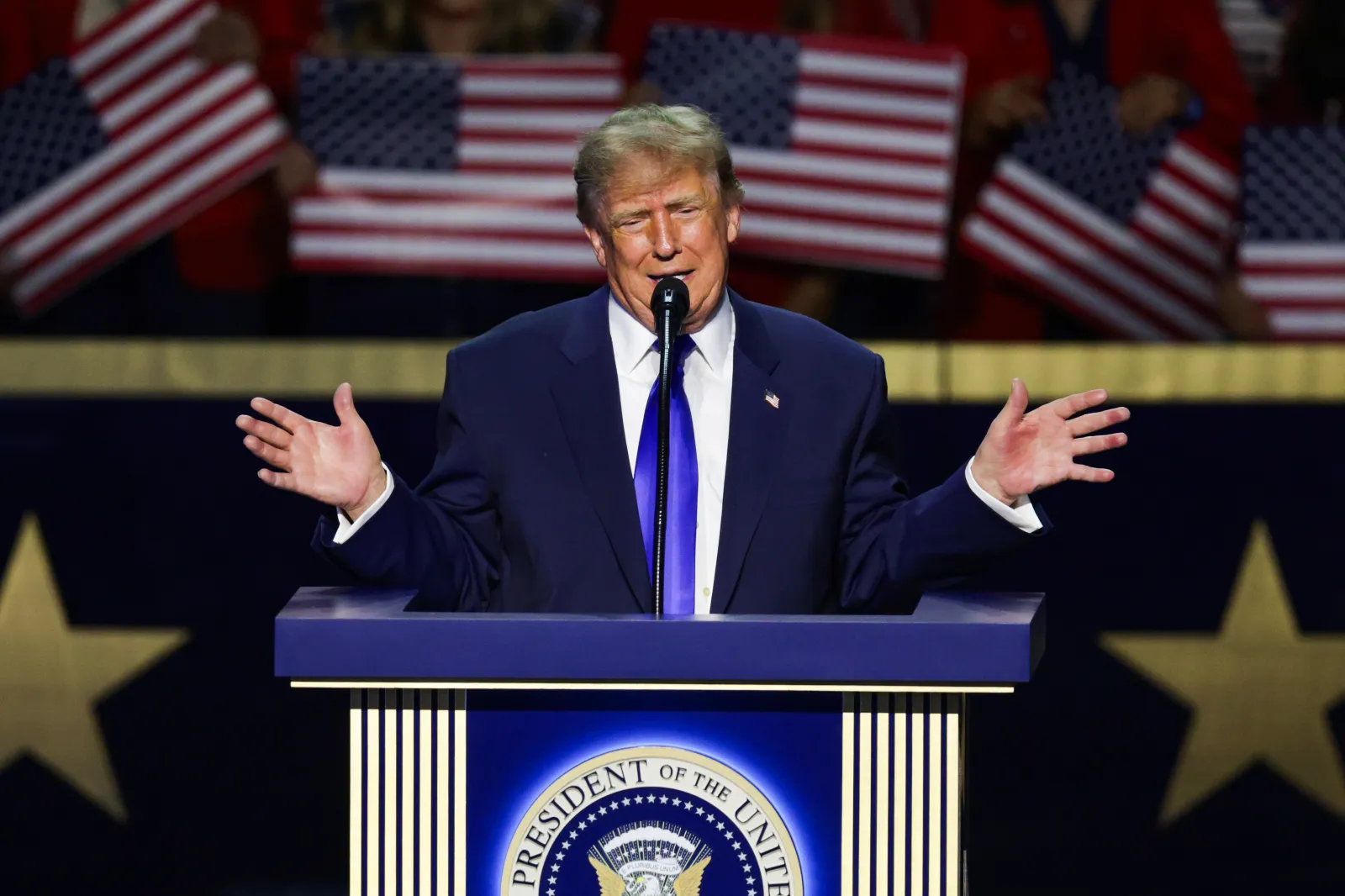
During the GOP's midterm convention in Dallas on Wednesday, the president pledged: "If the Republicans win the House of Representatives and the United States Senate, both of them, because of our tremendous economic success, I will issue a dividend to every adult citizen in the United States for $5,000."
The president likened the payments to a company's distributions to shareholders, and cited the nation's “tremendous strength and success economically.” However, Congress would need to approve or acquiesce to the payments.
The proposal quickly drew criticism, with some arguing it could implicate 18 U.S.C. § 597, which prohibits expenditures made to induce or influence voting.
“No, Mr. President you can't offer voters $5000 if the Republicans win the House and Senate,” Painter wrote on X, citing the statute. But others argued the proposal would be legal since the payment would go to everyone regardless of how they voted.
“This is a campaign promise,” New Mexico-based attorney John Day told the Associated Press. “It’s not a payment to individuals to try to get them to vote in a particular way.”
Democrats called it an empty promise and some accused Trump of seeking to buy votes.
“After making you sicker and poorer with his war, Donald Trump now wants to buy your vote with $5,000 in taxpayer-funded blood money,” California’s Democratic Governor Gavin Newsom wrote on X.
“The most corrupt man ever to occupy the Oval Office.”
Contact Newsweek editors on this story: Matthew Cannon and Sam Wilson.
View 0 Comments
Submit Correction
View Editorial & AI Guidelines