Getty Images

By Anna Skinner
Associate News Editor
0
Share
Newsweek is a Trust Project member
See more of our trusted coverage when you search.Prefer Newsweek on Googleto see more of our trusted coverage when you search.
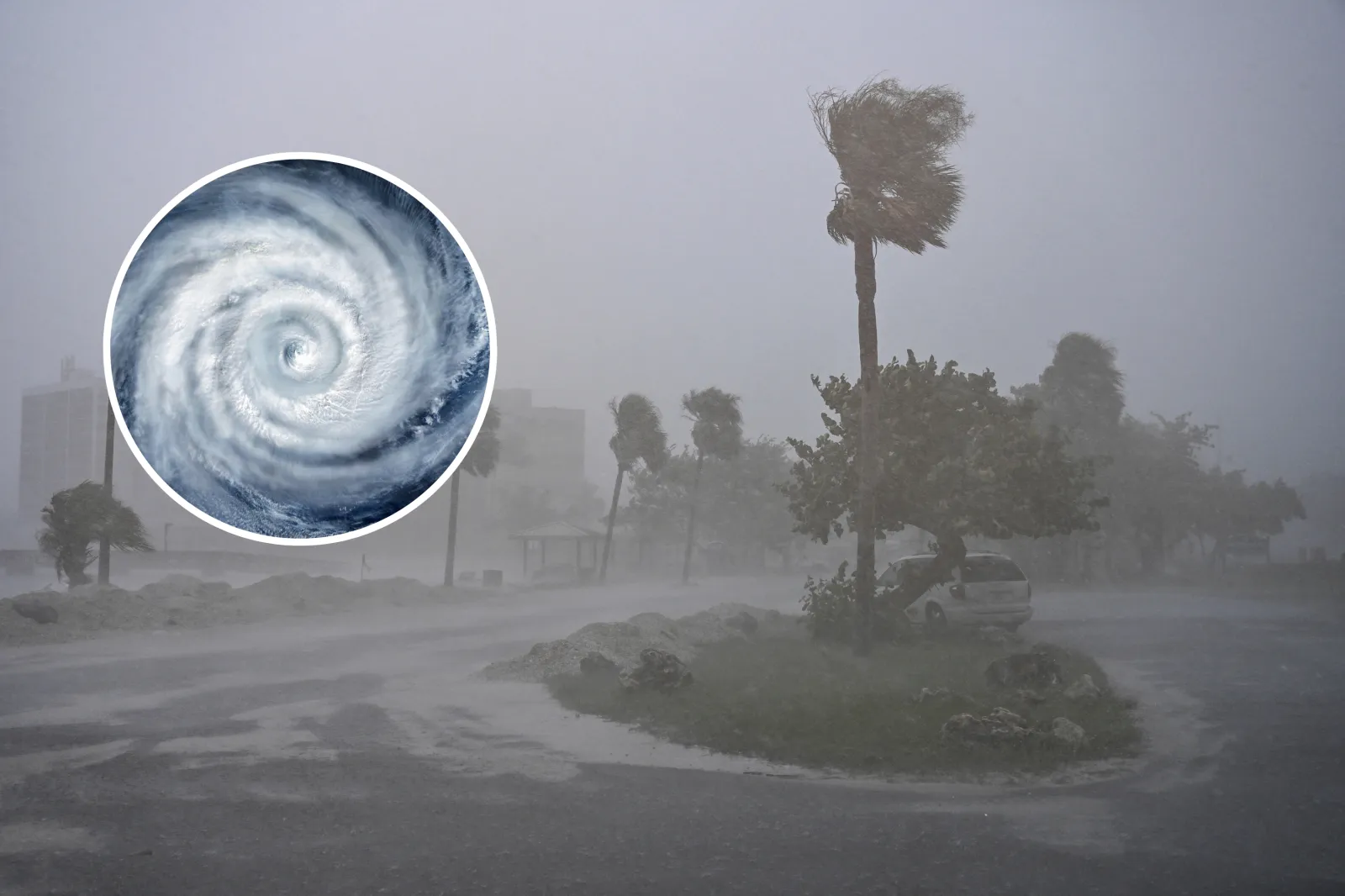
An artificial intelligence-driven weather forecast tool has flagged a potential early‑season signal in the Atlantic Ocean, prompting some meteorologists to note a low‑confidence hint of tropical development before the Atlantic hurricane season officially begins, according to posts circulating on social media.
If a storm develops, it would be considered "homegrown" because of its proximity to the U.S. East Coast, AccuWeather senior meteorologist Chad Merrill told Newsweek.
The Atlantic hurricane season runs from June 1 through November 30. Several forecasting agencies are anticipating a below-average Atlantic hurricane season, largely because El Niño conditions are expected to reduce the overall number of hurricanes in the Atlantic basin this season by increasing wind shear, which can disrupt storms as they try to form and intensify.
Read More on Weather
...
However, experts stress that fewer storms does not eliminate the risk, warning that a single powerful hurricane can still cause widespread damage if it makes landfall. Forecasters continue to urge coastal communities to stay prepared, noting that seasonal outlooks cannot predict where or when an individual storm may strike.
The National Hurricane Center (NHC) is not currently monitoring any tropical systems in either the Atlantic or Pacific basins, according to its latest official outlook. Experts stress that AI tools are increasingly being used as early pattern‑recognition aids, but operational forecasts and storm monitoring remain based on traditional observations and guidance from the National Hurricane Center (NHC).
The signal, shared by WOFL in Orlando meteorologist Noah Bergren comes from an experimental AI‑based forecasting model and does not indicate an active or imminent storm.
"Low probability but worth mentioning more just because it's the first time in 2026 the Google AI has showed some sign of tropical chance in the Atlantic," Bergren posted on X. "About 8-10 days now in the SW Atlantic."
The post caught the attention of other meteorologists.
"This time of the year, lingering and eventual washed out fronts in the Atlantic can serve as the starting point for lows to form," independent meteorologist Matt Devitt posted on X. "Considering water temps right now, they tend to be hybrids or subtropical systems. Not all, but a good amount. To Noah's point, right now only a few ensembles show the possibility and most indicate either a cold core, non-tropical low...or nothing at all. If anything changes, I'll let you know."
Chances Tropical Storm Will Form Before Hurricane Season Starts
In some years, tropical storms can form in late May after a cold front passes through, Merrill told Newsweek. When warmer water interacts with a stalled cold front in the Atlantic, it can create an area of low pressure that leads to tropical development.
If that were to occur in this case, development would occur in very late May or early June, Merrill said.
"It seems like it would be a pretty low chance of something actually happening before June 1, but probably not zero," Merrill said.
A potential storm path is not available because the storm has not formed.
The last time a tropical storm formed before Atlantic hurricane season began was in 2021, when Tropical Storm Ana formed on May 22. The storm, which did not make landfall, dissipated in the central Atlantic after a few days.
AccuWeather meteorologists are also monitoring potential tropical development that could arise in the Eastern Pacific Ocean closer to Mexico between May 26 and early June. The Eastern Pacific hurricane season starts on May 15.
How Many Hurricanes Are Expected This Year?
AccuWeather's outlook, released in late March, projects 11 to 16 named storms, four to seven hurricanes, and two to four major hurricanes—with three to five direct U.S. impacts anticipated. The central and eastern Gulf Coast, along with the Carolinas and parts of the Virginia coastline, are at higher-than-historical-average risk of significant tropical impacts this season, as is much of western Florida's coastline.
Colorado State University (CSU) hurricane researchers are predicting 13 named storms this season, with six expected to strengthen into hurricanes and two reaching major hurricane status, in which the storms are Category 3 or higher with sustained winds of at least 111 mph. Those projections fall slightly below long‑term averages but still represent a season capable of producing high‑impact landfalls.
There is a 32 percent chance that a major hurricane will make landfall along the U.S. coastline during the Atlantic season, according to CSU's initial forecast released in April. While that probability is lower than the long‑term historical average of 43 percent, experts stress that even a single storm can cause widespread destruction.
How to Prepare for Hurricane Season
With hurricane season approaching, emergency officials urge residents to prepare before any storm forms. That includes knowing whether their home is vulnerable to storm surge, flooding or high winds, identifying local evacuation routes, and making a plan for where to go if officials order evacuations. Federal forecasters stress that inland communities are also at risk, as tropical systems can bring deadly flooding and power outages far from the coast.
Experts also recommend assembling emergency supplies ahead of time, including enough food, water, medication and basic necessities to last several days if utilities are disrupted. People should have more than one way to receive weather alerts, such as wireless emergency alerts, weather radios and local notifications, especially in case power or internet service is lost during a storm.
Insurance and documentation are another key part of preseason planning. Officials recommend reviewing homeowners or renters insurance policies early, since flood damage is not covered by standard policies and flood insurance often comes with a waiting period. Residents are also encouraged to photograph valuable property and store important documents in waterproof containers or digital backups before hurricane season begins on June 1.
View 0 Comments
Submit Correction
View Editorial & AI Guidelines