...

By Sonal Nain
Newsletter Reporter/Producer
0
Share
Newsweek is a Trust Project member
See more of our trusted coverage when you search.Prefer Newsweek on Googleto see more of our trusted coverage when you search.
Originally from Caracas, Flora Martínez, 41, had moved from Venezuela about ten years ago. Now living in Colorado, US, she says she had "lost all hope" for her homeland long ago. For years, she hadn’t even checked the news. "It felt stagnant, like a vicious circle," she recalls. But recent developments surrounding Nicolás Maduro have pulled her back in, stirring both concern and reflection.
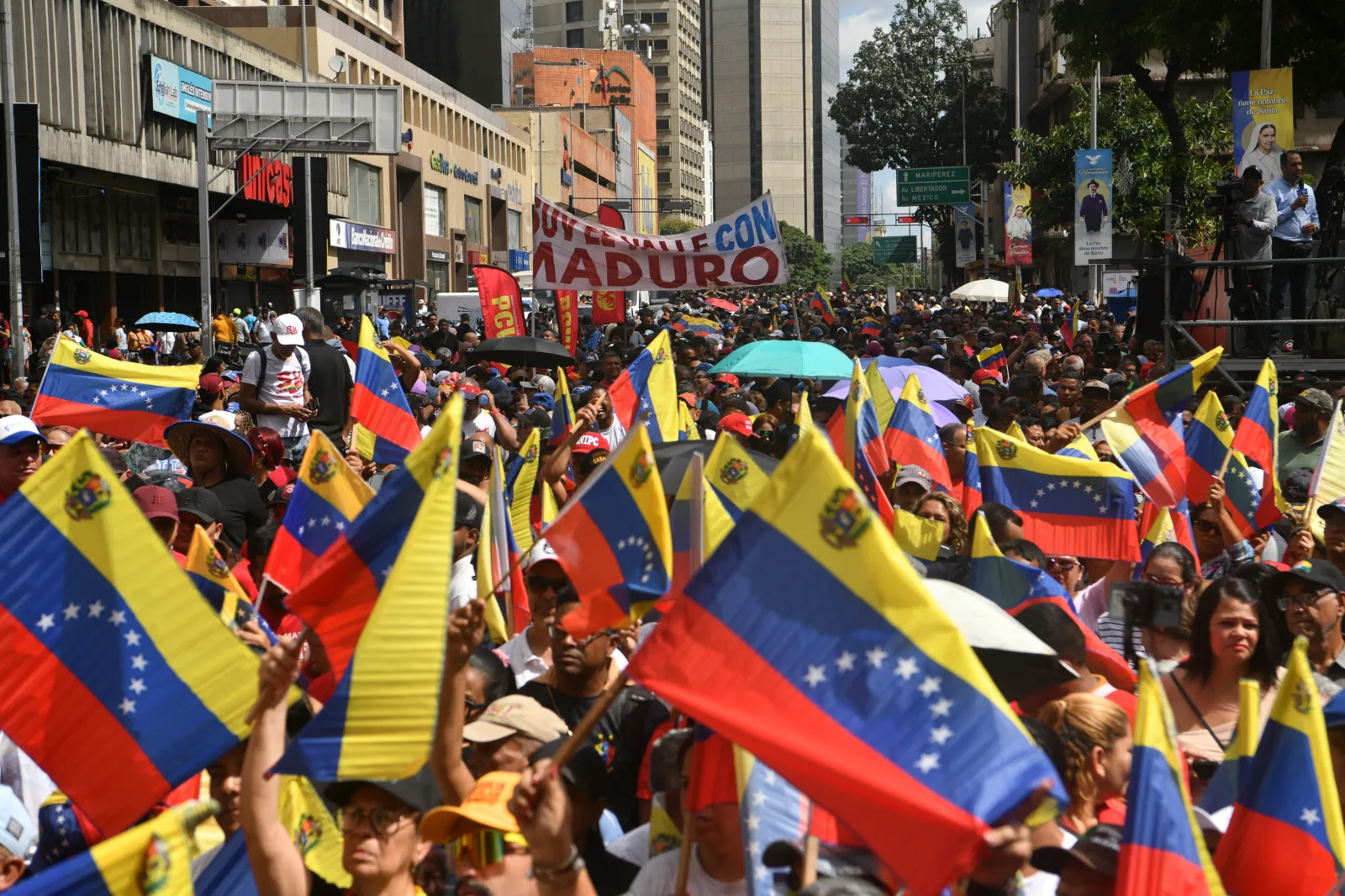
As news of Venezuela’s deposed president Maduro’s removal spread, confusion, celebration and speculation rippled through the country and across its vast diaspora. Newsweek spoke with Venezuelans both inside the country and abroad to understand what is happening on the ground, how people are reacting, and what they hope—or fear—comes next.
Martínez worries for the people still in Venezuela. "Out of arrogance and blind loyalty to the revolution, people in the country might ruin the opportunity that’s been given," she told Newsweek. Negotiations, she fears, could be mishandled, and a civil war could erupt if leaders insist on making "demanding" moves.
Read More on News
...
Martínez explained the delicate balance she sees in the government’s public messaging. "I think it might just be for show—keeping up anti-imperialist rhetoric so they don’t seem suspicious to their own people, even while they negotiate the transition*,*" she said. "It’s like their king was captured, but they haven’t actually surrendered yet."
Inside Venezuela, for instance, Michael Packman, a 60-year-old resident of Merida, Venezuela, said he first heard the news of Maduro being taken by U.S. forces in the early hours of Saturday, January 3. "My wife told me Venezuela had been attacked," he recalled. Living far from Caracas and other areas reportedly hit by U.S. operations, he relied on news feeds. "As someone living in country that has just come under an unprovoked attack by a foreign power, the immediate response is anxiety."
Like many others, Packman and his wife checked the streets and stocked up on food and gas. There were checkpoints*,* he said, but little panic. "The impression was that things were under control, following protocols*," he explained.* "It didn’t feel entirely unexpected." Since then, people are spending only on essentials, he said, but the country has not descended into chaos.
"Everything was very confusing," said Eduardo, a 40-year-old resident of Caracas (Newsweek was only provided with a first name). "From my house, you could hear the planes echoing in the distance. No one really knew what was happening—whether it was an internal coup or an action by the Americans. People rushed to the stores in panic and the streets looked like something out of The Walking Dead. On top of that, there’s an overwhelming sense of uncertainty and a deafening silence."
Trump’s announcement that he would "run" the country unsettled Packman. "It sounds very much like a flashback from the days prior to former president Hugo Chavez, when it was understood that Latin America was run from Washington." He worries that moving forward, social programs could shrink, deepening poverty and eventually increasing crime—even as he notes that criminal activity is currently at its lowest level in decades.
Distrust of official narratives has also shaped Martínez's view. When Maduro’s stepson was arrested in the U.S. with 800 kilograms of cocaine, Venezuelan media went silent for days. International coverage told one story, while national outlets framed it as an attack on the revolution. "The stepson declared himself guilty, but that never reached Venezuelan news," Martínez notes. She sees a similar pattern now: even as Trump and Delcy Rodríguez speak publicly about Venezuela’s future, their statements seem slightly different—yet, she suspects, it could all be part of the same careful performance to manage appearances.
Packman says although Maduro is absent, his government is still in place, and this does provide popular, political and especially military stability. "The whole situation, under careful analysis, would seem like a negotiated settlement between Venezuela and the US," he said. The United States secures a symbolic victory by taking Maduro, while Venezuela maintains its governing structure to avoid unrest. "A win-win, you could say,” he stated. “An expensive face-saving operation, but politically necessary."
However, the global reaction frustrates Martínez. She sees the international left as selectively interpreting events, sometimes more interested in criticizing Trump than supporting a peaceful transition in Venezuela. "It feels like they want this to become another Iraq or Vietnam, to justify their hatred for Trump," she says. Yet her concern is deeply personal—her father, a devoted leftist is living in Venezuela, "I sadly feel he deserves his government because he keeps choosing it."
Despite the tension, Martínez is cautious rather than celebratory. She worries that over-glorifying recent developments or giving thanks to foreign powers is premature. "Keeping Delcy Rodríguez in power was probably the best move," she reflects. She hopes it will appease Chavistas and prevent Venezuela from sliding into another conflict.
Eduardo told Newsweek that in Venezuela, "no one is celebrating, because we are still afraid of reprisals from the government. But at the same time, there is a feeling of happiness mixed with anxiety."
On the ground, Packman, said, Venezuelans are doing what they have always done. "People here are resilient. Improvising, adapting quickly, and moving on—that’s nothing new. It’s just the name of the game in Venezuela."
View 0 Comments
Submit Correction
View Editorial & AI Guidelines