...

By Steve Mollman
News Editor
0
Share
Newsweek is a Trust Project member
See more of our trusted coverage when you search.Prefer Newsweek on Googleto see more of our trusted coverage when you search.
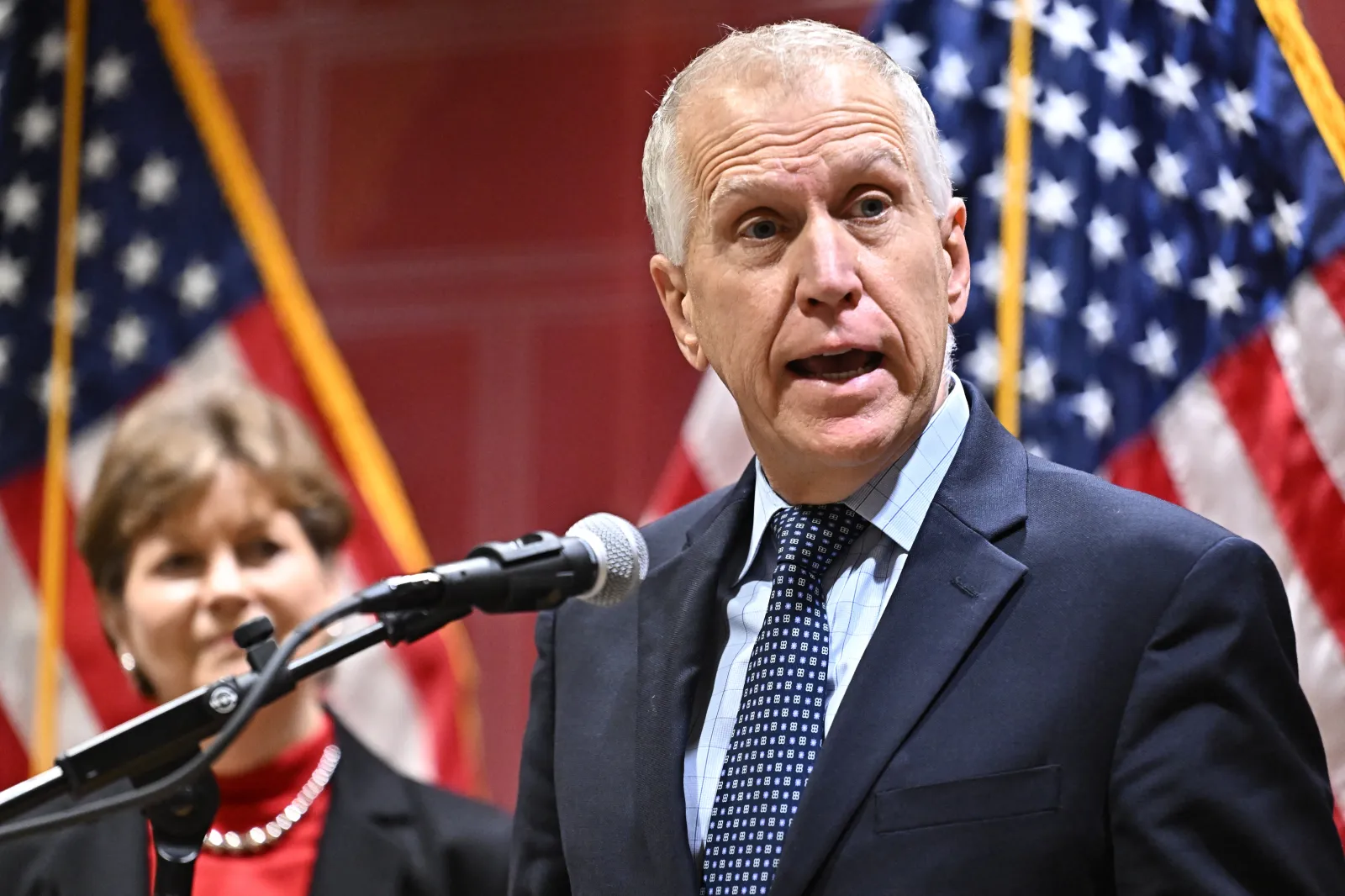
Republican U.S. Senator Thom Tillis praised the defeat of Hungarian Prime Minister Viktor Orbán in Hungary’s election, welcoming the result in an X post after Orbán—one of President Donald Trump’s closest allies abroad—conceded defeat after 16 years in power. The outcome matters because Orbán has been a core figure in the global far‑right movement that Trump has supported, and his loss on Sunday weakens that network at a politically sensitive moment. The result also underscores growing divisions within the Republican Party, where Tillis has increasingly positioned himself in opposition to Trump’s foreign‑policy instincts.
Why It Matters
Orbán’s defeat has significance far beyond Hungary because of the role he played as a symbol of “illiberal democracy” embraced by Trump and MAGA‑aligned conservatives. Trump repeatedly praised Orbán’s leadership and treated him as a governing model, while U.S. conservative groups elevated Hungary as proof that nationalist politics could thrive within Western democracies.
Read More on Politics
Tillis’ reaction highlights fractures inside the GOP over whether that approach strengthens or harms U.S. interests. The North Carolina senior senator has repeatedly warned that aligning with authoritarian‑leaning leaders and disparaging democratic allies undermines American credibility and national security. By hailing Orbán’s defeat, Tillis signaled a clear rejection of the political project Trump openly championed in Hungary.
The moment also shows how overseas elections are feeding directly into U.S. political debates. With Trump backing Orbán and Vice President JD Vance traveling to Budapest to campaign for him shortly before the vote, Hungary’s election was a test case for how much influence Trump exerts over Republican views on democracy, alliances and America’s role in the world.
...
What to Know
Hungarian voters ousted Orbán in a closely watched election, clearing the way for opposition leader Péter Magyar and his center‑right Tisza Party to take power. Orbán conceded defeat on Sunday, calling the outcome “painful” but clear, as projections showed Tisza on track for a two‑thirds supermajority in parliament—an extraordinary reversal after years of consolidated rule.
Orbán had been a favored partner of Trump, appearing at conservative gatherings like the Conservative Political Action Conference and maintaining close ties with both Trump and Russian President Vladimir Putin. Trump publicly endorsed him, while Vance’s visit to Hungary days before the election was widely interpreted as a show of strong U.S. conservative support.
Under Orbán, Hungary, a member of the European Union (EU), repeatedly blocked or delayed aid from the bloc to Ukraine, a stance that EU officials and analysts say could now shift under a new government more aligned with Brussels, home to NATO headquarters and the de facto union capital.
Tillis wrote in his Monday X post, “Congratulations to Péter Magyar on his election as Hungary’s new leader. This outcome underscores the power of democracy and NATO prevailing over the previous regime’s support for autocracy and Putin.”
Earlier this year, Tillis called Orbán “a puppet to Putin,” citing Hungary’s posture toward Ukraine and its clashes with NATO and the EU. Tillis has also criticized Trump for attacking NATO leaders and downplaying alliances, arguing that such rhetoric weakens deterrence and emboldens U.S. adversaries.
Those disagreements are part of a broader pattern. Tillis has repeatedly defied Trump and Trump‑aligned figures on foreign policy and national security, warning against actions he says weaken democratic institutions and long‑standing alliances—even when those positions have carried political risk within his party.
What Happens Next
Attention now turns to Hungary’s political transition, including the formation of a new government and its announced plans to repair relations with the EU and NATO after years of confrontation under Orbán. Magyar has pledged to re-anchor Hungary firmly within European institutions, potentially reshaping regional dynamics.
In Washington, Orbán’s defeat is likely to sharpen internal Republican debates as election season intensifies. How GOP lawmakers respond—whether they echo Tillis’ praise or continue to rally around Trump’s foreign‑policy stance—may offer early signals of how much sway the president retains over the party’s approach to democracy and alliances abroad.
In a polarized era, the center is dismissed as bland. At Newsweek, ours is different: The Courageous Center—it's not "both sides," it's sharp, challenging and alive with ideas. We follow facts, not factions. If that sounds like the kind of journalism you want to see thrive, we need you.
When you become a Newsweek Member, you support a mission to keep the center strong and vibrant. Members enjoy: Ad-free browsing, exclusive content and editor conversations. Help keep the center courageous. Join today.


View 0 Comments
Submit Correction
View Editorial & AI Guidelines