...

By Amanda Greenwood
Associate News Editor
0
Share
Newsweek is a Trust Project member
See more of our trusted coverage when you search.Prefer Newsweek on Googleto see more of our trusted coverage when you search.
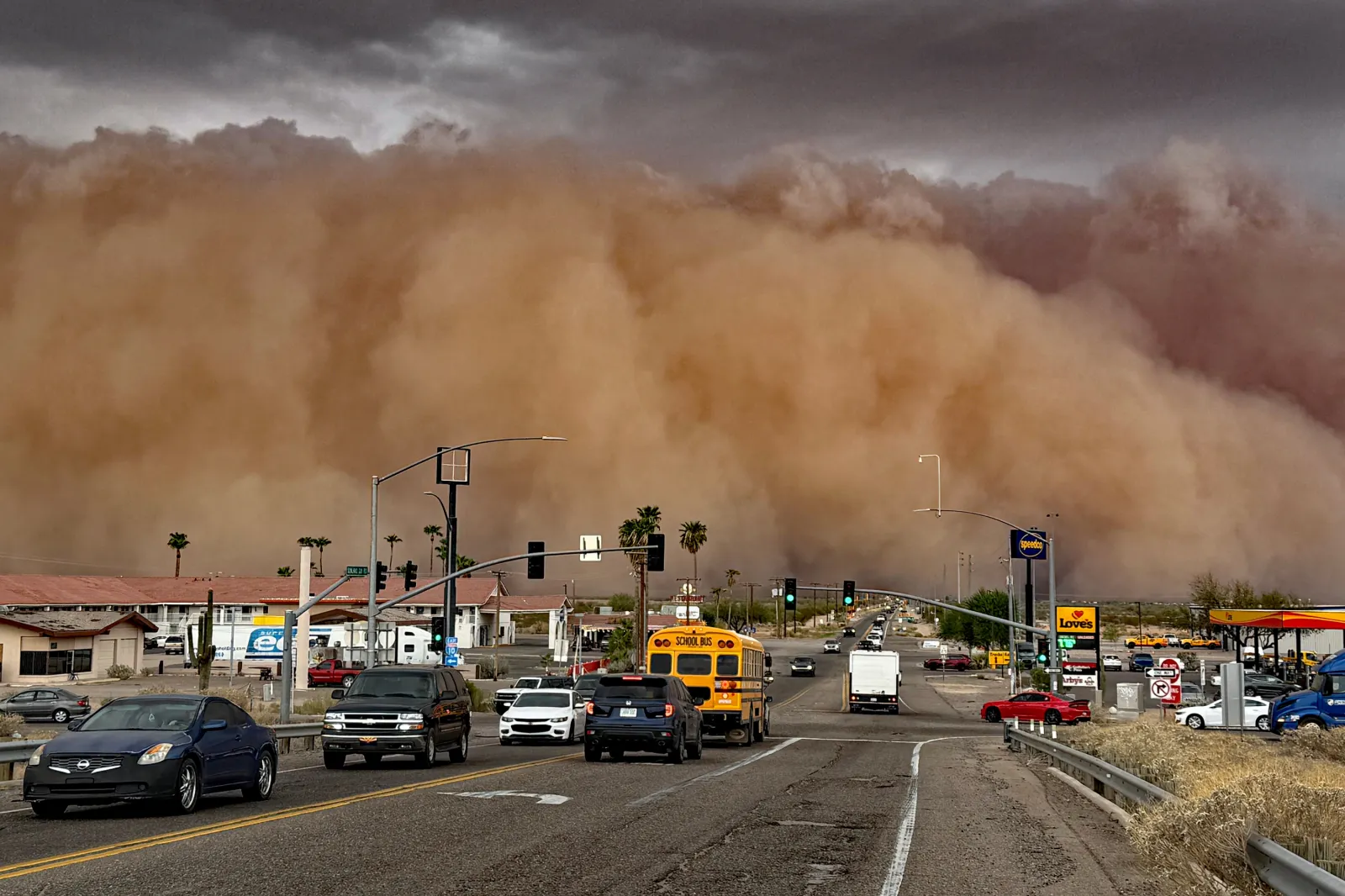
Thousands of residents in communities across parts of Arizona have been advised to stay inside,as a pocket of coarse particle pollution (known as PM10) is posing a health risk to those in the affected areas, according to an Air Quality Alert published by the National Weather Service (NWS).
Where in Arizona Is Affected by Poor Air Quality?
According to the NWS’s Air Quality alert, which was issued by the Arizona Department of Environmental Quality (ADEQ), Cochise County, including the city of Douglas, is expected to experience poor air quality through Sunday.
Read More on Weather
What’s Causing the Poor Air Quality?
The poor air quality is due to “strong and gusty" winds, which are blowing dust across the county, potentially raising the amount of PM10 in the atmosphere to levels that could pose a health risk to everyone, but especially those in sensitive groups, which include the elderly, children, and those with existing heart or lung conditions, such as asthma.
...
What Should People in Affected Parts of Arizona Do?
The NWS has advised those who might be impacted by the unhealthy air quality—especially people in sensitive groups—to reduce physical outdoor activity until conditions improve.
It is also urging people to avoid polluting the air further by reducing the number of trips taken by car—instead, consider car pooling or taking public transport—stabilizing any loose soil, and slowing down when traveling on unpaved or dirt roads, or avoiding them altogether.
General advice issued by the Environmental Protection Agency (EPA) and the NWS suggest that, alongside avoiding outdoor physical activity, people should try to keep the air as clean as possible inside in their homes.
They should keep windows and doors closed, avoid burning candles, incense, or indoor fires—including wood-burning stoves—and use air purifiers or filters to keep clean air circulating. They shouldn’t use house fans or swamp coolers, as they could bring the polluted air indoors.
What Is PM10, and Why Is It Harmful?
PM10 is considered harmful by the EPA because the particles are small—less than 10 micrometers in size—and can be inhaled, penetrating deep into the lungs and bloodstream, possibly worsening heart or lung medical conditions, or triggering symptoms ranging from coughing and eye, nose, and throat irritation to chest tightness and shortness of breath.
PM10 can come from a variety of sources, including—like in this case—windblown dust, which can stem from unpaved roads or construction sites; smoke from prescribed burns or wildfires in the area, or from emissions generated from vehicles or power and industrial plants.
View 0 Comments
Submit Correction
View Editorial & AI Guidelines