...

By Amanda Greenwood
Associate News Editor
0
Share
Newsweek is a Trust Project member
See more of our trusted coverage when you search.Prefer Newsweek on Googleto see more of our trusted coverage when you search.
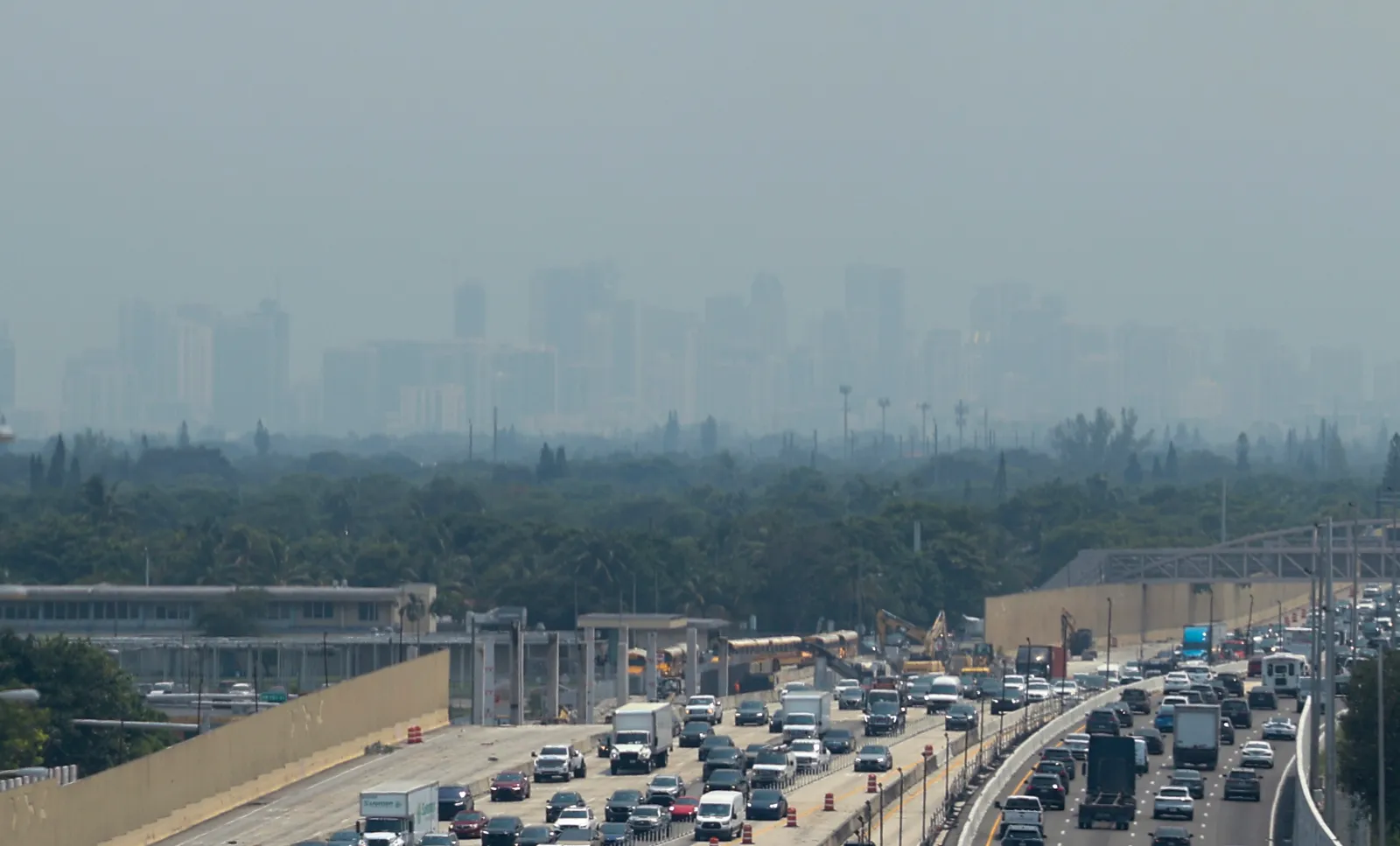
Residents across parts of Georgia and Florida have been issued air pollution alerts by the Environmental Protection Agency (EPA), who warn that elevated levels of fine particle pollution (known as PM2.5) are making the air in affected parts “unhealthy” and “very unhealthy,” as of Wednesday, April 22, at 4.15 a.m. ET.
What Areas Are Affected By High Air Pollution?
According to the EPA, areas in and around Warner Robins in Georgia, and areas around Madison in Taylor County in Florida, are likely to be the most affected by “unhealthy” and “very unhealthy” air.
Read More on Weather
...
What’s Causing Poor Air Quality Across Georgia and Florida?
Air quality across parts of Georgia and Florida has deteriorated in recent days, largely due to a combination of severe drought conditions and a surge in wildfires, which are producing widespread smoke and elevated levels of PM2.5
In Georgia, an exceptional drought has dried out vegetation across nearly the entire state, creating ideal conditions for wildfires to ignite and spread rapidly. According to Fox News, the Georgia Forestry Commission confirmed that crews responded to nearly 100 fires between April 18 and April 20, burning thousands of acres, particularly in the southern part of the state. Low humidity, gusty winds, and a continued lack of rainfall have worsened fire behavior, allowing blazes such as the Pineland Road Fire to grow large and remain only partially contained.
Smoke from these fires has released PM2.5 into the air, which can travel long distances and significantly degrade air quality beyond the fire zones themselves.
In Florida, air quality problems are being driven both by in‑state fires and by smoke drifting south from large wildfires burning in Georgia, according to the Tallahassee Democrat.
Parts of north and north‑central Florida have been particularly affected as smoke moves across state lines.
Federal and state tracking data showed that smoke from the Pineland Road Fire in Georgia was being transported into northern Florida, prompting warnings that air quality could worsen as the smoke overspreads the region.
What Communities in Florida and Georgia Should Do
When the EPA issues “unhealthy” and “very unhealthy” air quality alerts, it means that everyone in the affected areas should take precautions to minimize their exposure to the polluted air, particularly those in sensitive groups, which include the elderly, children, those with existing heart and lung conditions—such as asthma—and outdoor workers.
Affected communities should reduce the length and intensity of all outdoor physical activities and take steps to keep the air inside as clean as possible by keeping windows and doors closed, using air purifiers and filters, and avoiding burning candles, indoor fires, and incense until conditions improve.
They should keep monitoring local forecasts and EPA alerts as air quality conditions can change quickly.
Why Are Elevated Levels of PM2.5 Considered ‘Unhealthy’?
PM2.5 is considered to be one of the most dangerous forms of air pollution by the EPA. This is because the particles are so fine (less than 2.5 micrometers in size, which is smaller than the width of a single strand of hair), they can be easily inhaled—especially during intense or long periods of physical exertion—travelling deep into the lungs and bloodstream. This can often trigger symptoms such as chest tightness and shortness of breath, and worsen any existing heart or lung medical conditions, in some cases leading to hospitalization.
Georgia and Florida Forecasts for the Week Ahead
For Georgia, the National Weather Service (NWS) has forecast mostly sunny and dry weather for the rest of the week, until Friday, with highs in the low to mid‑80s. While these dry conditions could worsen wildfire risks and, therefore, the air quality across affected parts of Georgia, rain and thunderstorms are expected to return over the weekend and into early next week.
Florida is expected to face similar conditions, with mostly sunny and warm weather through the rest of the week, with highs climbing from around 80 into the upper 80s and low 90s early next week. However, there is a chance of afternoon showers or thunderstorms from Thursday onward, increasing slightly over the weekend, which could alleviate wildfire risks and reduce PM2.5 levels.
View 0 Comments
Submit Correction
View Editorial & AI Guidelines