...

By Tom O'Connor
Deputy Editor, National Security and Foreign Policy
0
Share
Newsweek is a Trust Project member
See more of our trusted coverage when you search.Prefer Newsweek on Googleto see more of our trusted coverage when you search.
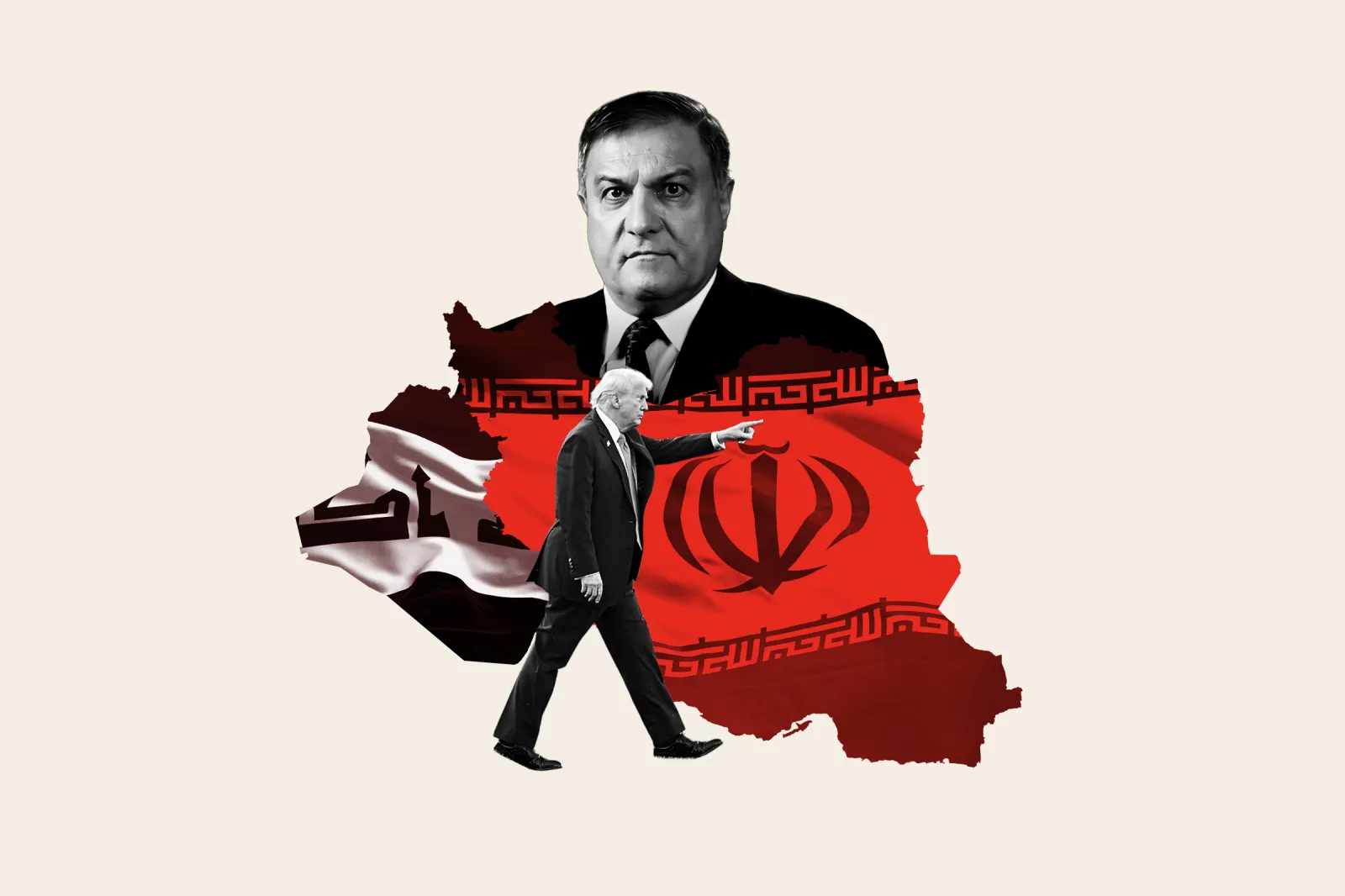
As Iraq's political deadlock persists in the wake of a tight election held last November, one independent candidate vying for the presidency has shared with Newsweek a plan to break the paralysis, secure closer ties with the United States and uproot influence from neighboring Iran.
Sardar Abdulla, a former member of parliament, is looking to shake up the two-party system that has long dominated northern Kurdistan region, largely split between the Kurdistan Democratic Party (KDP) and the Patriotic Union of Kurdistan (PUK), whose candidates have held each presidency since the first post-U.S. occupation government established in 2005.
Through this quest, Abdulla also seeks to strengthen the presidential position that has long been overshadowed by the prime minister's role, now at the center of a parallel feud between competing factions comprised of Shiite Muslim coalitions. While Prime Minister Mohammed Shia' al-Sudani's bloc came out in November with the largest share of votes, his rivals have rallied behind former Prime Minister Nouri al-Maliki, whose candidacy is openly opposed by Washington due to his ties to Iran and its allies.
Read More on News
Should Abdulla secure the presidency, he would be tasked with formally nominating Iraq's next premier, a position reserved for a Shiite Muslim under the same power-sharing agreement that allocates the presidency to a Kurd and the speaker of parliament to a Sunni Muslim. After decades of political crises that have become a regular obstacle in Iraqi politics, he views his political independence as an asset in mapping a new future for the nation in a way that establishment contenders could not offer.
"When you have a partisan candidate, the partisan candidate will be liable to his party, and the political parties all have interests with Iran," Abdulla told Newsweek. "They don't want to confront Iran, and they don't want to clash with Iranian interests in the region. So, it will be very difficult for them to have a candidate that will stand up for Iraqi interests and call for a direct relationship with the United States and confront Iranian expansion in Iraq."
He added: "But as a candidate with an independent voice, I don't have a political party that will be liable for my actions and whose interests will be risked when pursuing an independent and sovereign Iraq and a strong partnership with the United States. I will be responsible for my own actions."
...
'Out of Iranian Hegemony'
Iran's connections across Iraq's political landscape have proved one of the most persistent U.S. foreign policy challenges in the Middle East this century as well as a frequent obstacle to Washington's efforts to bring Baghdad closer into its sphere of influence.
Tehran's ties extend to Kurdish parties as well. Kurdish factions have a long history of working with Iran during the rule of President Saddam Hussein, with the KDP and PUK receiving Iranian assistance throughout the 1980s Iran-Iraq War, during which Baghdad also coordinated in parallel with Iranian Kurdish factions from within the Islamic Republic.
Since the fall of Hussein at the hands of a 2003 U.S.-led invasion, the two parties have competed for clout in the Kurdistan Regional Government, a semi-autonomous entity established across northern Iraq in 1992 following the first Gulf War, as well as in the central government in Baghdad. The KDP has often emerged as the more dominant faction in the north, while the PUK continues to wield strong influence at the federal level, including the presidency, currently held by the PUK's President Abdul Latif Rashid, as part of a longstanding power-sharing agreement.
Iran's presence is felt even more pronounced in the race for prime minister. Amid the current impasse, Maliki's campaign has touted an endorsement from Iranian Supreme Leader Ayatollah Ali Khamenei, deepening U.S. concerns at a time of heightened tensions between Washington and Tehran.
Maliki, a former dissident fighter who once coordinated with Iran within the ranks of Iraq's Shiite Muslim opposition to Hussein, emerged as a key partner to the U.S. in the post-Hussein era. He served as prime minister from 2006 until 2014, when he resigned amid a string of defeats to the Islamic State militant group (ISIS) and U.S. accusations of flaring sectarian tensions that exacerbated a deadly Sunni Islamist insurgency.
These tensions and the rise of ISIS also led to the proliferation of rival Shiite Muslim militias, some of whom had previously waged a parallel campaign against U.S. forces. Tehran played a major role in aiding these armed factions in the fight against ISIS, though their presence, political connections and varying degrees of alignment to the Islamic Republic have raised concerns about Iranian influence in Iraq.
Abdulla asserted he would reject Maliki's candidacy and remained non-committal about the prospects of nominating Sudani, who has led since 2022 and has also proclaimed a more independent path for Iraq with hopes of maintaining close ties with both the U.S. and Iran.
"I have 15 days after I become the president, and within 15 days, I have to discuss with all of the parties how we need to have a prime minister that will not cause a lot of crises inside Iraq, but also with our partners, especially the United States," Abdulla said. "We want a strong partnership with the United States, and we don't want a confrontation with the United States. "
He continued: "The Iraqi interest is first and I will discuss that. I will see which candidate has the most backing from all of the political parties but also will not cause any crisis for our partners, especially the United States. So, the prime minister will be someone I can count on, together, to get Iraq out of Iranian hegemony."
To achieve these goals, Abdulla said he would pursue a multi-faceted approach that would set the conditions for Iraq to become a leading investment target, noting some other examples of nations subject to U.S. invasion and later transformed into prosperous allies.
"Iraq's survival is dependent on a good relationship with the United States and getting closer and having a stronger relationship with the trust of the American leadership is vital for Iraq's survival," Abdulla said. "I believe that Iraq had an opportunity to become like Germany or Japan after World War Two, or South Korea after the Korean War, to give an opportunity with the United States to rebuild the country to be prosperous and sovereign."
"We had that opportunity," he added. "But because of the corruption and terrorism and interference from other countries and weak leadership in Iraq, they allowed the country to go in another direction, which was not the direction that the Iraqi people want."
Among his first orders of business, he said, would be to "send a bill that will ask for dissolving all of the militia groups, to integrate them into Iraqi security forces," a task begun a decade ago as the Popular Mobilization Forces paramilitary network were formally brought under the Iraqi Armed Forces, only for many powerful groups, such as Kataib Hezbollah, the Nujaba Movement and Asaib Ahl al-Haq, to continue to operate with broad autonomy to this day.
Abdulla said he would also pursue legislation geared toward "opening up the energy sector for Iraq, like Aramco in Saudi Arabia, for the American companies that they can invest in Iraq." Other steps would directly address "confronting not only the Iranian, but also Turkish intervention," which has targeted Kurdish dissident groups operating in northern Iraq.
"So, we'll try to build a strong partnership with the United States that will bring all of us to get closer to these Iraqi goals," he added.

...
'Peace Through Strength'
Also key to this equation, according to Abdulla, is President Donald Trump. Since assuming a second non-consecutive term early last year, Trump has pursued a more hardline approach to Iran, ordering direct strikes against three nuclear sites amid its 12-Day War with Israel in June and threatening new military action today renewed nuclear talks.
The U.S. leader's strategy of applying military and economic pressure to secure diplomatic victories has proven divisive across the globe, including in the Middle East. Yet his transactional style has also won him high-profile victories, including regional backing for an ambitious peace plan to put an end to the war in Gaza, sparked by the Hamas-led attack against Israel in October 2023.
Trump has leveraged this approach to Iraq as well, communicating a desire for Baghdad to rein in the influence of Tehran and allied militias. After Trump warned late last month if Maliki were to be chosen as premier, the U.S. "will no longer help Iraq and, if we are not there to help, Iraq has ZERO chance of Success, Prosperity, or Freedom," U.S. Embassy to Iraq Chargé d’Affaires Joshua Harris sent a new message in a meeting Thursday with the head of Iraq's National Approach Alliance, Abdul Hussein al-Musawi.
A statement issued by the U.S. Embassy said Harris "discussed the importance of a strong U.S.-Iraq partnership that delivers tangible benefits for Americans and Iraqis as we work to advance our shared interests – safeguarding Iraqi sovereignty, bolstering regional stability, and strengthening economic ties.
"He reiterated we are prepared to use the full range of tools to counter Iran’s destabilizing activities in Iraq," the Embassy said. "CDA Harris emphasized that any Iraqi government should remain fully independent and focused on advancing the national interests of all Iraqis."
A State Department spokesperson reiterated the White House's position to Newsweek, saying "President Trump has spoken clearly: the selection of Nouri al-Maliki as the next Prime Minister of Iraq would force the U.S. government to reassess the U.S.-Iraq relationship."
"The selection of Maliki would be a negative outcome for the Iraqi people. Our priorities are clear: ending the dominance of Iran-backed militias in Iraqi politics and the threat they pose to the United States, Iraq, and the region; winding down Iranian influence; and promoting a strong business relationship between Iraq, the United States, and our shared regional partners," the spokesperson said. "We seek partners who share our objectives."
The administration's approach has spurred protests from Maliki's supporters and others who view the ultimatum as an overt form of U.S. interference in Iraqi politics. However, Abdulla finds Trump's direct approach in dealing with Iraq refreshing.
"There's a lot of talk about how President Trump is thinking in that area, but one thing I will say is something very positive, and I think we can count on, that is the clarity," Abdulla said. "We had a lot of issues in the last administration. We didn't have a clear vision for Iraq, how to deal with the crisis, until it became a crisis. So, that was an issue we had."
"We don't have this now. We know what they want," he added. "We know what the United States wants in Iraq and also in the region. And I think that helps me a lot and helps Iraq a lot on how to deal with the United States."
He lauded Trump's "peace through strength" approach, criticizing a failed notion that mere "positive conferences and nice words will bring peace in the Middle East." Rather, he argued, "you have to use force to make some groups and states in the regions that don't respect peace comply."
Sudani was among the regional leaders and representatives who gathered in Egypt in October to back Trump's 20-point Gaza peace plan. Yet as Trump's subsequent Board of Peace established as part of the framework garners growing membership in the Middle East and beyond, Iraq has been conspicuously absent, something Abdulla said he would seek to rectify as president.
"I will join the United States and President Trump's plan for Iraq to be integrated in the Middle East," Abdulla said. "For example, the Board of Peace, if he invites Iraq, I will accept the invitation, and I will strongly support plan to have a stable and also prosperous Iraq by counting on the vision from the United States on how to deal with the challenges in the region."
"And I don't think we can do it ourselves," he added. "We need partners like the United States, and I think we have that partner despite all of the other concerns they may have. I think for us, it's a blessing."

...
'Not Complete Without Iraq'
Abdulla's path to the presidency among 14 other contenders is a challenging one, with rival candidates seeking to highlight their credentials within the establishment parties and others also running on independent platforms.
The official choice of the PUK, the favorite to win should the power-sharing agreement with the KDP prevail, is Nizar Amidi, who most recently served as environmental minister under Sudani. Incumbent President Rashid's name was also included in the name of candidates cleared by the parliament for the race.
From the KDP's side, the top nominee is Fuad Hussein, who currently serves as Iraq's foreign minister under Sudani, while the KDP's Nawzad Hadi Mawlood, former governor of Erbil province, is also vying for the presidency. The race also includes a number of other independents, including the Kurdistan Islamic Union's Muthana Amin, backed by the opposition National Stance Movement and also looking to challenge the binary nature of Iraqi Kurdish politics.
Abdulla previously ran in 2018, a race in which former Iraqi President Barham Salih prevailed. Today, Abdulla says he brings more knowledge and experience to the table, as well as "stronger relations with the political parties in Kurdistan, not just in Iraq, but also in other parts of Kurdistan, in Syria and Iran."
"But also, you have a change globally and regionally in the area," he added. "You have a change in the U.S. You have a change in the U.S. vision in the Middle East."
Since the outbreak of the war in Gaza, the Middle East has been swept by upheaval, often to the disfavor of Iran and its Axis of Resistance coalition.
The fall of Iran-aligned Syrian President Bashar al-Assad to an Islamist militant leader-turned-Interim President Ahmad al-Sharaa, once an Al-Qaeda-loyal fighter in Iraq, has raised border security concerns, even as Baghdad and Damascus ease into a new relationship with Washington's endorsement. In Lebanon, voices critical of one of Iran's most powerful allies, Hezbollah, have gained political influence following a devastating war with Israel, which continues to strike the neighboring country as the government seeks a path forward to peacefully disarm the group.
Tehran, too, is in a moment of turmoil. Still reeling from the 12-Day War last summer, Iran was rocked by nationwide protests that devolved into the deadliest clashes in the history of the Islamic Republic, with reports indicating Iraqi militias played a role in the crackdowns.
Trump has since threatened new military action against Iran should ongoing negotiations to strike an agreement on Tehran's nuclear program—and potentially other areas—fail, sparking a wave of anger among militias preparing to come to their ally's aid. Once again, Iraq appears to be poised to be at the heart of a regional confrontation.
But as old equations collapse and regional dynamics shift, Abdulla felt the time was right for the nation to find its footing in the new order.
"Iran is weakened in the region, after the changes since October 7, like in Iran, in Syria, in Lebanon and the area," Abdulla said. "But that is not complete without Iraq. In Iraq, there are a lot of things that need to be done."
View 0 Comments
Submit Correction
View Editorial & AI Guidelines