...

By Andrea Justus
Community coordinator, Restoring Faith in America
0
Share
Newsweek is a Trust Project member
See more of our trusted coverage when you search.Prefer Newsweek on Googleto see more of our trusted coverage when you search.
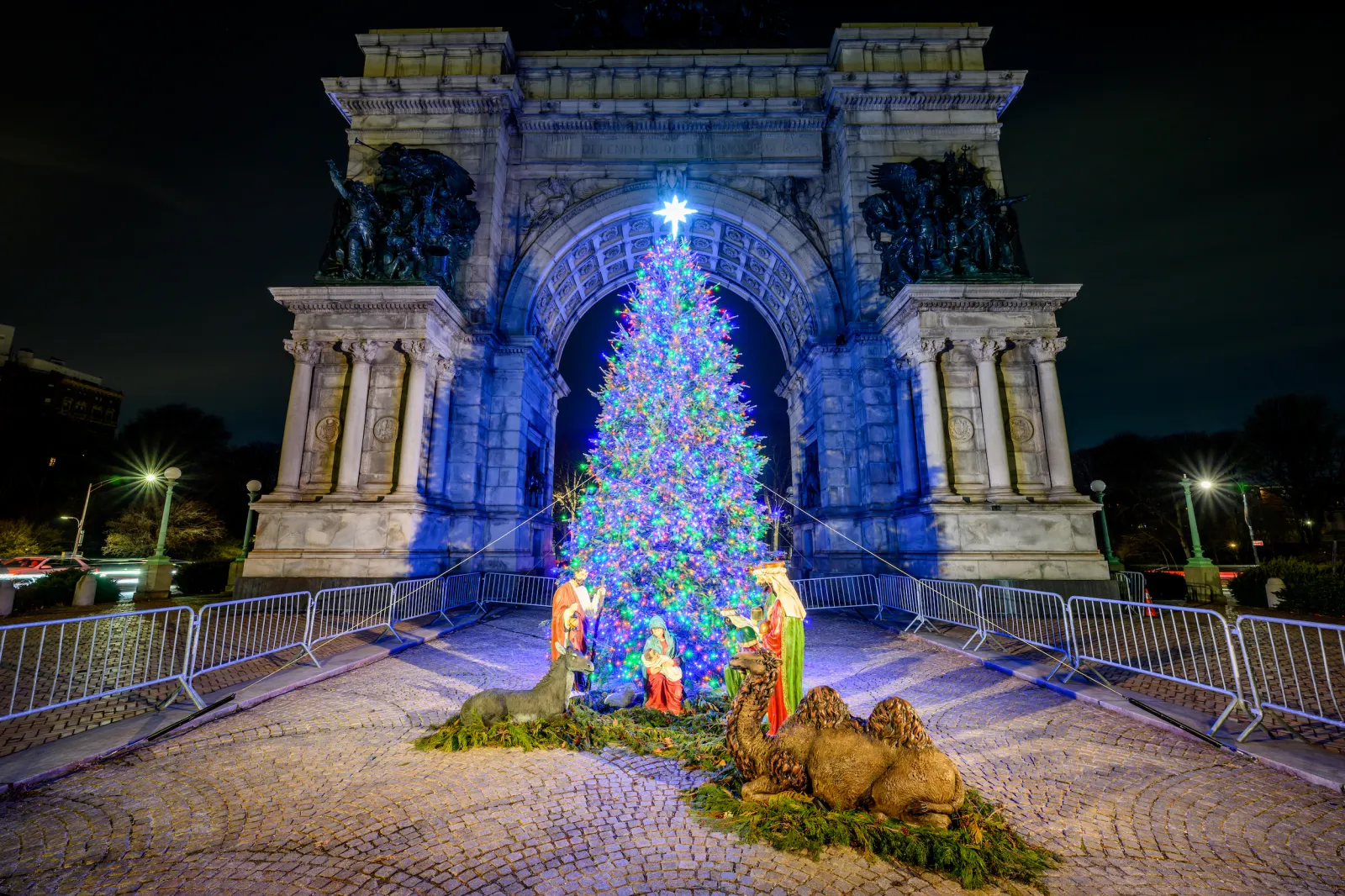
The Christmas season marks the return of twinkling lights, festive gatherings, gifts, cards, and holiday music. For decades of American history, nativity scenes depicting the birth of Jesus Christ were traditionally part of public holiday displays. Many town squares across the nation prominently displayed nativities.
While the United States has a rich and celebrated history of religious displays in public spaces, unfortunately, some choose to attack this honored tradition.
Through much of the 20th century, Americans generally accepted nativity scenes as an appropriate and festive part of celebrating the season. But the debate over nativity scenes in public places began in the later part of the century, rooted in a fundamental misinterpretation of what the Founders intended in the text of the Establishment Clause of the First Amendment to the U.S. Constitution.
Read More
Will the Supreme Court Put the State Ahead of Parents Rights? | Opinion5 min read

The Supreme Court Must Show That Equal Protection Also Applies to Transgender Youth | Opinion5 min read

In Transgender Case, Can SCOTUS Cut to the Moral Heart of the Issue? | Opinion5 min read

Anti-religious groups seeking to purge the public square of religious imagery weaved a false narrative to accomplish their mission. Such displays were an endorsement of one religion, they argued. In 1971, the U.S. Supreme Court provided these zealots a legal gift, in Lemon v. Kurtzman, holding that, when it came to public expressions of faith, government action must have a secular purpose, must not promote or inhibit religion, and must not create excessive entanglement between the government and religion. This strict test became the basis for removing religious displays from the public square.
The nativity purge began soon after. In the 1980s, the American Civil Liberties Union (ACLU) set its sights on the town of Birmingham, Michigan, suing the city for its long-held tradition of placing a nativity scene on the lawn of city hall during the Christmas season. Unfortunately, the U.S. Court of Appeals for the Sixth Circuit ruled in favor of the ACLU, determining that the nativity scene's placement on public property violated the Establishment Clause. The court reasoned, based on Lemon, that the nativity scene sent a message that the government was endorsing Christianity.
Shortly thereafter, the ACLU sued the city of Pittsburgh, Pennsylvania, for having a nativity scene displayed inside the Allegheny County Courthouse, as well as a large menorah, Christmas tree, and sign saluting liberty displayed outside on the courthouse grounds. The ACLU challenged both displays as violating the Establishment Clause for promoting religious imagery on government property.
...
In a 5-4 decision, the Supreme Court of the United States concluded that, because of Lemon, the placement of the stand-alone nativity scene inside the courthouse amounted to government endorsement of Christianity, thus requiring its removal. However, in a separate 6-3 decision, the outdoor display with the menorah and Christmas tree was seen as neutral and inclusive of diverse traditions—factors that allowed it to remain. In other words, displaying a nativity by itself: unconstitutional. Displaying a menorah, plus a Christmas tree: constitutional. This was the illogical outcome of Lemon.
As secularists asserted similar claims of government endorsement of religion over the years, many towns and cities began removing religious displays from the public square, often to avoid a lawsuit. In one Virginia city, to get around Lemon, the town allowed local Satanists to add a display to the town square at Christmas—a skeleton in a Santa costume.
The Supreme Court ended this ridiculousness a few years ago when it finally interred Lemon once and for all and provided a proper understanding of the First Amendment.
In 2019 and 2022, the Court decided two pivotal cases: American Legion v. American Humanist Association and Kennedy v. Bremerton School District. These cases paved the way for religious displays to return to the public square.
Today, because the Lemon test is dead, courts now must consider the "history and tradition" of an activity when reviewing Establishment Clause claims related to public displays of religious imagery. Given that nativities and the menorah were a staple of the holiday public square for the better part of a century, towns and cities are free to add them back to their holiday displays.
So be of good cheer, because religious liberty is being restored in America in accordance with our nation's founding and the vision of our Founders. Every American of faith can now confidently proclaim that nativity scenes and other religious symbols can be freely displayed at courthouses, city halls, parks, and holiday festivals.
Andrea Justus is community coordinator for Restoring Faith in America, a project of First Liberty Institute.
The views expressed in this article are the writer's own.
View 0 Comments
Submit Correction
View Editorial & AI Guidelines