...

By Jamie Geller
Global Spokesperson and Chief Communications Officer for AISH
0
Share
Newsweek is a Trust Project member
See more of our trusted coverage when you search.Prefer Newsweek on Googleto see more of our trusted coverage when you search.
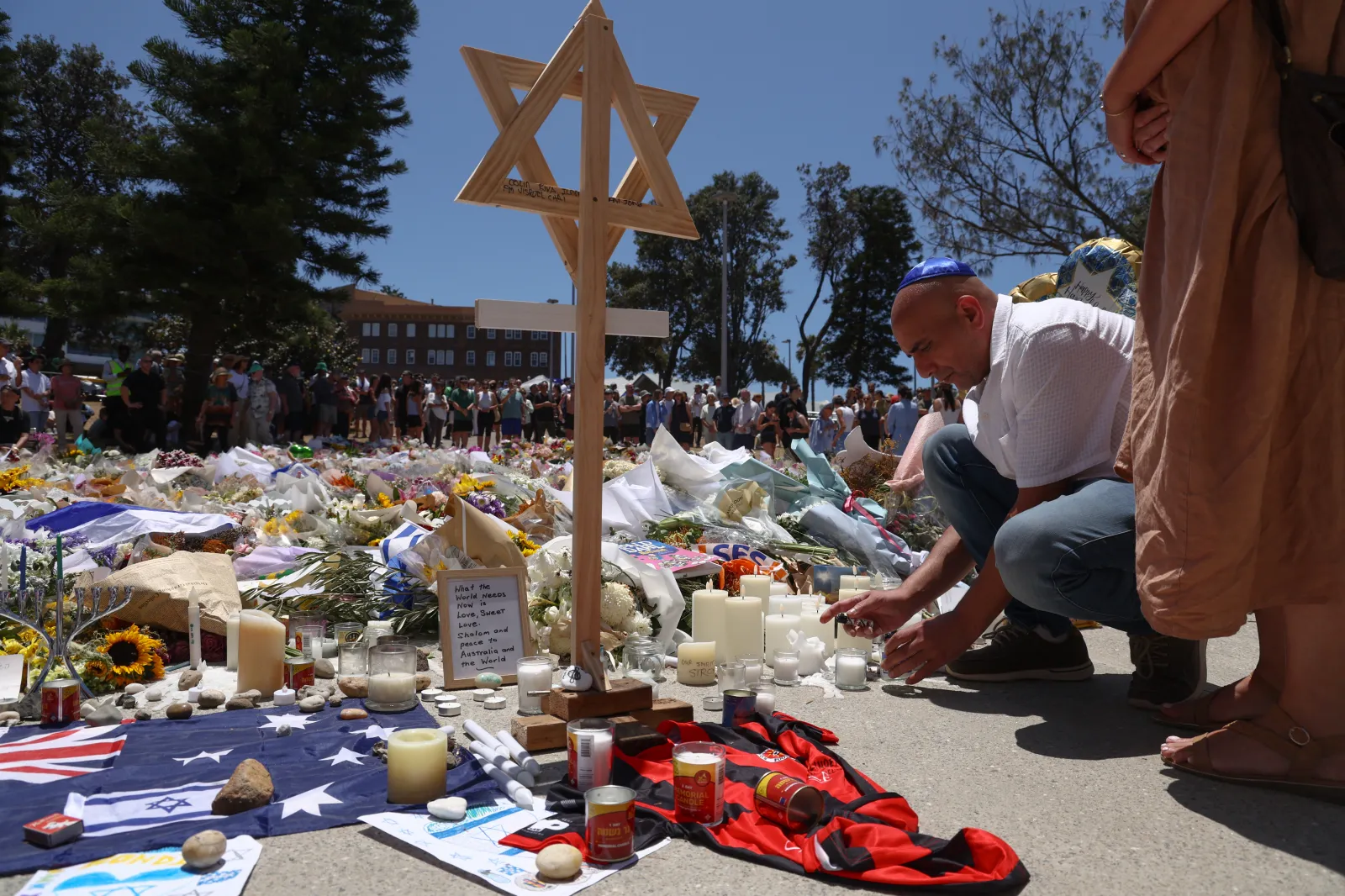
The Bondi Beach shooting left 15 dead and over 40 people injured. Among the victims was 87-year-old Holocaust survivor Alex Kleytman, shot while shielding his wife from bullets. He survived the Nazi death machine only to be murdered in an Australian park in 2025 because he was Jewish.
Let that sink in for a moment.
...
Read More on Opinion
Alex carried the weight of history in his bones. He bore witness to humanity's darkest chapter, rebuilt his life and raised generations who would carry forward the promise of "Never Again." Yet during an event to celebrate Hanukkah, hatred found him once more. This time, civilization did not save him.
The tragedy at Bondi Beach is not an isolated incident. In 2018, Mireille Knoll, 85, was murdered in her apartment in Paris in an antisemitic attack. Yaffa Adar, 85, a Holocaust survivor, was dragged into Gaza on a golf cart during the Hamas massacre. Another Holocaust survivor, Barbara Steinmetz, 88, was burned in the antisemitic attack in Boulder, Colorado, in June 2025. Around the globe, Holocaust survivors have become victims of modern antisemitic violence that has only increased since October 7.
These survivors asked only to live in peace after surviving the unsurvivable. Instead, they found themselves in the crosshairs of a resurgent hatred that was supposed to have died with the Third Reich.
How did we get here?
Part of the answer lies in our failure to act on the warning signs that have been flashing red for years. Swastikas began appearing on synagogues years ago. It was brushed under the rug as vandalism. Mobs chanting eliminationist slogans marched unchallenged through cities across the globe; the powers that be called it “freedom of protest.” Jewish students have been harassed on campuses throughout North America and Europe for years, and little or nothing has been done. Each incident, treated as an isolated event and brushed off, empowered those who perpetrate hate.
The West refused to recognize the symphony of hatred that has been fomented into a crescendo in a planned and methodical manner for years.
In the decades following the Holocaust, the sight of a swastika anywhere would have provoked universal revulsion. Yet today, swastikas are spray-painted across Jewish institutions, they flash on LED screens at concerts, they appear on protest signs equating Zionism with Nazism. Somehow, we have become desensitized to the very symbol that once represented the lowest point of human evil.
Normalization has real consequences. It gave moral permission to violence. It created a framework where attacking Jews has become permissible and even righteous according to some. Calls abound on social media by people who aren’t hiding their identities any longer, declaring that Jews be killed. Charlie Kirk, prior to his assassination, told Jewish students that it has become “hunting season for Jews,” and authorities “will not protect you.”
We as a society have failed to protect the last of the Holocaust survivors. We also failed in how we chose to remember the Holocaust itself. We universalized its lessons to focus on tolerance and prejudice in general but lost sight of its specific target. We taught "Never Again" as a slogan for all humanity, but forgot to educate about the world's oldest hatred. We treated antisemitism as a historical problem solved by education rather than an active virus requiring constant vigilance.
The Jewish community bears responsibility here as well. A 2020 Pew study found that one of the main ways U.S. Jews identified their Jewishness was through Holocaust remembrance.
While Holocaust memory remains sacred, we have focused so heavily on commemorating the dead that we failed to protect the living. We universalized the Holocaust's lessons while antisemitism continued to fester beneath the surface, waiting for the right moment to erupt.
That moment arrived on October 7, and it has not stopped since.
So what now? We must refocus efforts on educating about antisemitism here and now. Not historical manifestations. We must make clear that anti-Zionism is antisemitism, that there is no moral equivalency between Israel and the Nazis and that swastikas are never acceptable under any circumstances.
We must treat credible threats to Jewish communities with the utmost seriousness. When mobs march through streets calling for violence against Jews, law enforcement must recognize these as precursors to bloodshed, not simple protests.
Most urgently, we must protect the Holocaust survivors who remain. They deserve to live their remaining years in safety and dignity, not fear.
Alex Kleytman, may his memory be a blessing for us all, survived the Nazis. Civilization owes him more than to allow him to be murdered in the street 80 years later. We failed him. We cannot fail the others who remain.
Jamie Geller is the global spokesperson and chief communications officer for AISH. She is a bestselling cookbook author, Jewish education advocate and formerly an award-winning producer and marketing executive with HBO, CNN and Food Network.
The views expressed in this article are the writer's own.
View 0 Comments
Submit Correction
View Editorial & AI Guidelines