...

By Ambassador Robert O'Brien
0
Share
Newsweek is a Trust Project member
See more of our trusted coverage when you search.Prefer Newsweek on Googleto see more of our trusted coverage when you search.
The closure of the Strait of Hormuz has made it clear that the United States cannot rely on foreign entities for its energy needs, whether fossil fuels, nuclear power, or renewables.
The world is a dangerous and unpredictable place. Instability in any country or region thousands of miles away can cause ripple effects that impact American workers and undermine our economy. This is exactly why President Trump has prioritized restoring American energy dominance and reducing reliance on volatile foreign sources.
...
Read More on Opinion
The president recognized this vulnerability early. His policies helped make the United States a net energy exporter in his first term and he is now moving to expand domestic production and grid resilience even further.
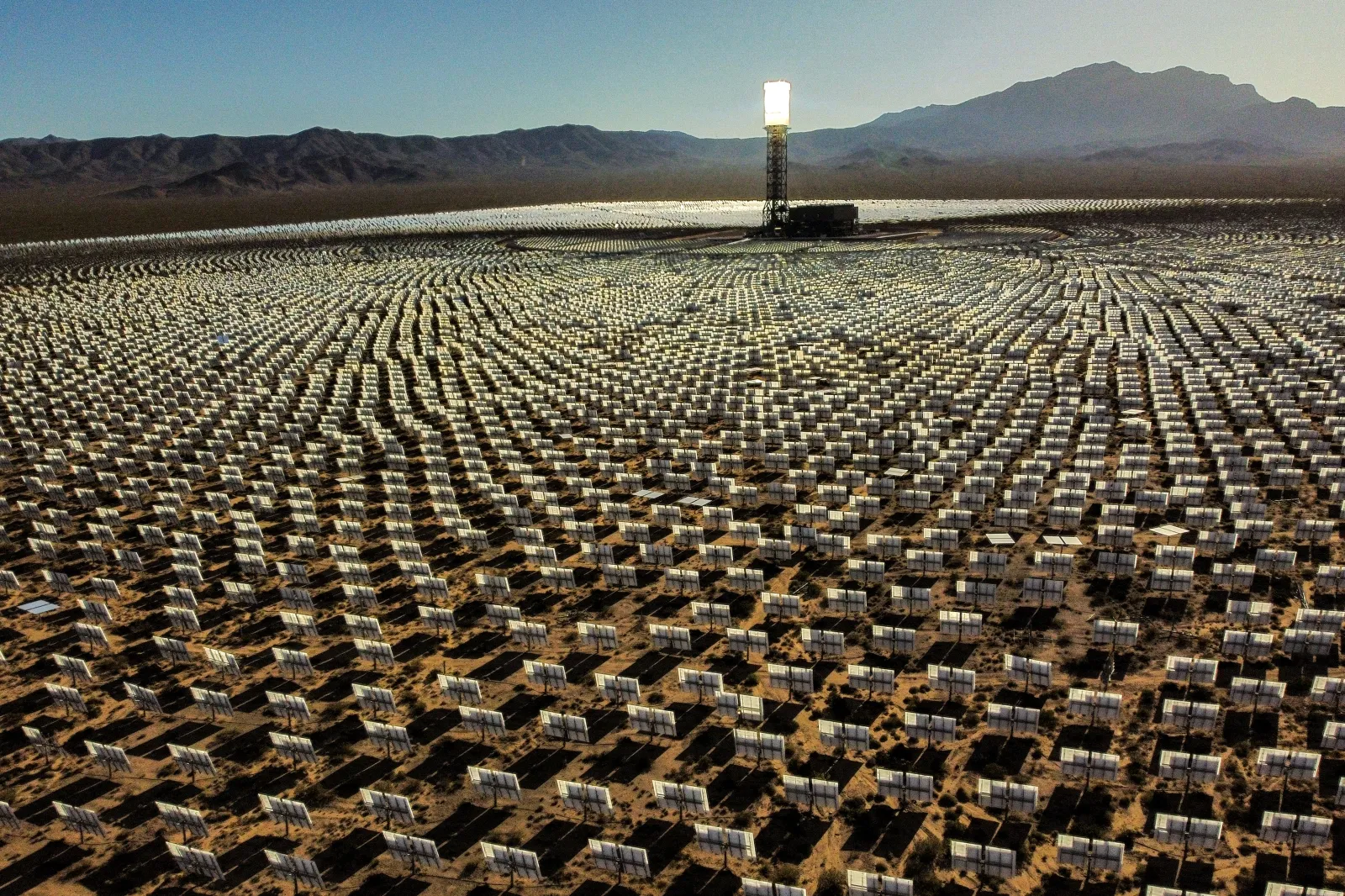
Fortunately, abundant sources of energy are something we already have on our own shores. We need to deploy all of them. That includes solar power.
Solar energy dominance, as part of an all-of-the above approach, is particularly important given its national security implications in our competition with China. China is aggressively working to corner global solar manufacturing and battery supply chains. If the U.S. fails to lead in this area, we risk swapping one form of energy dependence for another, this time on an energy source that Beijing controls.
China is emphasizing solar energy production in part because it recognizes the unique capacity to store and hold solar energy in batteries. According to the U.S. Department of Energy, that stored electricity can be used at any time, including "after the sun has set,” making this energy source in effect “an insurance policy for sunshine.”
Solar energy paired with energy storage technology isn’t just affordable. It is also the fastest-to-build power source now available, allowing us to scale energy capacity in a fraction of the time it takes to expand other sources. In the event of a national security emergency, policymakers should want to ensure the U.S., not China, has the upper hand in this respect.
China and other adversaries aligned with Iran are racing to outproduce the U.S. with the intent of gaining vital leverage over our economic security. As a recent report in Time notes, “Today’s tool kit to weaponize energy is broader and more varied. Countries are no longer relying solely on production cuts or physical disruptions to supply. They are also using a wider array of instruments—control over infrastructure, shipping routes, financial systems, trade, and critical supply chains.”
If energy can be weaponized against us, the U.S. must be in a position to control its own supply. This means producing more of it here at home, across every available source.
To revitalize American manufacturing for the 21st century, we must also do more to diversify our supply chain and increase our domestic supply of rare-earth metals, which are essential for renewable energy technology.
Right now, China controls 70 percent of the world’s rare earths mining and 90 percent of its processing. The U.S. must not depend on hostile powers for the batteries and other materials that power our modern energy systems. Lithium, for instance, powers electric vehicles and batteries for drones and other advanced weaponry. China, however, dominates the global lithium market. If the U.S. can onshore lithium production, it will strengthen our economic resilience and our position as a global leader.
We must also modernize our energy grid and not rely on centralized power sources that others can disrupt. We need a diversified and distributed grid that’s harder to take offline in a crisis.
President Trump is doing just that—working to strengthen the national power grid while ramping up production of domestic energy resources. But we must do more to cut through red tape that hinders us from developing more types of energy, including solar power.
As for fossil fuels, the United States is a net oil and natural gas producer, which supports a thriving industry that sustains around 11 million American jobs. We don’t need to import something we already have in abundance.
Domestic energy production isn’t just a matter of national pride; it’s a key source of economic stability and national security. We must ensure we continually treat it as such.
Ambassador Robert O’Brien served as the 27th United States National Security Advisor. He currently serves on the President's Intelligence Advisory Board.
The views expressed in this article are the writer's own.
View 0 Comments
Submit Correction
View Editorial & AI Guidelines