...

By Daniel R. DePetris
Fellow, Defense Priorities
0
Share
Newsweek is a Trust Project member
See more of our trusted coverage when you search.Prefer Newsweek on Googleto see more of our trusted coverage when you search.
The Middle East has enough problems as it is.
The war in Gaza may be suspended for the time being, but the Trump administration’s struggle to cobble together an international coalition to disarm Hamas means President Trump’s 20-point peace plan is tenuous at best. Iran’s nuclear and missile programs were dealt a setback after the 12-day war in June, yet Tehran’s attempt to rebuild its military capacity has led Trump to threaten another attack. Syria, meanwhile, remains in a difficult transition period, in which the new government, led by former Al-Qaeda commander Ahmed al-Sharaa, is trying to consolidate his authority.
Now we can add a crisis in the Persian Gulf to the mix, one that could complicate the Trump administration’s wider diplomatic agenda in the region. Saudi Arabia and the United Arab Emirates, two of Washington’s closest partners in the Middle East, are now at each other’s throat in Yemen, a perpetually chaotic country that has been in a state of civil war for the last decade.
Read More on Opinion
Saudi Arabia and the UAE are traditionally described as strategic partners, if not allies.
...
This is not entirely inaccurate; the two Gulf powers cooperate on a vast array of security issues. Both want to see Syria’s new government succeed and were quick to offer Sharaa political and economic support after his forces swept the Assad regime from power. Both are historically suspicious of Iranian motives. The Saudis and Emiratis are both happy to have U.S. troops on their soil. And both would love to see Hezbollah eradicated in Lebanon.
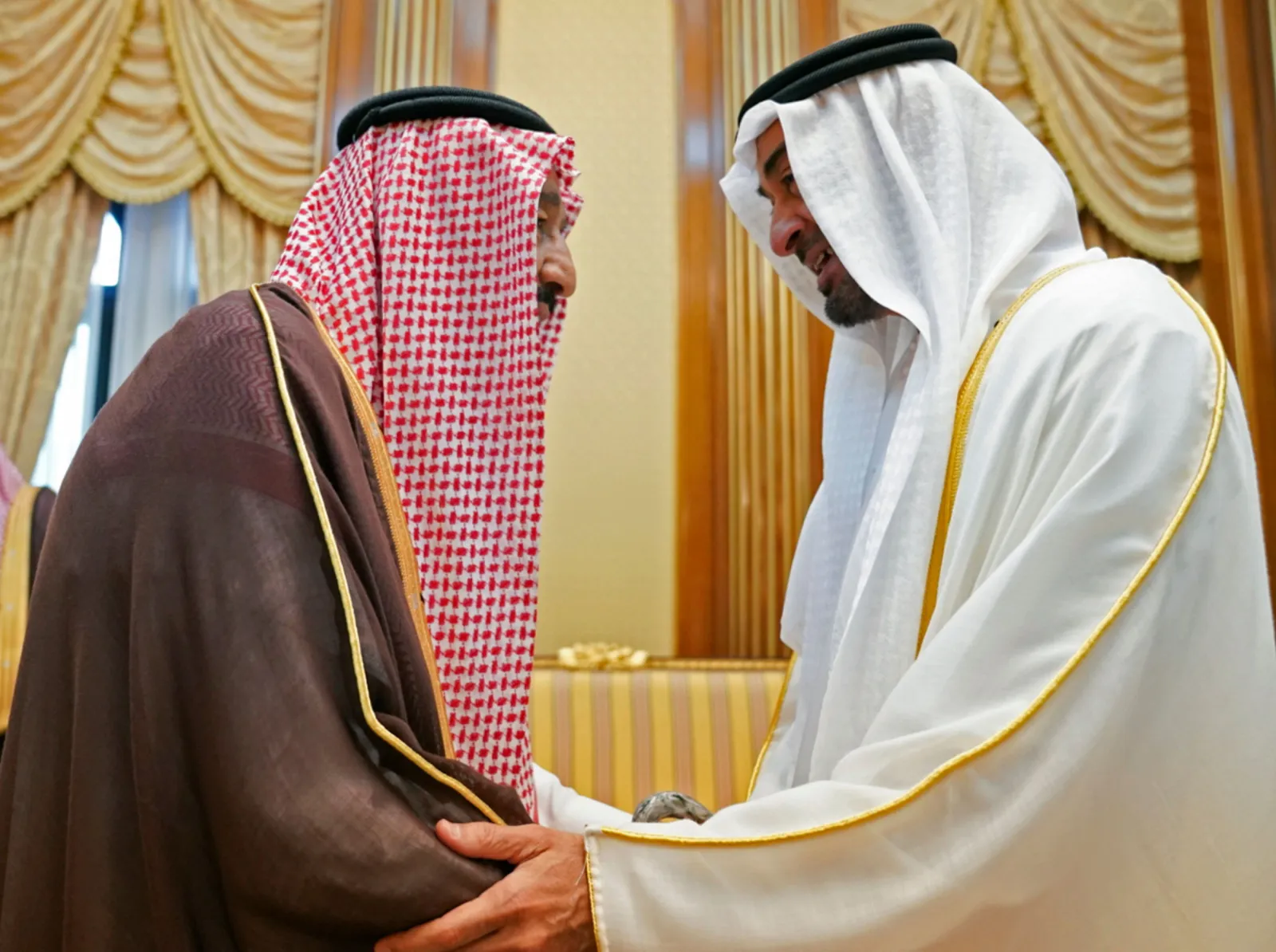
Yet the two countries interests aren’t identical. As their economies and geopolitical influence have grown, Saudi Crown Prince Mohammed bin Salman (MBS) and UAE President Mohammed Bin Zayed (MBZ) have sought to translate those assets into power. For MBS, this revolves around ensuring the region’s politics are stable enough to give the Kingdom the time to modernize its economy. MBZ, however, appears to have a different perception of how power should be thrown around. In Sudan, for instance, the UAE is the principle foreign backer of the Rapid Support Forces, a militia that has helped plunge the vast African country into one of the world’s worst civil wars. The Saudis, in contrast, are on the opposite side of that conflict and have been much more involved in seeking a diplomatic solution.
Yemen, however, is where Saudi and Emirati interests are clashing most violently. There was a time when Riyadh and Abu Dhabi were the chief organizers of a military coalition whose express purpose was to overthrow the Iranian-backed Houthis by force. Yet as time wore on and the war stumbled into a messy stalemate, the UAE decided to disengage, pulled most of its forces from the country in 2019 and refocused its attention since on establishing reliable proxies in the southern end of the country. The Saudis have disengaged militarily as well but still view Yemen’s stability as inextricably tied its own.
The problem is that the internationally-recognized Yemeni government spends as much time fighting itself as it does the Houthis. The Presidential Leadership Council that is supposed to bring anti-Houthi elements into a unified administration is in reality a mishmash of competing interests; the Saudis have their favorites, and the Emiratis have theirs. It just so happens that the UAE’s favorite, the Southern Transitional Council (STC), is the most powerful force on the ground and has lost patience with the normal process. The STC, whose long-term goal is to establish an independent state in South Yemen, has spent the last week capturing territory, including near Saudi Arabia’s southern border.
The Saudis reacted quickly. On Tuesday, December 30, Riyadh launched airstrikes against a convoy it says was funneling UAE weapons to the STC. The Saudi Foreign Ministry also released a statement all but blaming the UAE for destabilizing Yemen. On January 2, Saudi airstrikes struck more STC positions, and Saudi-backed Yemeni forces began an operation to reclaim territory. The UAE has tried to thread the needle between registering objections, protecting its own prerogatives and announcing the withdrawal of all its forces. Whether MBS will view these announcements as an exit ramp toward de-escalation remains to be seen.
How will this Gulf schism impact Trump’s own initiatives in the region? In the immediate term, it likely won’t. The Saudi-UAE slugfest is mostly confined to Yemen, a country the Trump administration is only concerned with in so far as the Houthis are targeting civilian tankers in the Red Sea. Those Houthi attacks have since tapered off. The White House is unlikely to spend a lot of capital on Yemen notwithstanding the recent fighting.
Yet if Riyadh and Abu Dhabi are unable to find a compromise on how Yemen should be governed, how the various anti-Houthi militias should be structured and what security arrangements should be in place along Yemen’s porous border, the rivalry could bleed into other aspects of policy. Reconstructing Gaza could get even more complicated if the Saudis and Emiratis are increasingly working at cross-purposes. Ditto Syria, where strengthening the new state might be impossible if MBS and MBZ begin to view the Levant as an arena for competition rather than cooperation.
For Trump, none of this would be particularly helpful.
Daniel R. DePetris is a fellow at Defense Priorities and a syndicated foreign affairs columnist at the Chicago Tribune*.*
The views expressed in this article are the writer's own.
View 0 Comments
Submit Correction
View Editorial & AI Guidelines