...

By Newsweek Editors
0
Share
Newsweek is a Trust Project member
See more of our trusted coverage when you search.Prefer Newsweek on Googleto see more of our trusted coverage when you search.
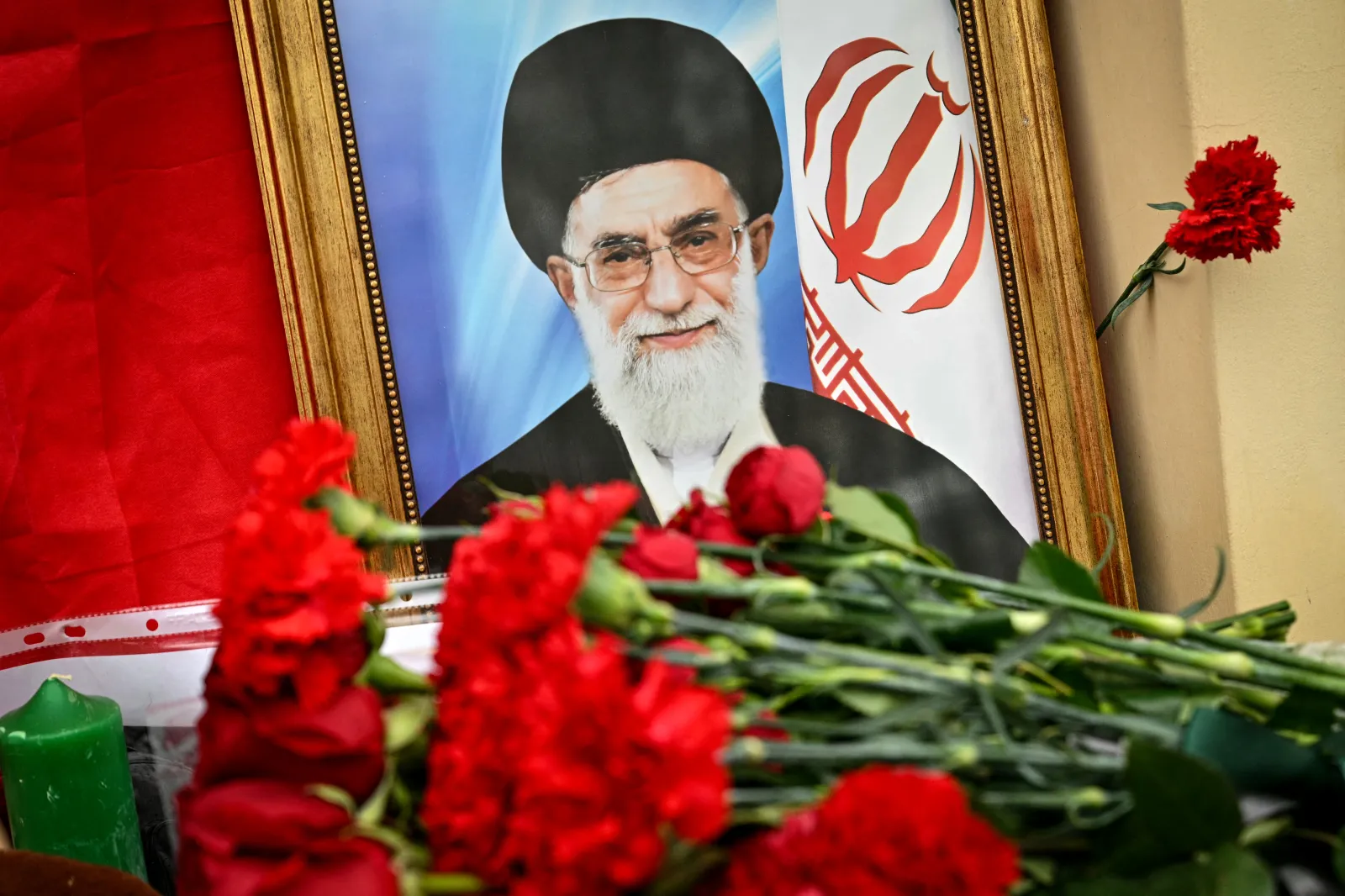
The footage shows a young boy asking Ayatollah Ali Khamenei to pray that he will become a martyr. Iran's Supreme Leader draws him close and advises him to live first—to study, to become a scientist, to serve Islam—and only in old age, at 80 or 90, to think about martyrdom.
The video gaining traction on social media is undated and unverified. But after his death in an Israeli airstrike on his compound on Saturday morning, there is speculation that Khamenei may have anticipated, and perhaps even embraced, the possibility of dying as a martyr himself. At 86, he chose to remain in Tehran despite the threat of imminent attack, staying at his residence with family members. If deliberate, that decision would align with a leadership philosophy rooted in sacrifice, endurance and resistance in the face of external pressure.
Read More on Analysis
Since his death, Khamenei's regime survival plan has been executed. Iran’s system had been structured to survive him, and the plan Khamenei laid is now playing out—and standing in the way of President Donald Trump and his ultimate goal of regime change.
"Iran, unlike the United States, has prepared itself for a long war," Ali Larijani, Iran’s powerful national security chief, said on X on Monday.
Ayatollah Alireza Arafi, named as one of the three members of Iran’s interim leadership council, said in a video message on Monday that "this war is going on gracefully with [Khamenei’s] designing," the Financial Times reported.
The immediate retaliatory strikes and the quick mobilization of allied militias show those plans were put into action fast, expanding the conflict beyond a single front.
Oil prices have soared over fears that fighting could disrupt key Gulf shipping routes, putting pressure on the global economy. Some Iranian military units are acting independently on pre-issued orders, officials have said.
Instead of collapsing after its leader’s death, Iran appears structured to keep operating, leaving Trump facing what could be a prolonged and unpredictable conflict rather than a quick end to the crisis.
Here are the five ways Iran is digging in for a long fight, as Khamenei's survival plan haunts Trump:
1. Retaliatory Strikes
Iran launched retaliatory strikes on Israel early Saturday morning, hours after U.S.-Israeli attacks targeted key sites inside the country. The response appeared swift and pre-planned, underscoring how Tehran had been preparing for months for the possibility of renewed military confrontation, even as nuclear talks continued.
In recent weeks, Iran had placed its armed forces on the highest level of alert, operating under the assumption that conflict could erupt at any moment. Ballistic missile launchers were repositioned along Iran’s western border and Persian Gulf coast, with Tehran believed to possess roughly 2,000 midrange missiles capable of reaching Israel.
Satellite imagery published days before the escalation showed Iran reinforcing nuclear facilities and repairing previously damaged missile bases, suggesting readiness for sustained conflict. Saturday’s strikes signaled that Iran’s retaliation plans were not improvised, but part of a broader strategy designed to respond immediately and decisively.
2. Oil Price Surge
Since Saturday’s strikes, oil prices have soared as markets react to the risk of supply disruptions in the Middle East. Brent crude rose about 7—9 percent, reaching around $78—$80 per barrel, amid fears that fighting could threaten shipments through the Strait of Hormuz, the narrow waterway that carries roughly 20 percent of the world’s oil.
Iran’s threats and strikes around the strait have slowed tanker traffic, with insurers raising war-risk premiums and some companies pausing shipments. A drone strike on Saudi Arabia’s Ras Tanura refinery, one of the world’s largest, also forced a temporary shutdown, adding to concerns about energy supplies.
Tehran knows that instability in oil markets creates global economic pressure. By raising uncertainty around energy flows, Iran can affect economies far beyond the region. If the conflict continues or the Strait of Hormuz is disrupted further, oil prices could climb much higher, pushing up fuel and everyday costs worldwide.
3. Wider Regional War
Iran’s retaliation quickly expanded beyond Israel, signaling the start of a wider regional conflict. Missile and drone strikes were launched not only against Israeli targets but also toward Gulf states, including attacks on Dubai and other major cities. Several countries closed their airspace as air defense systems were activated and explosions were heard across large parts of the region.
At the same time, Iranian-backed proxy groups in Lebanon, Iraq and Yemen were mobilized, raising fears of coordinated attacks on multiple fronts. Militias aligned with Tehran have threatened U.S. bases and key infrastructure, increasing the risk that the conflict could spiral further.
By widening the battlefield, Iran appears to be applying pressure across the region rather than limiting its response to Israel alone. The strategy raises the stakes for Gulf states and Western allies, making de-escalation more difficult and heightening concerns about a prolonged, multifront war.
4. Military Units Acting Independently
Iranian Foreign Minister Abbas Araghchi told Al Jazeera on Sunday that some military units were now "independent and somewhat isolated," operating on general, pre-issued directives rather than awaiting direct orders from Tehran.
This suggests a decentralized command structure designed to keep operations going even if central leadership is disrupted, reflecting prewar planning to ensure continuity and rapid retaliation.
5. Regime Survival Plans
As the risk of U.S. airstrikes grew, Khamenei tasked Larijani and a small inner circle of trusted political and military aides with safeguarding continuity of power.
Iran’s system is deeply entrenched across political, military and religious institutions, making it harder to destabilize. Khamenei is said to have created four layers of succession for key military and government posts, while senior officials were ordered to name multiple replacements in case they were killed. Decision-making authority was consolidated within a tight group to maintain control if communications were disrupted.
Rather than relying on one figure, the structure was designed for endurance, signaling that even leadership decapitation would not necessarily dismantle the regime or halt its strategic objectives.
Iran has moved quickly to manage the transition of power after Khamenei’s death, showing that succession planning was central to the regime’s survival strategy. Under Iran’s constitution, the Assembly of Experts (an 88-member clerical body) is responsible for choosing the next Supreme Leader. Officials have signaled that the process will be handled swiftly to avoid a power vacuum during wartime.
In the meantime, an interim leadership structure has been put in place to ensure continuity. Several senior figures are believed to be under consideration, including hard-line clerics and establishment figures. By preparing for a rapid appointment, Iran’s leadership aims to project stability, prevent internal infighting and show both domestic and foreign audiences that the system can endure even after the loss of its most powerful figure.
Iran’s response to the crisis reflects years of planning centered on one priority: regime survival.
Hey gang, Carlo Versano here. I hope you enjoyed this article. As Newsweek's Director of Politics and Culture and editor of the 1600 newsletter, I'm keen to hear what you think. Now, Newsweek is offering a new service to allow you to communicate directly with me in the form of a text message chat. You can sign up and get a direct line to me, as well as the reporters who work for me. You can shape our coverage.
As a Newsweek member, we're offering this service to you for free. You can sign up below, or read more about how it works here. Let's talk!
View 0 Comments
Submit Correction
View Editorial & AI Guidelines