
...

By Amanda Castro
Associate News Editor
0
Share
Newsweek is a Trust Project member
See more of our trusted coverage when you search.Prefer Newsweek on Googleto see more of our trusted coverage when you search.
A Texas family is speaking publicly after their son, Sam, died following exposure to a concentrated 7‑Hydroxymitragynine (7‑OH) product he believed was ordinary kratom.
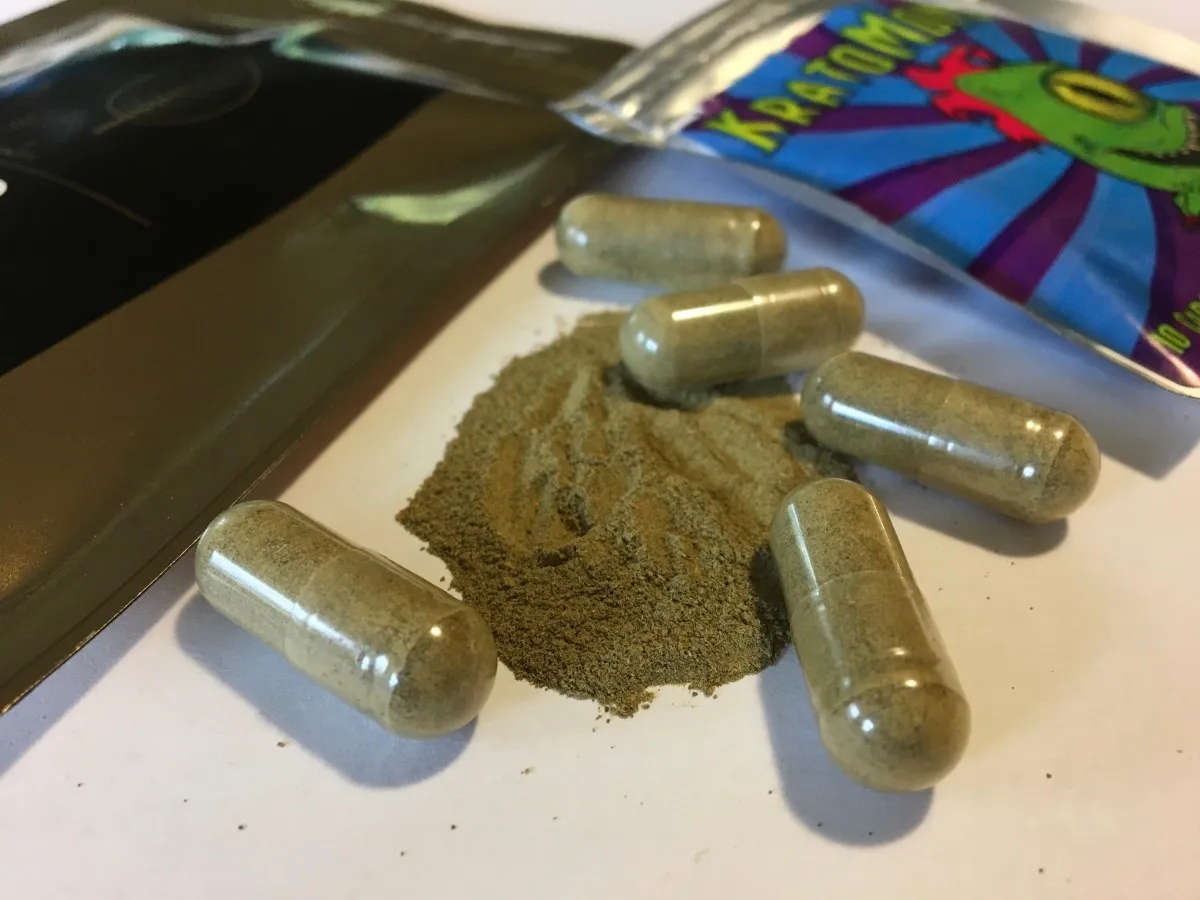
Their story comes as federal regulators move to classify 7‑OH and related compounds as Schedule I opioids, citing rising overdoses and the drug’s spread through gas stations and vape shops.
Families, addiction experts, and public‑health officials warn that these products — often sold as “enhanced kratom” — may be driving the next wave of the opioid epidemic.
Read More on News
Sam’s parents, Paul and Anne Marie, say their son never knew he was taking a potent opioid. “He always called it kratom,” Paul said. “He didn’t know what 7‑OH was. He didn’t know it was addictive. He didn’t know it could kill him.”
Newsweek has reached out to the offices of the Food and Drug Administration and the Drug Enforcement Administration (DEA) for comment.
...
‘He Loved His Family’: A Family Remembers Sam
Samuel Laws was born in Kingwood, Texas, in 1999 and grew up in Kingwood and Katy, spending summers with extended family in England. His parents describe a life “richly filled with love, creativity, spirituality, adventure and a steady pull toward new horizons,” marked by music, art, travel and a deep connection to nature and animals.
“Samuel was a very creative, artistic young man. He had lots of passions. He loved nature, he loved scuba diving, he loved music… He was a larger‑than‑life person. He was nearly six-foot-three and had a loud, booming voice. He’d just light up a room when he came in.
“He was gifted musically and also artistically… You’d just wonder how on earth he did it in such a short amount of time and the amount of detail.
“He’d play the bass guitar… through a concert‑grade amp and just blast the music out. But he was very talented, a very talented bass player.”
He attended culinary school, obtained a diploma in 2024, played bass, and won recognition for his art. As a child, he loved going to the circus and dressing up as a clown, putting on magic shows and entertaining the family at home. He was voted class clown at Woodcreek Junior High School and later class president at Tompkins High School.
“He was very funny and good at impersonating people… He had several characters that he could easily switch into, and it would cause everyone around him to laugh and be entertained,” his family said. “He loved entertaining, but he also had little self‑confidence, which was upsetting to see.”
How Sam Came Into Contact With 7‑OH
Sam’s family says they only pieced together his relationship with kratom and 7‑OH after his death.
“We located some in his bedside drawer in March," Anne Marie said. "His behavior had changed so much we didn’t know what was going on. We confronted him, and he said he’d stopped.”
“He told us that it had been sold to him [at a] discount," she added, saying it was six dollars per unit.
They later learned he continued using it while staying with relatives. “Unknown to them, he’d been out again buying the 7‑OH because it was so easy and so cheap for him to get.”
“We believe Sam started taking kratom a few years ago," Anne Marie said. "We believe he went to his usual vape store last year, where he was offered something stronger than kratom by the store owner, which was 7‑OH. Sam never called it 7‑OH; he always called it kratom.”
To them, that distinction — between what Sam thought he was taking and what he was actually given — is central. “The people in the shop were selling him what he thought was kratom.”
Anne Marie told Newsweek that she visited the vape shops Sam frequented.
“One of them, which is the last store he bought from, I went in and asked if he had kratom. And he said, ‘No, I have something much stronger. I have 7‑OH.’ I asked to see it, and I bought it.”
She said the product was labeled at 98 percent alkaloids — far above Texas’s 2 percent threshold. “I’m a 59‑year‑old woman and they didn’t think it was funny I was going in and buying 7‑OH.”
According to her, another store had it hidden in the back before selling it to her. A fourth had it openly displayed.
“It’s just very easy for people to buy it," Paul said.
Sam's Final Words Revealed His Relationship with 7-OH
When the family returned from England, Sam was incoherent on the floor.
“His very last words… he said, ‘I took three kratom teas,'" Anne Marie said. "'I told you I’d stopped, but I hadn’t.’”
She also said that the drug had made him suicidal. "He had suicidal ideation; he was in psychosis. He was very, very ill with a spiritual psychosis… I think he thought he was going to fly off and be with this Norse god.”
Paul and Anne Marie said that hospital notes from March described him as being in “spiritual psychosis," a term clinicians use when someone’s psychotic symptoms take on religious or supernatural themes.
Sam’s parents say his mental‑health challenges began in adolescence and often showed up as extremes. As Paul put it, “Samuel suffered from mental‑health issues for many years… everything was always in excess.”
Despite those struggles, they emphasized that Sam had never developed a substance addiction until 7‑OH. “He was never addicted to anything until he got the 7‑OH… he had written in his notes on his phone: ‘I’m addicted to this and I can’t stop.’”
According to his parents, the concentrated 7‑OH products intensified his symptoms dramatically. “Over the last year or so… it was really, really bad behavior, very erratic,” Paul said.
What Experts Say About 7‑OH
Scientific assessments describe 7‑OH as a potent opioid‑like compound that behaves very differently from botanical kratom. In natural leaf, 7‑OH appears only in trace amounts, but concentrated products can contain 90–97 percent 7‑OH, delivering doses far beyond what the plant produces.
Scott Hemby, professor of Basic Pharmaceutical Sciences at High Point University, told Newsweek that “7‑OH is a much stronger opioid than mitragynine, kratom’s most abundant compound.” Both substances act on the mu‑opioid receptor, he said, but “7‑OH binds about fifteen times more tightly and is roughly thirty times more potent.”
Hemby’s research also shows clear differences in addiction potential. “We published the first study showing rats will work to get 7‑OH,” he said, noting that animals repeatedly self‑administered the compound — “the standard test for a drug’s addiction potential.” By contrast, “They wouldn’t do it for mitragynine at any dose we tried.”
He warns that concentrated 7‑OH products carry risks that botanical kratom does not. “Concentrated 7‑OH products carry the risks of a strong opioid,” he said, including respiratory depression: “Opioid overdose kills by slowing respiration until it stops, and 7‑OH does this at much lower doses than morphine.”

...

...

...
1 of 3
Hemby also noted that commercial “kratom extracts” often contain unnaturally high levels of 7‑OH. Natural kratom contains “roughly 0.1 to 0.4 mg per gram of 7‑OH,” he said, while some extracts have measured “22 to 75 mg per gram,” indicating they were not produced by simply concentrating the plant.
He supports DEA’s temporary scheduling of concentrated 7‑OH. “For concentrated 7‑OH, yes,” he said, adding that the action “doesn’t limit botanical kratom below the threshold.”
Daniel Kraft, a physician and founder of NextMed Health, told Newsweek that concentrated 7‑OH “is not simply ‘stronger kratom.’ It is a potent opioid compound with pharmacology much closer to an opioid drug than consumers would expect from something marketed under the kratom label.”
Kraft said 7‑OH activates “the same mu‑opioid receptor system involved in the analgesia, dependence, and respiratory depression caused by drugs such as morphine and oxycodone,” and noted that in animal studies reviewed by the FDA, concentrated 7‑OH “produced respiratory depression with more than three times the potency of morphine.”
He emphasized the difference between natural kratom and concentrated 7‑OH. In botanical leaf, he said, 7‑OH is present only in “trace amounts,” while gas‑station and smoke‑shop products “reverse that relationship,” delivering “10, 20, 30, or more milligrams in a single unit.”
Clinically, Kraft said patients are presenting with symptoms that “overlap substantially with opioid toxicity,” including profound sleepiness, slowed breathing, altered mental status, agitation, seizures, and in severe cases, respiratory failure. Naloxone is appropriate, he said, because 7‑OH “acts at the mu‑opioid receptor.”
He also warned of escalating tolerance and dependence, with users reporting “compulsive use, opioid‑like physical dependence, and withdrawal,” including anxiety, sweating, chills, bone aches, diarrhea, dysphoria, and intense craving.
‘They Didn’t Know Anything About It’: Response From Officials
Paul and Anne Marie said that they've tried to raise concerns with local authorities. “What stood out to us was how little they knew about the drug,” they wrote in separate commentary to Newsweek. “Lack of awareness.”
“The police never heard of it, a lot of the medical staff never heard of it, the DEA didn’t know what it was when I called them,” Anne Marie said. “People who are supposed to be protecting us in the community have never even heard of it.”
Their experience mirrors national trends. Poison‑control centers have documented rising 7‑OH exposures. Federal agencies have issued warning letters, seized products, and opened public‑comment periods on proposed thresholds.
Paul and Anne Marie want immediate action: bans, enforcement, and public education. “These products need to be banned immediately,” they said in their comments. “It appears these stores are able to sell these products prior to them being approved by the FDA or government. It’s completely wrong. They’re made to sound beneficial. But it’s the complete opposite."
"I'm not sure what the way forward is," Anne Marie said. "At least get these side products banned; these offshoots of the kratom need to be banned. I believe we lost our son because of the substance that changed his mind; he was taking it heavily. It was purely, in my mind, because he was taking the 7-OH that we lost him."
Newsweek has reached out to the Texas Attorney General’s Office for comment.
A spokesperson for the U.S. Department of Health and Human Services (HHS) told Newsweek, “Under the Trump Administration, HHS is taking action to address the public health risks associated with enhanced 7‑OH and related compounds.”
Another spokesperson at the Texas Department of State Health Services (DSHS) told Newsweek the state is seeing a sharp rise in poison‑center calls involving kratom and concentrated 7‑OH products. Through July 2026, Texas recorded nearly three times more 7‑OH‑related exposure calls than in all of 2025.
Botanical kratom remains legal in Texas under the state’s Kratom Consumer Protection Act (SB 497), which regulates how traditional kratom products can be sold.
The law sets a strict 2 percent cap on 7‑hydroxymitragynine content, bans synthetic or chemically altered versions of the compound, and requires buyers to be at least 18.
While kratom leaf itself is still permitted, Texas has taken enforcement action against adulterated or ultra‑potent products that exceed legal limits.
By contrast, the DEA’s proposed scheduling targets concentrated or manufactured 7‑OH isolates — not botanical kratom — reflecting a regulatory divide between natural leaf and high‑potency derivatives.
‘More People Will Die’
Paul and Anne Marie say they’ve already met other families who lost loved ones to 7‑OH. “There are several support groups where many families are suffering from the same thing we’re suffering from,” they said. “However, little is being done by local authorities.”
They fear the crisis will worsen before it improves. “Basically you have drug dealers in these vape stores selling products that are highly addictive,” they said. “It’s no different from street drugs that are Schedule I. But kratom products and 7‑OH can be bought very easily and cheaply.”
The parents said: “Sadly, many more people will die from these products. And the people selling them are quite literally getting away with murder.”
Related Story
What is 7-OH? Experts Warn of Emerging Opioid Threat
Contact Newsweek editors on this story: Samantha Beech and Gray R. Thomas
View 0 Comments
Submit Correction
View Editorial & AI Guidelines