...

By Jesus Mesa
Reporter
0
Share
Newsweek is a Trust Project member
See more of our trusted coverage when you search.Prefer Newsweek on Googleto see more of our trusted coverage when you search.
At first glance, a three-letter airport code might seem like bureaucratic trivia meant mostly for air-traffic control purposes. But when the code is GAY, FUK or SUX, those letters can stir political outcry, cultural backlash or a citywide PR headache.
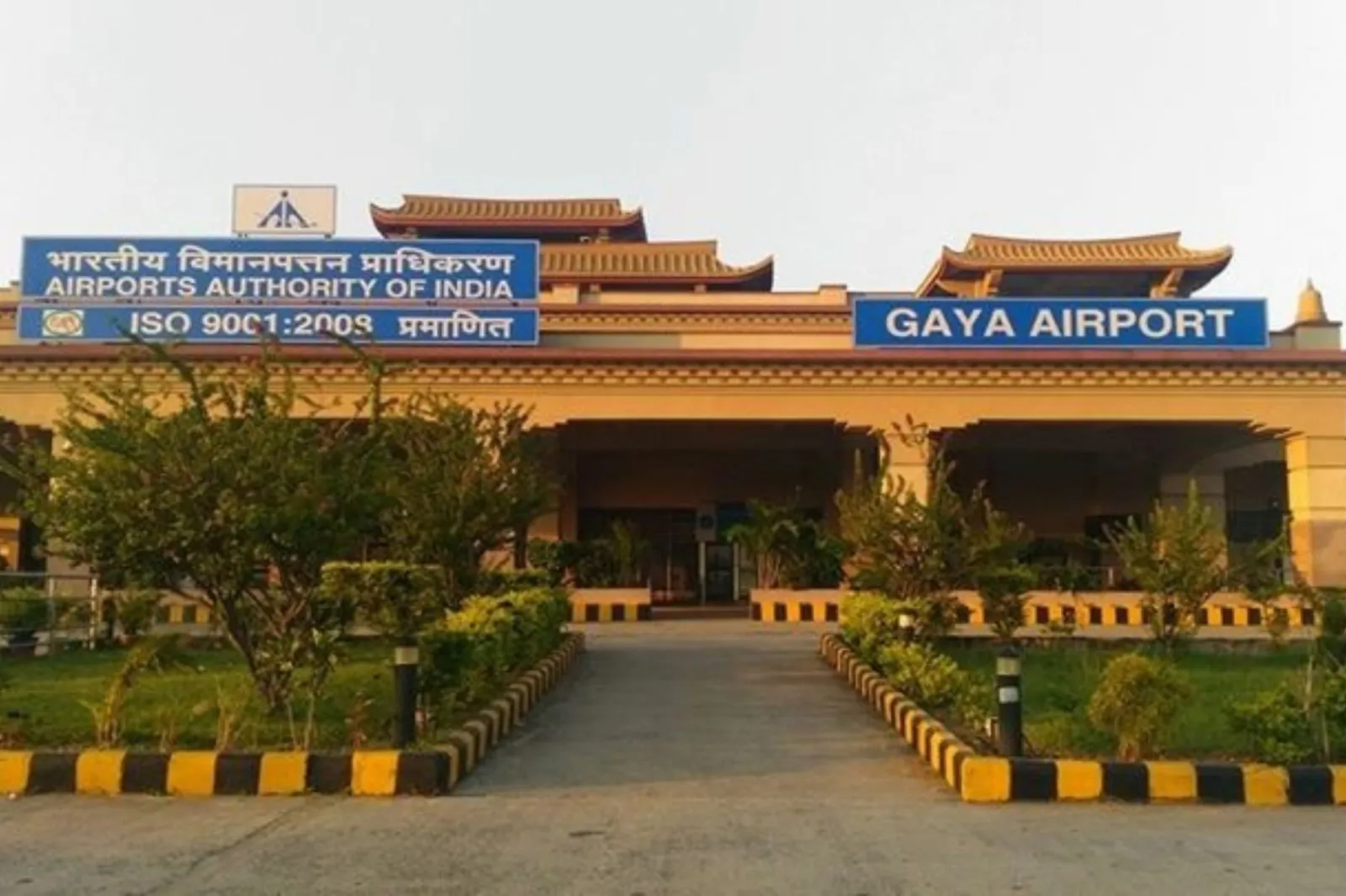
This week, Gaya International Airport in the Indian state of Bihar became the latest flashpoint after BJP Member of Parliament Bhim Singh called the airport's "GAY" designation "socially and culturally offensive." He urged India's civil aviation ministry to request a change from the International Air Transport Association (IATA).
The Indian government demurred, saying such changes are allowed only under "exceptional circumstances" tied to air safety.
Read More on World
...
The dispute reflects the rare instances of airport codes that can cause discomfort — or, more likely, chuckles — because of unintended meanings. While some codes — like SEX or GUN — are explicitly banned by IATA, others such as GAY, FUK (Fukuoka, Japan) and SUX (Sioux City, Iowa) remain in use, often after failed rebranding efforts.
"IATA codes can only be changed for safety reasons," the civil aviation ministry said in response to Singh's demand, according to the air travel blog View from the Wing. Yet that's not entirely accurate. Historical precedents show codes have changed before. Baltimore's airport went from BAL to BWI, and New York's Idlewild Airport was renamed JFK. Still, the process is rare and complex.
The push to change GAY's code has drawn criticism from LGBTQ+ activists who argue the effort is rooted in homophobia.
"The call to change the airport code is a symptom of homophobia," LGBTQ rights groups told View from the Wing. The code GAY was unused before Gaya's airport opened in 2002 and had ironically even been offered to Sioux City (SUX), which declined, reportedly uncomfortable with the acronym.
SUX faced its own identity challenge. Sioux City's code was considered embarrassing, and in both 1998 and 2002, city officials tried to have it changed. When those attempts failed, the city embraced the code with tongue-in-cheek marketing campaigns urging travelers to "Fly SUX."

...
Branding Dilemma
Requests to change Gaya's airport code have previously been submitted to the Ministry of Civil Aviation and the Airports Authority of India. In 2022, the Parliamentary Committee on Public Undertakings recommended changing the code from GAY to YAG, arguing that the existing codename was indecent.
Civil Aviation Minister Murlidhar Mohol noted that Air India had approached the International Air Transport Association (IATA) to request a change, but without success.
These cases are part of a long list of unintentionally provocative airport identifiers. FUK remains the official code for Fukuoka Airport in Japan. Dickinson, North Dakota, uses DIK. Other examples include POO (Pocos de Caldas, Brazil), PEE (Perm, Russia), and BUM (Butler Memorial, Missouri). Even codes like CAT, DOG, LOL, and OMG appear on the list of oddities.

...
Some codes stem from legacy naming systems, while others simply reflect the first available three-letter combination at the time of the airport's registration. Regardless of their origin, once an IATA code is assigned, changing it is no simple task.
IATA's Resolution 763 outlines the process for assigning and changing codes, stating that "only a strong justification, primarily concerning air safety, can be the driver for change." In practice, codes are deeply embedded in airline reservation systems, cargo tracking databases, and baggage-handling operations, making alterations costly and logistically difficult.
There have been exceptions. The most recent appears to be in 2019, when Kazakhstan's capital renamed its airport from Tselinograd to Nur-Sultan, and the IATA code changed from TSE to NQZ. Even then, the process took years. In 2022, the city reverted to its previous name—Astana—while keeping the new airport code.
For many travelers and aviation enthusiasts, these codes are more curiosity than crisis. "I always wanted to ticket an itinerary from Fresno, California (FAT), to Fukuoka, Japan (FUK)," Gary Leff, an aviation expert and main author of View from the Wing.
"Better to just lean into it: Fly SUX."
View 0 Comments
Submit Correction
View Editorial & AI Guidelines