
By Alexis Kayser
Healthcare Editor
0
Share
Newsweek is a Trust Project member
See more of our trusted coverage when you search.Prefer Newsweek on Googleto see more of our trusted coverage when you search.
This is a preview of Access Health—Tap here to get this newsletter delivered straight to your inbox.
I was diagnosed with rheumatoid arthritis in 2019, and from a patient perspective, my chronic pain is still a mystery.
Read More on Health Care
I spent weeks on waiting lists to see specialists, failed multiple medications and infusions and—even after six years—I've never had the underlying illness explained to me by a medical professional. What causes rheumatoid arthritis? What can I expect as it progresses? Is there anything I can do to improve my symptoms besides taking a pill? These questions were skimmed over in 15-minute-or-less consultations (with kind doctors, but doctors who were stretched thin). Just about everything that I know about my condition was learned via internet searches. Thankfully, as a journalist, I know where to look for reputable information. I know that isn't the case for many others in my shoes.
So when I ventured into the world of chronic pain research and treatment for a recent magazine feature, I expected that answers would be hard to come by. I was absolutely shocked by the level of consensus that I found.
From physical therapists to anesthesiologists, spine surgeons to pain scientists, everyone I interviewed told me that we know more about chronic pain now than at any time in history. We know how to manage it—and even cure it—with collaborative care models, combining psychotherapy, physical and occupational therapy and Western medicine.
But medical treatment hasn't kept up with the science, experts from Johns Hopkins Medicine, Michigan Medicine, the Shirley Ryan AbilityLab, Kaiser Permanente, Abbott, Inovalon, Confluent Health and other organizations told me.
There are a few reasons for that. The first is a classic: the supply of chronic pain specialists is not meeting the demand. In 2023, nearly one in four adults struggled with chronic pain, according to the most recent data from the CDC. That's a four percent increase from 2019. However, a recent study from UC Davis found that from 2019 to 2023, there was a 45 percent drop in the number of anesthesiology residents applying for chronic pain fellowships.
The experts told me that treatments we once called "alternative" are now being called "integrative." Physical and occupational therapy, behavioral therapy, Tai Chi and even acupuncture have been found to improve chronic pain, and are more effective than surgeries, injections or pills in many cases. That's because scientists have linked hundreds of chronic pain presentations to central nervous system dysregulation. To get to the root cause of their pain, patients often need to learn techniques that soothe the brain, taking their bodies out of "flight or fight" mode.
When speaking with chronic pain patients for this story, I heard experiences that mirrored my own. Long wait times, endless tests and bouncing from one specialist to another while relaying the same lengthy medical history over and over. There's some irony there. Navigating the health care system can be stressful, and in turn, can exacerbate symptoms.
In the article—which you can find on newsstands and online—I explored the barriers to treating chronic pain the right way, according to the experts. It's a story of insurance battles, pharmaceutical lobbies, medical school shortcomings and patient (mis)trust. Writing it made me think about so many of the shortcomings in our health care system, but also filled me with hope for what change could bring. I hope that you feel similarly while reading it.
I'll leave you with a quote that didn't make the final edit, but that's stuck with me through the reporting process. It's from Dr. David Hanscom, a board-certified orthopedic spine surgeon who left the scalpel behind after researching the true causes of chronic pain. He has dedicated his career to understanding the stress physiology behind these symptoms and helping patients heal from the inside out.
"We're using the same process to treat chronic pain which we've used for 50 years, and we keep asking ourselves why it's getting worse," Hanscom told me. "It's unbelievable."
If you've had your own experiences with chronic pain—as a patient or provider—I would love to hear them. Email me at a.kayser@newsweek.com and let me know what you think.
In Other News
Major health care headlines from the week
- The man who fired nearly 200 rounds at the U.S. Centers for Disease Control and Prevention headquarters wrote about wanting to make "the public aware of his discontent with the [COVID-19] vaccine," Georgia Bureau of Investigation Director Chris Hosey confirmed.
- House Democrats are pushing back against CMS' plan to expand prior authorization requirements to traditional Medicare.
- CentraCare is laying off 535 employees, local radio station MPR News reported. About 70 percent of the affected employees are in administrative and support roles, while the rest are patient-facing.
- Young adults are struggling to find health insurance after their 26th birthdays, according to a joint report from KFF and The New York Times.
Pulse Check
Executive perspectives on key industry issues

...
For this week's Pulse Check, I spoke with Warner Thomas, president and CEO of Sutter Health: a non-profit health system caring for more than 3.5 million patients in Northern California. The 21-hospital system is a consistent leader in research, innovation and digital health care solutions.
I asked Thomas how his system has benefitted from a focus on technology, and how it's positioning itself for success while caring for a rapidly aging population. Here's a snippet of our interview.
Which digital solutions have you found most effective for improving the consumer experience? Tell us about one tech initiative that's been a game-changer.
We've moved more and more of our appointments online. We book nearly 5 million appointments online each year, and nearly 50 percent of our primary care appointments are booked online. We've just seen a tremendous expansion of our online appointments. We've worked hard with our physicians and clinicians, and they've been great on the change management, the behavior change, to allow us to move more appointments online.
And patients like it. I mean, we see more people seeing us for both primary and specialty care. We have almost 1.2 million monthly active users of our patient portal. By making that easier, we're making access easier. We're providing more information to our patients on our patient portal, providing wayfinding opportunities, on demand and virtual visits. All these things are reducing friction, making it easier to be seen, and frankly, we're getting a lot of positive feedback from our patients.
What we find is patients that use our patient portal for two or more types of functions, whether it's online appointments and results reporting or after-visit summaries, they have a higher satisfaction rate than patients that don't use our patient portal. So we're trying to engage more and more of our patients in a digital fashion.
How are you working to increase patients' utilization of those digital services?
Just continuing to educate people, continuing to have them understand what's there for them to use and moving more of our appointments online. In the second half of the year, we'll see more of our subspecialties offer online appointments. I think that will increase the uptake. We're moving our radiology exams online so that they can book radiology exams online. It's a process that we're going through, and the easier we make it, the more traction we see from our patients and from new patients that want to use our system.
Health systems are navigating a complex and evolving landscape, from workforce challenges to financial pressures. What do you see as the biggest headwinds for hospitals right now, and how is Sutter positioning itself to stay resilient?
The aging of our population is the single biggest macro factor affecting the health care industry. Every day, roughly 11,000 people age into Medicare. And every time that happens, that's a reduction in revenue for all physicians in all hospitals in America.
And it's an immovable trend; we are going to continue to see the aging of the population. So I think organizations have to get more efficient, reduce cost, grow. You have to grow and care for more patients, because you really cannot just shrink your way out of this issue. You have to do both—you have to work hard to grow your revenue stream and serve more patients while being more efficient, effective and productive from a cost perspective.
Which services are you expecting to grow over the next few years as more patients enter the 65+ age range?
I think you'll see us continue to invest in primary care and areas like orthopedic care, neurological care, cancer care, cardiac care. But I think you'll also see us move into likely building our version of senior clinics over time, so that patients that are older and maybe have a lot of chronic diseases—they may have three, four or five chronic diseases and have a lot of health challenges—we would provide them an opportunity to be in a senior clinic where we have a more comprehensive approach. We have the right social services and team members that can help them navigate the system, longer appointments, offices that are easier to access.
C-Suite Shuffles
Where health care leaders are coming and going
- The Joint Commission has selected Austin Frakt to helm its research center, gleaning actionable insights from the accrediting body's surveys and programs.
- Bon Secours Mercy Health has promoted Tracy Griffin, naming her chief information security officer. She has been with the Cincinnati-based health system since 2010, climbing the ranks to her most recent role, system director of information security risk and assurance.
- The American Hospital Association elected nine new members to its board of trustees, including leaders from NYU Langone Health, Intermountain Health, Endeavor Health, UnityPoint Health, Sentara Health, Trinity Health, Yale New Haven Health, Providence St. Joseph Health and University Medical Center in Las Vegas.
Executive Edge
How health care execs are managing their own health
...
Planning ahead is one of those less-talked-about forms of self-care that can make a huge difference. When I'm thinking about next week's projects a week in advance, I notice a significant change in the quality of my work—and my physical and mental health. I wake up less stressed when I know my schedule for the day by heart. My writing is sharper when I've been mulling over the words for days before a deadline.
If that short-term prep is so impactful, imagine how much good long-term planning can do.
There are so many immediate demands on health care executives that it can be challenging to peer beyond the hour, let alone 10 years into the future. But succession planning is a critical safeguard for both individual leaders and organizations. Identifying and developing talent early can prevent vacancies in vital roles, especially in a competitive hiring atmosphere.
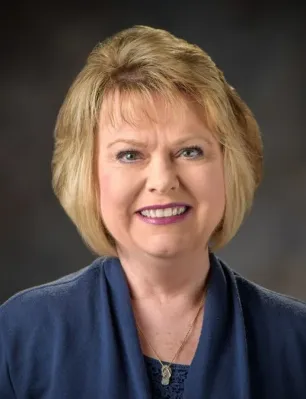
This week, I spoke with Dr. Lavonia Thomas, nursing informatics officer at MD Anderson, about her approach to succession planning in a demanding, multifaceted role. Here's what she told me:
- "I am fortunate that as part of the growth of the team, I have four associate directors that report to me, and their roles are delineated based on real workflow, ambulatory procedure, therapeutics, inpatient. And then I have a data piece that works on the reports that nurses use and their analytics."
- "All four of them are given the responsibility and the latitude to work within their space, but they also step outside that space, because, as I have taken over more innovations, they've had to step into more of that gap, if you will. We've spent years working together. They're all well-experienced informaticists."
- "And so a part of that, too, is my four times a year speaking with them and really talking to them about what they want. You know, not everyone wants to advance up the chain, and you have to respect those great individuals. But then you also identify those folks that would be able to step into your shoes, and then work with them to put their name out there, to put them in charge of projects with more and more responsibility. That's what I am doing with a couple of my associate directors, so that when I retire, they'll be able to step into my shoes."
Thomas will be speaking at Newsweek's Digital Health Care Forum on September 16 in New York City. Click here for more information and to secure your spot!
This is a preview of Access Health—Tap here to get this newsletter delivered straight to your inbox.
View 0 Comments
Submit Correction
View Editorial & AI Guidelines