...

By Tim Ryan and Justin Zorn
Former 10-term Member of the U.S. House of Representatives; Senior Adviser at the Center for Economic and Policy Research
0
Share
Newsweek is a Trust Project member
See more of our trusted coverage when you search.Prefer Newsweek on Googleto see more of our trusted coverage when you search.
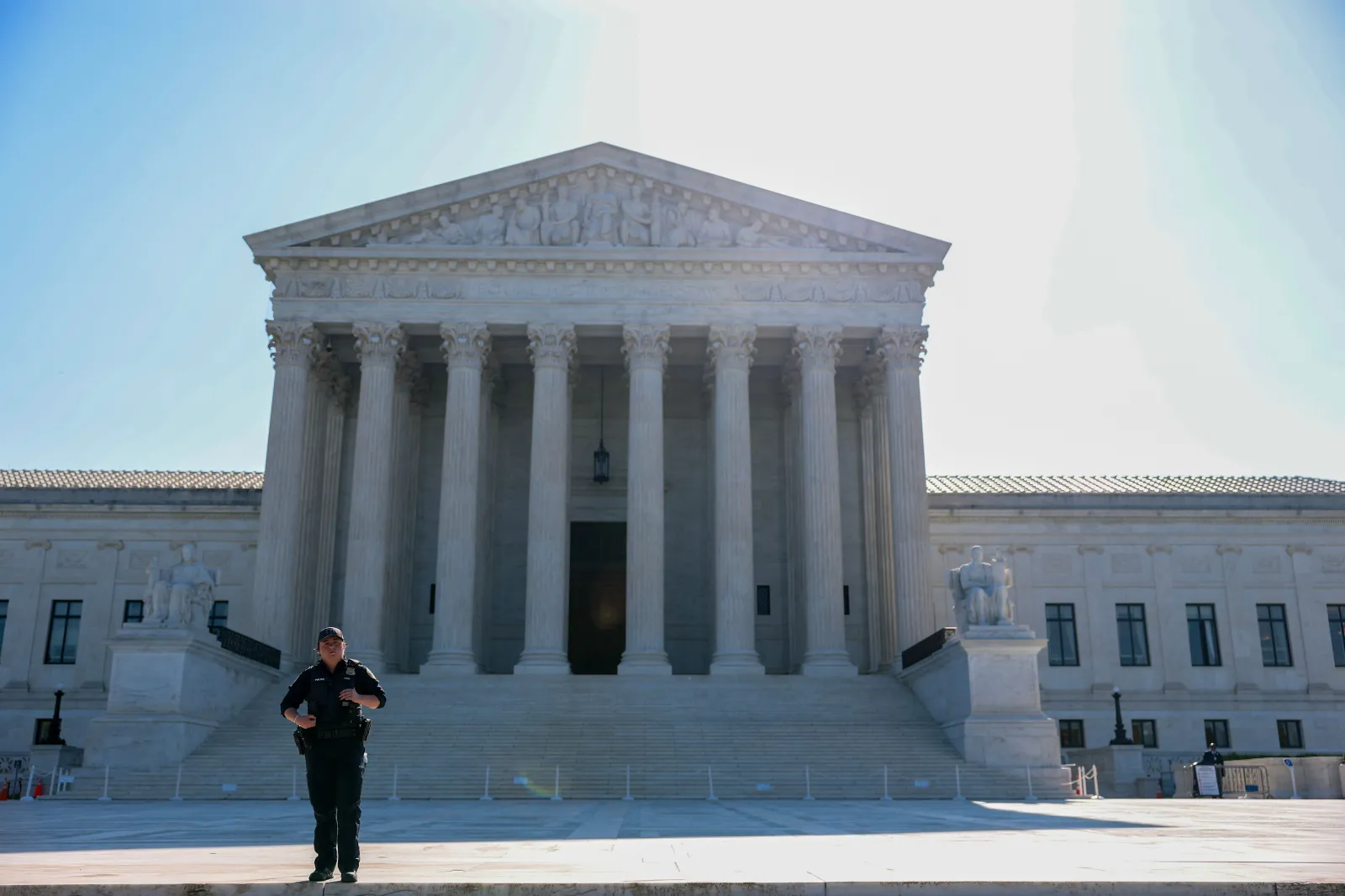
On Thursday, the Supreme Court handed down a ruling that’s uniting an extraordinarily wide swath of Americans in opposition—from MAHA moms to the health-oriented manosphere to rural conservatives to progressive environmentalists. In its 7-2 decision in Monsanto v. Durnell, the Court made it far harder for American farmers who developed cancer after years of exposure to toxic agrochemicals to sue the companies that made those products.
The case centered on whether people exposed to a toxic pesticide or herbicide can sue under state law when they believe the company failed to warn them about cancer risks. Bayer-Monsanto, the maker of the weedkiller Roundup, argued that because the Environmental Protection Agency approved the product label, companies should be shielded from legal liability—even when there’s clear evidence that the product made them sick and the warning was inadequate. The Court agreed.
No one wants dangerous chemicals in their food. No one wants basic legal rights denied to farmers. But this ruling lands amid a major awakening over toxins in the food system. You can see it in the growing bipartisan outrage over chemical additives in food, in how cancer rates and water quality have become midterm issues in Iowa and elsewhere, and in state legislatures passing packages focused on healthy food—including under the Make America Healthy Again banner in red states.
Read More on Opinion
In polling we commissioned with YouGov, 89 percent of Americans, including 87 percent of Republicans, said they want to ban pesticides that are already banned in Europe. It’s hard to find many issues that command that kind of bipartisan support.
...
It’s against this backdrop that Bayer-Monsanto, ChemChina and other agrochemical giants are urgently seeking legal protection from the wave of lawsuits and public scrutiny that’s coming.
Despite its stated commitment to a MAHA agenda, the Trump administration sided with the chemical industry in this case, reversing the Biden administration’s position in filing an amicus brief supporting Bayer-Monsanto over farmers and cancer plaintiffs.
At first glance, the Durnell ruling looks like a major victory for the agrochemical industry. But look ahead, and the answer isn’t so clear.
The industry may have just kicked up a hornet’s nest.
In April, when the Supreme Court heard the case, political leaders and influencers across the spectrum rallied against industry abuses. Days later, 73 Republicans joined nearly all Democrats to strip pesticide-immunity language from this year’s House farm bill. Such a bipartisan revolt against the chemical industry would have been unimaginable just a few years ago. In recent polling, 57 percent of Republicans told us they would consider voting for a candidate of the other party if that candidate made healthy food and toxic chemical reduction a top priority.
The Durnell decision will have real consequences. It will make it harder for people harmed by agrochemicals to seek accountability. It could embolden companies seeking broader liability shields. And it could deepen a dangerous pattern in American agriculture in which weeds become resistant to herbicides, regulators approve riskier new compounds, and farmers come under pressure to apply new and dangerous chemical combinations.
But the ruling can also catalyze a movement that is already gaining massive bipartisan traction.
Members of Congress, including House Republicans Anna Paulina Luna and Thomas Massie, are pushing to stop glyphosate liability shields. Democratic Senator Cory Booker and Representative Chellie Pingree are pushing for corporate accountability while proposing broader legislation to make healthy food affordable, expand prudent organic farming programs, and improve healthy food options in schools and public institutions.
All these efforts are crucial. But the bigger task ahead is to pass policies that enable farmers to get off the chemical treadmill.
While industry tries to argue that they’re representing the interests of farmers, the fact is that farmers’ costs and health risks keep rising. They’re increasingly trapped in a system dominated by seed, fertilizer, and chemical giants.
The response shouldn’t be to tell farmers to “use fewer chemicals.” It should be to give farmers the financial and technological tools to reduce costly and dangerous inputs over time. Lawmakers should start by rebuilding USDA technical assistance, expanding agricultural conservation programs, and supporting practical tools that lower costs and defend yields. Lawmakers should confront the corporate concentration—in seeds, fertilizers, and chemicals—that keeps farmers trapped in monopolistic pricing that is driving near-record bankruptcies.
Policymakers should also invest in grants and low-interest financing to make new technologies available to help farmers reduce chemical inputs. New innovations like machine learning-based sprayers can target individual weeds instead of blanket-spraying entire fields. Biological pest controls are moving into mainstream agriculture. New approaches like pulsed power, guided by AI sensors, can eliminate weeds down to the root without herbicides. State and federal leaders should make new technologies like these available to ordinary farms, not just the largest operators.
The Senate is now set to consider the new farm bill. Booker has already proposed legislation that would effectively overturn what the Supreme Court just did on liability shields. Lawmakers should seize the opportunity to make healthy food affordable, funding the off-ramp from chemical dependence and steering public dollars toward healthier food and farming.
The Supreme Court just handed Bayer-Monsanto a major short-term win. But it may also have awakened a much larger force: An American public that’s awake and organized on food issues. Don’t bet against them.
Tim Ryan is a former 10-term member of the U.S. House of Representatives from Ohio.
Justin Zorn is a senior adviser at the Center for Economic and Policy Research in Washington.
The views expressed in this article are the writers' own.
View 0 Comments
Submit Correction
View Editorial & AI Guidelines