
...

By Gabe Whisnant
News Editor
0
Share
Newsweek is a Trust Project member
See more of our trusted coverage when you search.Prefer Newsweek on Googleto see more of our trusted coverage when you search.
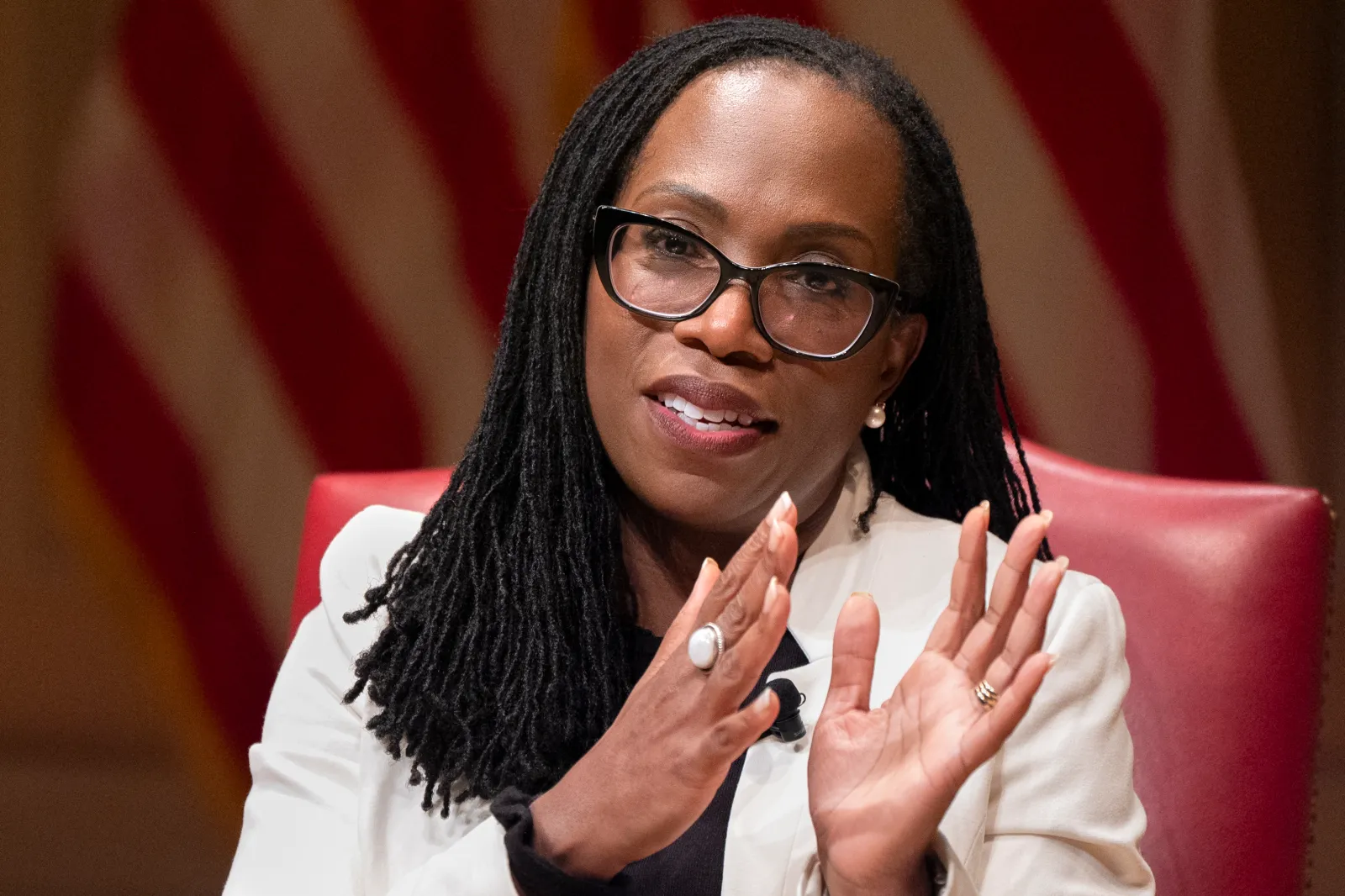
Justice Ketanji Brown Jackson dissented Monday as the Supreme Court ordered lower courts to reconsider a closely watched Voting Rights Act case involving Native American tribes.
The move comes after a recent decision weakening key protections under the landmark civil rights law and could change how discrimination claims are evaluated. The ruling could affect Native American voters and other minority groups by reshaping who can challenge redistricting maps and how those cases proceed.
In sending the cases back, the Supreme Court cited its recent decision in Louisiana v. Callais, which raised the bar for proving discrimination but did not directly address who may enforce the law. Jackson’s dissent highlights ongoing divisions over how far the court should go in narrowing the scope of the Voting Rights Act.
Read More on Politics
...
What Is Section 2 of the Voting Rights Act?
Section 2 of the Voting Rights Act of 1965 bars voting practices that discriminate on the basis of race and has long been used to challenge election laws and district maps. Courts have interpreted the provision to apply not only to explicit discrimination but also to policies that weaken minority voting power.
For decades, both the federal government and private plaintiffs—including voters and civil rights groups—have brought Section 2 cases in federal court. Those lawsuits have led to changes in congressional and legislative maps across the country.
The current legal fight centers on whether private parties can continue to enforce that provision.
Separately, on Monday, the Supreme Court ordered lower courts to revisit a similar Voting Rights Act case out of Mississippi, in which Black voters and the state NAACP had challenged legislative maps as discriminatory. Like the North Dakota dispute, that case raises questions about whether private plaintiffs can sue under Section 2, an issue the justices declined to resolve while sending both cases back for reconsideration in light of their recent ruling.
Rob Weiner, the Voting Rights Project director at the Lawyers’ Committee for Civil Rights Under Law, said in a statement shared with Newsweek, “In remanding this case for further consideration in light of Callais, the Court gives Mississippi relief it did not even request. The only issue the State presented for the Court's review was whether private parties can sue for violations of the Voting Rights Act."
Weiner continued, "In sending the case to the lower court for further review of other issues, the Supreme Court confirms once again that the normal rules do not apply when it considers voting rights cases. The Court's apparent hostility to voting rights, especially the rights of Black people, is wreaking havoc in our Nation's electoral system.”
What Is the Voting Rights Act Case Brought by Native American Tribes?
The dispute stems from a lawsuit by Native American tribes and voters in North Dakota challenging the state’s 2021 legislative map. The plaintiffs argued that the map split Native communities across districts, reducing their ability to elect preferred candidates.
A federal district court agreed and ordered a revised map, which improved Native representation.
The case took a turn when the U.S. Court of Appeals for the 8th Circuit ruled that private plaintiffs could not use a federal civil rights statute to enforce Section 2, suggesting that only the federal government could bring such claims.
That interpretation, if applied broadly, would break with decades of precedent and limit how voting rights cases reach federal court.
"This case presents only the question of Section 2’s private enforceability, which our decision in Louisiana v. Callais...did not address," Jackson wrote in her dissent. "Thus I see no basis for vacating the lower court’s judgment."
Supreme Court’s Broader Voting Rights Shift
The Supreme Court’s order follows a recent ruling that changed how Section 2 claims are analyzed. The conservative majority emphasized proof of intentional discrimination, a higher legal bar than standards previously applied in many cases.
Legal observers say this shift could make it harder to challenge redistricting plans based solely on their impact. Ongoing cases involving election maps and systems at federal, state and local levels are now being reconsidered under this framework.
By sending the Native American case back, the court is requiring lower courts to apply that updated standard.
What the Ruling Could Mean Going Forward
The implications extend beyond North Dakota. If courts adopt the view that only the federal government can enforce Section 2, the number of voting rights cases could decline, particularly in areas where private lawsuits have driven challenges.
That potential shift has drawn attention because Native American voters and other minority groups have often relied on Section 2 litigation to contest barriers to representation.
The case will now move back through the lower courts, where judges will reconsider the claims under the Supreme Court’s revised interpretation—an outcome that could shape how voting rights protections are applied in future election cycles.
View 0 Comments
Submit Correction
View Editorial & AI Guidelines