...


By Dan Gooding and Gabe Whisnant
0
Share
Newsweek is a Trust Project member
See more of our trusted coverage when you search.Prefer Newsweek on Googleto see more of our trusted coverage when you search.
The Supreme Court agreed Monday to hear arguments over the Trump administration’s effort to end legal protections that allow people fleeing war and natural disasters in countries such as Haiti and Syria to live and work in the United States.
The Justice Department asked the justices to step in after lower courts blocked the administration from ending Temporary Protected Status (TPS) for Haitians. The conservative‑majority court has previously allowed immigration officials to terminate similar protections for about 600,000 people from Venezuela, a move that exposed them to possible deportation.
"This case is about 350,000 law-abiding neighbors, friends, co-workers, and family members who live among us and have contributed to our communities," Geoff Pipoly and Andrew Tauber, counsel working the case with Bryan Cave Leighton Paisner LLP in Chicago, told Newsweek in a statement.
Read More on U.S.
"Unable to return to Haiti in safety, they care for our elderly, work in our factories, and have built businesses that employ others. Rather than expel them, we should be thankful that they are here. The administration insists that it can violate statute and that the courts can do nothing about it. That is an extreme position that should concern all."
The Haitian community was among the immigrant groups singled out during the 2024 presidential election, with Vice President JD Vance and President Donald Trump both claiming that Haitian migrants in Springfield, Ohio, many of whom had TPS, were eating their pets and causing housing issues in the community. The claims were widely debunked.
Faith leaders, community members, and immigration advocates are expected to rally outside the Supreme Court as it hears the case Tuesday at noon.
Do Haitians and Syrians Still Have TPS?

...
Tuesday's hearing comes after a lower court blocked the Trump administration from revoking TPS for Haiti. The Department of Homeland Security (DHS) had sought to do that on the basis that conditions in the Caribbean nation had improved enough for nationals to return home, despite ongoing unrest.
The District Court judge's two-page order declared the termination "null, void, and of no legal effect" during the stay, meaning some 350,000 Haitian TPS holders retained their work authorization and protection from detention and deportation.
In November, a similar ruling was issued on Syria's TPS status, allowing immigrants with the protections to remain in the U.S. pending further hearings.
Monday's update from the Supreme Court also kept those protections in place, with the justices wanting to delay any further action until after they have heard the case.
When DHS announced it was ending TPS for both countries, it used reasoning similar to that put forward when other TPS statuses were revoked: that the circumstances that had led the respective countries to be granted the status had eased, and that it was therefore safe for immigrants to return home. U.S. State Department travel advisories have largely shown otherwise.
DHS said in its filing that it was "contrary to the national interest of the United States to permit Haitian nationals (or aliens having no nationality who last habitually resided in Haiti) to remain temporarily in the United States."
Immigration Cases Heard by the Supreme Court
...
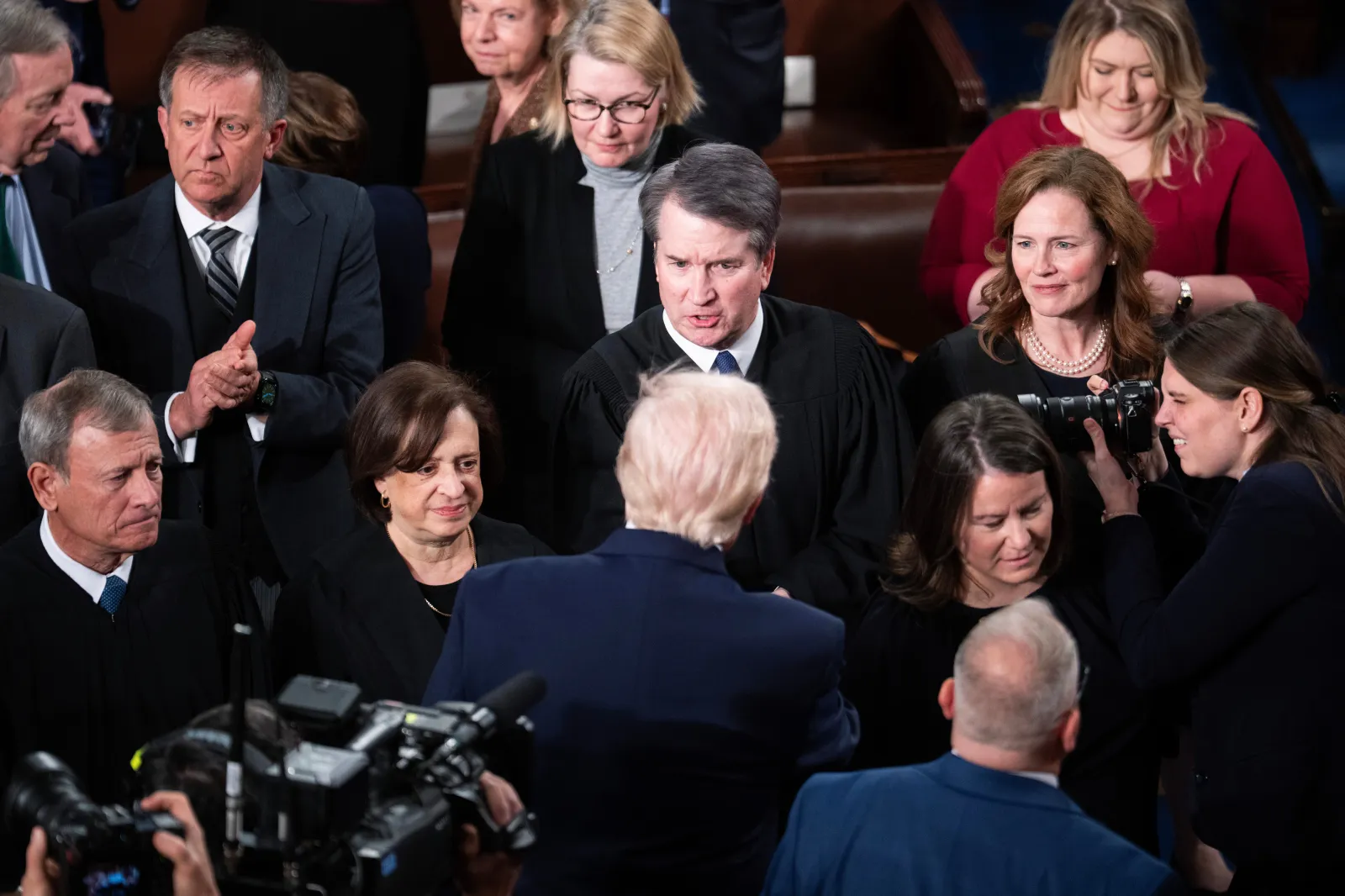
Since Trump returned to the White House, the country's highest court has heard a handful of key immigration cases.
The most widely known and debated issue is birthright citizenship, stemming from an executive order Trump signed earlier last year, aimed at ending the automatic right to citizenship for nearly all babies born in the U.S., regardless of their parents' immigration status.
Justices have heard arguments on the case, but a ruling is still pending on whether Trump can revoke the right of those whose parents do not have legal status.
Recently, the court ruled in favor of the Trump administration in Urias‑Orellana v. Bondi. The justices held that courts of appeals are required to apply a “substantial‑evidence” standard when reviewing the Board of Immigration Appeals’ determination on whether an asylum-seeker has shown “persecution” under the law.
Under the ruling, federal appeals courts would have to abide by immigration judge rulings on whether asylum-seekers qualify for protection.
Other immigration cases that have been taken up by the Supreme Court include whether the White House had authority to deploy federal troops as part of immigration enforcement efforts, whether those agents could stop and detain individuals based on their race, location, or job, and challenges to asylum policies.
Update 3/16/26, 4:32 p.m. ET: This article was updated with additional information.
Update 3/16/26, 5:11 p.m. ET: This article was updated with comment from Geoff Pipoly and Andrew Tauber.
In a polarized era, the center is dismissed as bland. At Newsweek, ours is different: The Courageous Center—it's not "both sides," it's sharp, challenging and alive with ideas. We follow facts, not factions. If that sounds like the kind of journalism you want to see thrive, we need you.
When you become a Newsweek Member, you support a mission to keep the center strong and vibrant. Members enjoy: Ad-free browsing, exclusive content and editor conversations. Help keep the center courageous. Join today.


View 0 Comments
Submit Correction
View Editorial & AI Guidelines