...

By Khaleda Rahman
National Correspondent
0
Share
Newsweek is a Trust Project member
See more of our trusted coverage when you search.Prefer Newsweek on Googleto see more of our trusted coverage when you search.
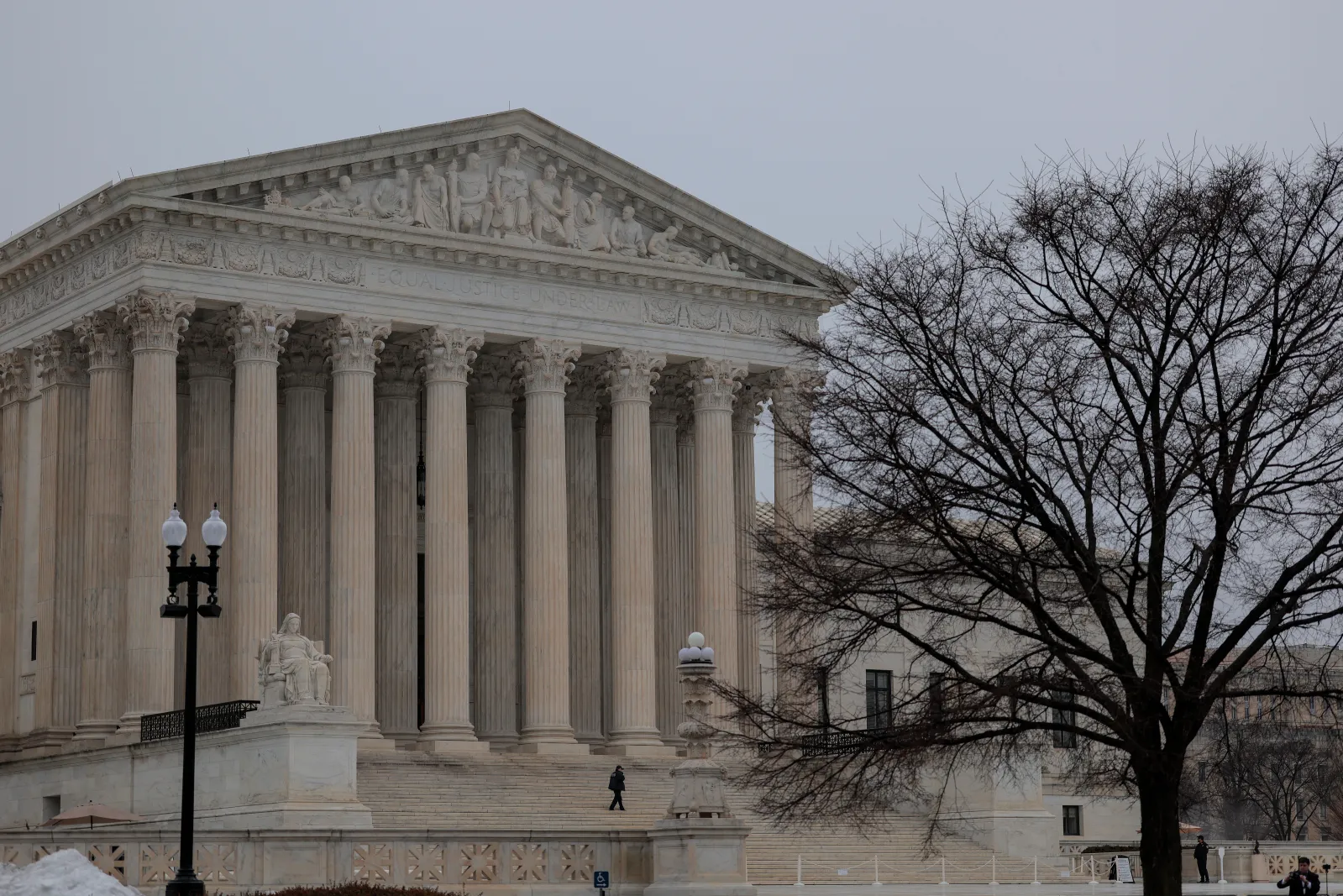
The Supreme Court’s conservative majority on Monday cleared the way for California schools to tell parents if their children identify as transgender without getting the student’s approval.
The court’s three liberal justices publicly dissented, saying the case is still working its way through lower courts and there was no need to step in now.
Justice Elena Kagan wrote in her dissent: “If nothing else, this court owes it to a sovereign state to avoid throwing over its policies in a slapdash way, if the court can provide normal procedures. And throwing over a state’s policy is what the court does today."
Read More on News
The high court’s order, granting an emergency appeal from a conservative legal group, blocks, for now, a state law that bars school districts from adopting policies requiring automatic parental notification requirements if students change their pronouns or gender expression at school. It comes after religious parents and educators challenged California policies aimed at preventing schools from outing students to their families.
California argued that students have the right to privacy about their gender expression, particularly if they fear rejection from their families, and that the policies and state law aim to balance student privacy with parental rights.
...
The high court majority sided with the parents and reinstated a lower-court order blocking the law and school policies while the case continues to play out.
“The parents who assert a free exercise claim have sincere religious beliefs about sex and gender, and they feel a religious obligation to raise their children in accordance with those beliefs. California’s policies violate those beliefs,” and burden the free exercise of religion, the court majority wrote in an unsigned order.
Read Justice Kagan’s Dissent in Full
JUSTICE KAGAN, with whom JUSTICE [Ketanji] JACKSON joins, dissenting.
Today’s decision shows, not for the first time, how our emergency docket can malfunction. A case raising novel legal questions and arousing strong views comes to this Court via an application about whether to stay a district court’s injunction pending appeal. The ordinary appellate process has barely started; only a district court has ruled on the case’s merits. The Court receives scant and, frankly, inadequate briefing about the legal issues in dispute. It does not hold oral argument or deliberate in conference, as regular procedures dictate. It considers the request on a short fuse—a matter of weeks. And then the Court grants relief by means of a terse, tonally dismissive ruling designed to conclusively resolve the dispute. The Court does all this
even though the application of existing law to the case raises tricky questions, and so cries out for reflection and explanation. The Court is impatient: It already knows what it thinks, and insists on getting everything over quickly. See also, e.g., Department of State v. AIDS Vaccine Advocacy Coalition, 606 U. S. , (2025) (KAGAN, J., dissenting from grant of stay application) (slip op., at 2–3); Trump v. Wilcox, 605 U. S. , (2025) (KAGAN, J., dissenting from grant of stay application) (slip op., at 2–3, 8).
Indeed, the precipitousness of the Court’s decision today has yet a further—and wholly new—dimension: In granting emergency relief, the Court cannot even wait for an appellate court to conclude its own process for deciding the identical issue. As the Court notes, a Ninth Circuit panel last month stayed the District Court’s injunction against the challenged policies, pending the State’s appeal of that order. See ante, at 3–4. The plaintiffs responded by simultaneously filing two motions—one asking this Court to vacate the panel’s stay and the other asking the Ninth Circuit to do the same thing through en banc review. The Ninth Circuit is already acting on the motion filed there: The court promptly called for (and has now received) a response from the State, preparatory to exchanging memoranda and voting on reconsideration of the panel’s decision. Regular order counsels that, in this situation, the Ninth Circuit should go first. The lower court, that is, should decide whether to vacate the stay; and only then should this Court decide whether further action is needed. Cf. Supreme Court Rule 23.3 (Stay applications “shall set out with particularity why the relief sought is not available from any other court”). But the Court’s impatience cannot be contained for even that long. The Court jumps the line, preempting the Ninth Circuit’s normal (and notably reflective) en banc process. Why wait for appellate procedures to play out when the Court already knows what it wants?
And still, there is worse: The Court resolves the issues raised through shortcut procedures on the emergency docket even though it has had—for months now—the option of doing so the regular way, on our merits docket. Since November of last year, a petition for certiorari has been pending in a case that, in critical respects, is a carbon copy of this one. In Foote v. Ludlow School Comm., 128 F. 4th 336 (CA1 2025) (per curiam), cert. pending, No. 25–77, as here, a public school adopted a policy, conforming to a state agency’s guidance, about students who identify as transgender. There, as here, the policy requires school employees to use only a student’s preferred name and pronouns, while barring employees from disclosing the student’s at-school gender identity to parents. And there, as here, parents challenge that policy as a violation of their right to substantive due process. See id., at 340–344.1 Why not, then, just grant certiorari in Foote, and decide it this coming fall? Or if there is some reason that Foote is not suitable, the Court could take one of the many cases lined up behind it. By recent count, almost 40 cases raising due process and/or free exercise objections to similar school policies are currently in the judicial system (with several recently decided by appellate courts), so this Court would not have to wait long. See Pet. for Cert. in Foote, O. T. 2025,
No. 25–77, p. 32. By granting certiorari on one (or more) of those cases, the Court could ensure that the issues raised by such policies receive the careful, disciplined consideration they merit, rather than the inevitably truncated review the Court affords emergency applications.
Certainly, the Court cannot claim that thought and care are not needed. If nothing else, this Court owes it to a sovereign State to avoid throwing over its policies in a slapdash way, if the Court can provide normal procedures. And throwing over a State’s policy is what the Court does today. To be sure, the Court sprinkles the word “likely” atop its assessment of which party’s arguments will succeed. But no one—in particular, neither a state official nor a lower court—is apt to read the Court’s per curiam, brusque though it is, as anything less than a conclusive merits judgment.
In any event, there is something else: This case presents some thorny legal issues. The Court grants relief to parents on the same two substantive grounds that supported the District Court’s injunction. First, the Court says, some parents can show that the State’s policy “substantially interfere[s]” with their First Amendment right “to guide the religious development of their children.” Ante, at 5. Here, the Court analogizes to Mahmoud v. Taylor, 606 U. S. 522 (2025), a decision issued last Term about school curriculum. The ink on that decision is barely dry, and courts have just begun to consider its meaning and reach. But even assume the Court is right on the free exercise score; still, that could not justify extending relief to all the parents here. After all, some of those parents object to the State’s policy not for religious reasons, but simply because it prevents them from taking part in their children’s most crucial life decisions. So the District Court also ruled on substantive due process grounds, finding a parental right to “direct the upbringing and medical care of their children.” App. to Emergency Application 54a. And indeed, in doing so, the court made its free exercise ruling superfluous, because the due process ground protects every parent, whether or not religious. See supra, at 3, n. 1. This Court, to affirm the relief given, must follow the same course: It explains that the State’s policy “excludes parents” from “participation in decisions regarding their children’s mental health.” Ante, at 5–6. But the very phrasing the Court uses betrays the delicateness of the operation: Even in recognizing that parental right, the Court cannot quite bring itself to name the legal doctrine—it is, again, substantive due process—that provides the right’s only basis.
Anyone remotely familiar with recent debates in constitutional law will understand why: Substantive due process has not been of late in the good graces of this Court—and especially of the Members of today’s majority. The Due Process Clause, needless to say, does not expressly grant parental rights of any kind. The relevant text bars a State only from depriving a person of “liberty” “without due process of law.” Members of the majority often have expressed skepticism—sometimes outright hostility—to understanding the “capacious” term “liberty” to enshrine specific rights. Dobbs v. Jackson Women’s Health Organization,
597 U. S. 215, 239 (2022). Substantive due process, one has stated, is a “particularly dangerous” “legal fiction” because it “invites judges” to “roa[m] at large in the constitutional field guided only by their personal views.” McDonald v. Chicago, 561 U.S. 742, 811 (2010) (THOMAS, J., concurring in part and concurring in judgment); Obergefell v. Hodges, 576 U. S. 644, 721 (2015) (THOMAS, J., dissenting). 2 Another has pointed to the “judicial misuse of the so-called ‘substantive component’ of due process to dictate policy on matters that belonged to the people to decide.” Sessions v. Dimaya, 584 U. S. 148, 191 (2018)(GORSUCH, J., concurring in part and concurring in judgment). And yet a third, when defending the Court’s elimination of a 50-year-old right grounded in substantive due process, explained that the “Constitution does not grant the nine unelected Members of this Court the unilateral authority to rewrite the Constitution.” Dobbs, 597 U. S., at 340 (KAVANAUGH, J., concurring). There are many such statements to choose from in this Court’s recent substantive due process caselaw. Especially given the Court’s last venture into the field, today’s decision cannot but induce a strong sense of whiplash. Compare ante, at 5–6 (recognizing a parent’s right to make important decisions about her child’s health), with Dobbs, 597 U. S., at 231 (repudiating a woman’s right to make important decisions about her own health).
None of this is to say that the Court gets the merits here wrong. It may not—as to the plaintiffs’ free exercise claim, or their substantive due process claim, or both. As to due process particularly—because, again, that claim alone does all the load-bearing work in this case, see supra, at 3, n. 1, 4—I have no doubt that parents have rights, even though unenumerated, concerning their children and the life choices they make. See Pierce v. Society of Sisters, 268 U. S. 510, 534–535 (1925); Parham v. J. R., 442 U. S. 584, 602–603 (1979). On the other side of ledger, of course, a State has critical interests in the care and education of children. But California’s policy, in depriving all parents of information critical to their children’s health and well-being, could have crossed the constitutional line. And that would entitle the parents, at the end of the day, to relief.
The Court, however, would be far better equipped to draw the appropriate line and to explain its legal basis—in short, to do law in the right way—if it had followed our ordinary processes. A mere decade ago, this Court would never have granted relief in this posture. (Indeed, I am confident that the plaintiffs would never have thought to ask, at this stage, for the Court’s involvement.) Then, though apparently not now, we understood that our normal processes—full briefing, oral argument, conference, and opinion writing, along with the time they take—exist for a reason. They ensure that before the Court makes a decision, it has marshaled all the relevant facts; considered all interested parties’ and multiple lower courts’ legal arguments; and deliberated internally, with full understanding of each other’s perspectives, on all disputed issues. So too, those processes enable us to think through the best legal rationale for, and scope of, any decision, given both the views we have earlier expressed and the related issues that will soon come before us. And they allow us to explain ourselves well and carefully, both to the parties and to the public. Our processes are, in short, the hallmark of judicial probity, and alike its guarantor. There was no reason to abandon them here. I respectfully dissent.
In a polarized era, the center is dismissed as bland. At Newsweek, ours is different: The Courageous Center—it's not "both sides," it's sharp, challenging and alive with ideas. We follow facts, not factions. If that sounds like the kind of journalism you want to see thrive, we need you.
When you become a Newsweek Member, you support a mission to keep the center strong and vibrant. Members enjoy: Ad-free browsing, exclusive content and editor conversations. Help keep the center courageous. Join today.


View 0 Comments
Submit Correction
View Editorial & AI Guidelines