
...

By Gabe Whisnant
News Editor
0
Share
Newsweek is a Trust Project member
See more of our trusted coverage when you search.Prefer Newsweek on Googleto see more of our trusted coverage when you search.
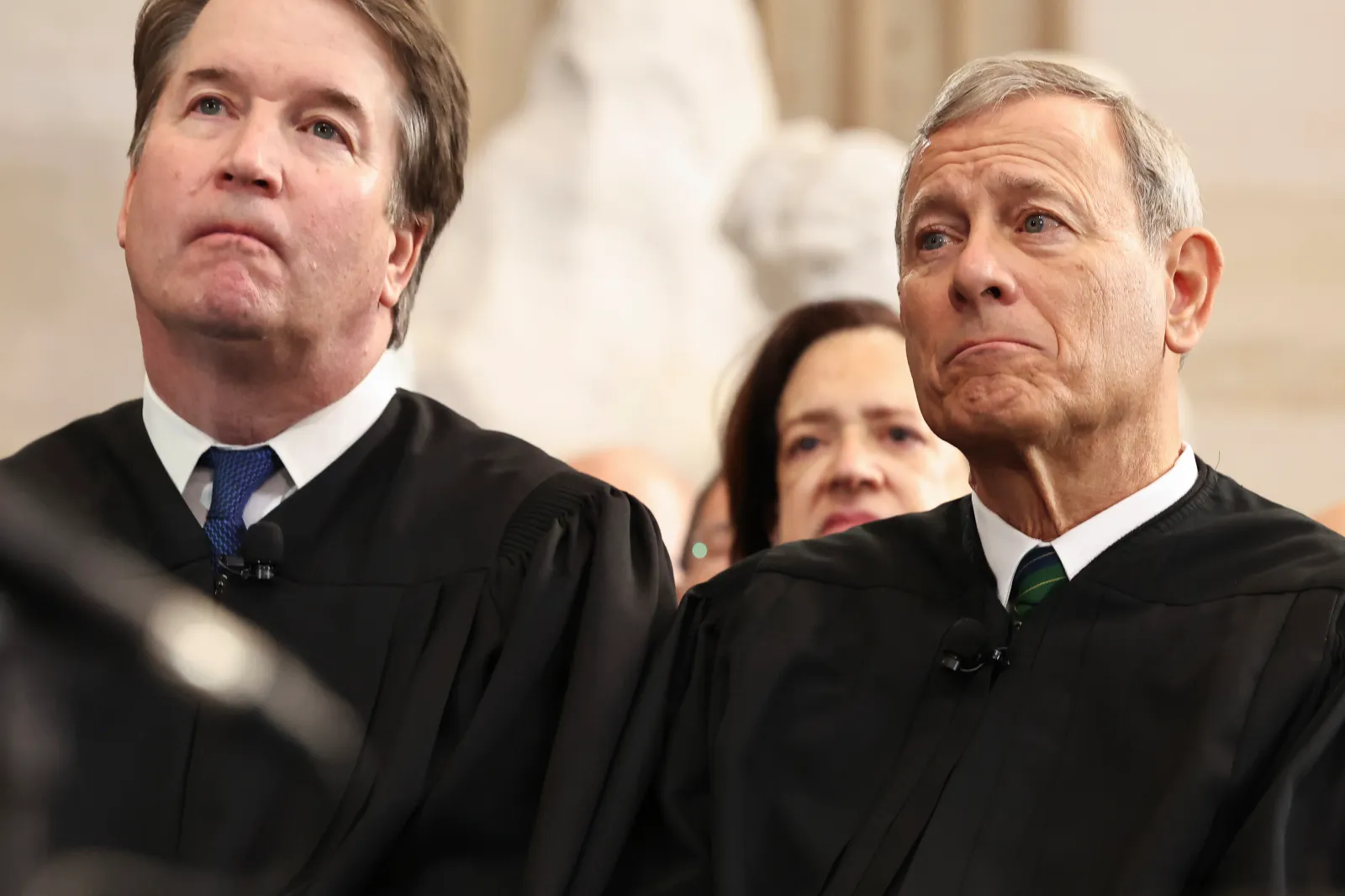
The Supreme Court on Thursday ruled that a Black Mississippi death row inmate can pursue renewed challenges to his conviction, with Chief Justice John Roberts and Justice Brett Kavanaugh joining the court’s liberal wing in a 5-4 decision.
The ruling highlights differences on the conservative-majority court over how aggressively to police claims of racial bias in jury selection and reinforces precedent barring discrimination against Black jurors. It reopens a decades-long legal battle for Terry Pitchford and sends his case back to lower courts, where his conviction and death sentence could again be reconsidered.
“Mr. Pitchford is now entitled to a fair trial in the state court,” Joseph Perkovich, who argued the case for Pitchford at the Supreme Court, told the Associated Press.
Read More on U.S.
A Fractured Conservative Block Over Racial Bias
At issue was whether prosecutors improperly removed Black prospective jurors during Pitchford’s 2006 capital murder trial, in which he was sentenced to death for his role in the robbery and killing of grocery store owner Reuben Britt in northern Mississippi. Prosecutors struck four of the five eligible Black jurors, leaving a panel with just one Black member, prompting objections from defense attorneys who argued the moves were racially motivated.
...
The case turned on the court’s 1986 decision in Batson v. Kentucky, which prohibits excluding jurors on the basis of race and requires courts to scrutinize prosecutors’ explanations for such strikes. Pitchford’s lawyers contended they were not given a meaningful opportunity to argue that those explanations were pretextual, a conclusion a federal district judge reached in 2023 when overturning his conviction.
That ruling was later reversed by the 5th U.S. Circuit Court of Appeals, which sided with the Mississippi Supreme Court in finding that Pitchford’s attorneys failed to properly preserve their objections during trial. The Supreme Court’s decision Thursday effectively rejects that reasoning, clearing the way for Pitchford’s claims to be reconsidered.
“The Court made clear that Batson cannot be sidestepped," said Jessica Ellsworth, partner and co-head of the Hogan Lovells Appellate and Supreme Court practice that served as Pitchford's pro bon counsel. "If a defendant raises a discrimination claim, courts must assess whether the prosecutor’s reasons withstand scrutiny."
Legal experts say the narrow ruling signals a continued willingness by the court to intervene in cases involving allegations of racial bias—though by the thinnest of margins. Joshua Dressler, a professor of law emeritus at Ohio State University, told Newsweek via email:
"Inevitably, the job of preventing racial discrimination by prosecutors is in the hands of trial judges. They must be vigilant in ruling in Batson cases. Too often trial judges accept the pretextual claims of prosecutors. Here, the Supreme Court, albeit by a slim majority - but a majority nonetheless - seems to be sending a message to trial judges to treat the Batson ruling, which seeks to guard against racist efforts by some prosecutors to keep Black persons off juries, as a constitutionally important ruling."
What Brett Kavanugh Wrote
Kavanaugh wrote, in part, for the majority opinion, “The trial court did not afford Pitchford’s counsel a sufficient opportunity to rebut the prosecutor’s proffered race-neutral reasons … and never determined whether the prosecutor’s stated reasons were pretextual.”
He added, “Whether due to confusion, oversight, an overly hurried jury selection process, or some other cause, things broke down, and the ordinary trial-court procedure for resolving Batson claims at step three never occurred.”
What Neil Gorsuch Wrote
But in dissent, conservative Justice Neil Gorsuch said, in part, the record showed prosecutors offered legitimate, race-neutral reasons for striking the jurors, arguing the majority gave too little weight to those explanations before writing: “One prospective juror … had returned late to court after lunch break and had a history of mental problems. Two had brothers who had been convicted of violent offenses. Another ‘had no opinion on the death penalty.’”
Return of Doug Evans and the Shadow of Flowers v. Mississippi
The case closely mirrors Flowers v. Mississippi, a 2019 ruling in which the justices threw out another conviction involving the same prosecutor, Doug Evans, for what Justice Kavanaugh described as a “relentless, determined effort to rid the jury of Black individuals.” Evans also prosecuted Pitchford, and the same trial judge, Joseph Loper, presided over proceedings in both cases.

...
Who is Terry Pitchford?
Pitchford, now 40, was 18 when he participated in the 2004 robbery that led to Britt’s death. Although his accomplice fired the fatal shots, he was ineligible for the death penalty because he was under 18, leaving Pitchford to face capital charges. A jury convicted him and sentenced him to death in 2006, setting off years of appeals over whether racial bias tainted the jury that condemned him.
Pitchford has spent nearly two decades on death row at the Mississippi State Penitentiary at Parchman while pursuing claims that his constitutional rights were violated during jury selection, part of a broader pattern seen in several Mississippi cases involving allegations of racial bias.
His legal challenge focused less on whether discrimination occurred outright and more on whether courts properly evaluated it. Defense attorneys argued that the trial judge cut short their efforts to contest the prosecution’s explanations for striking Black jurors, effectively preventing a full accounting of whether those reasons masked racial intent—an issue the Supreme Court ultimately agreed warranted closer review.
"The Court's decision focused on the fact that the trial court never completed the critical third step of the Batson inquiry and never made a determination on pretext,” said Jo‑Ann Tamila Sagar, partner at Hogan Lovells. “On that record, treating the claim as waived meant the discrimination issue was never actually resolved; now, Mr. Pitchford is entitled to a fair trial in state court.”
This article includes reporting by the Associated Press.
View 0 Comments
Submit Correction
View Editorial & AI Guidelines