...


By Jenna Sundel and Gabe Whisnant
0
Share
Newsweek is a Trust Project member
See more of our trusted coverage when you search.Prefer Newsweek on Googleto see more of our trusted coverage when you search.
The U.S. Supreme Court is scheduled to convene Friday morning for a public non‑argument session and may announce at least one opinion from the bench.
Any opinions released will be posted on the court’s website shortly after they are announced.
The justices will take the bench at 10 a.m., according to a Supreme Court update released Tuesday. Seating for the session will be available to the public, members of the Supreme Court bar and the press, though the Supreme Court building will otherwise be closed during that time. After the session ends, the building will reopen to the public and remain open until 3 p.m.
Read More on U.S.
Later in the day, the justices will meet in a private conference to discuss pending cases and vote on whether to take up new petitions for review. The court said it will release its next order list at 9:30 a.m. Monday, April 20.
The court still has several high‑profile cases to decide before wrapping up its term in late June or early July, including disputes touching on birthright citizenship, gun regulations, voting and civil rights, immigration enforcement, and the power of federal agencies. The justices typically release most of their remaining opinions in the final weeks of the term, often issuing multiple rulings on decision days as the summer recess approaches.
Major Upcoming Supreme Court Decisions: What To Know
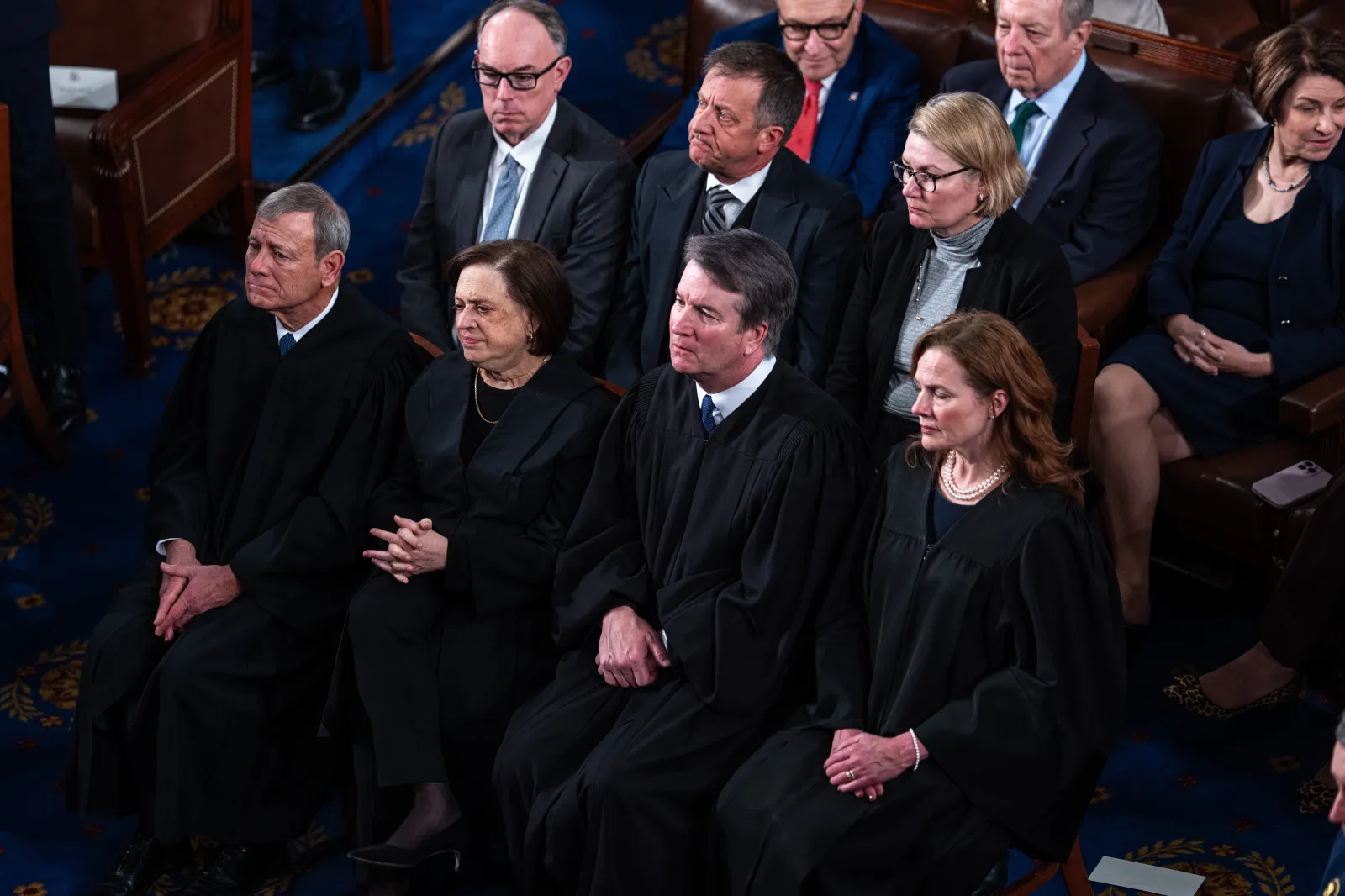
There are nine justices on the Supreme Court, six conservatives and three liberals. The conservatives are Chief Justice John Roberts and Justices Clarence Thomas, Samuel Alito, Neil Gorsuch, Amy Coney Barrett and Brett Kavanaugh. The liberals are Justices Elena Kagan, Sonia Sotomayor and Ketanji Brown Jackson.
It has ruled in favor of the Trump administration on several occasions. Trump nominated Justices Gorsuch, Kavanaugh and Barrett during his first term.
...
Birthright Citizenship
Earlier this month, the court heard arguments in a case about President Donald Trump's executive order on birthright citizenship. Trump made history by attending oral arguments, becoming the first sitting president to do so at the Supreme Court.
Trump signed an executive order on the first day of his second term establishing that children of temporary visitors and illegal immigrants are not U.S. citizens by birth. The order has been met with multiple lawsuits.
Some of the court's conservative justices questioned arguments made by the Trump administration. Roberts said it is not clear how the exceptions to citizenship under the law can be applied to “a whole class of illegal aliens,” and Kavanaugh said Congress might have worded things differently in laws enacted in 1940 and 1952 if lawmakers wanted to make clear that children of people here illegally or temporarily were not entitled to citizenship. The court has yet to issue a ruling in this case.
Firing of FTC Rebecca Slaughter
The court has also not ruled yet in a case related to the president’s ability to fire the members of independent federal agencies like the Federal Trade Commission. The case centers around Trump's removal of Rebecca Slaughter, who was serving as a Commissioner of the FTC. She was appointed to the FTC by Trump in 2018, and reappointed by then-President Joe Biden to a term expiring in 2029.
Slaughter's attorneys said the president failed to assert that Slaughter had engaged in “inefficiency, neglect of duty, or malfeasance." Lawyers for the federal government argued that, under Supreme Court precedent, "the President must be able to remove, at will, members of multimember commissions that exercise substantial executive power."
Transgender Athletes
The court is facing a major decision on whether transgender athletes can participate in women’s and girls' sports. The court heard oral arguments on two cases related to the matter in January.
The cases come amid larger national debates about the rights of transgender individuals. President Donald Trump signed an executive order on January 20, 2025, the day of his second inauguration, establishing that gender identity "cannot be recognized as a replacement for sex," which the order defines as "not changeable" and "grounded in fundamental and incontrovertible reality."
What to Watch Next at the Supreme Court
The justices are set to release additional opinions in the coming weeks as the court moves toward the end of its term in late June or early July, a period when rulings often come in rapid succession. Decisions are still pending in several high‑profile cases, including disputes over birthright citizenship, gun regulations, voting and civil rights, immigration enforcement and the authority of independent federal agencies. The court is also expected to issue new order lists on Mondays, signaling which future cases it may take up.
Do you have a story that Newsweek should be covering? Do you have any questions about this story? Contact LiveNews@newsweek.com.
View 0 Comments
Submit Correction
View Editorial & AI Guidelines