...

By Jenna Sundel
News Reporter
0
Share
Newsweek is a Trust Project member
See more of our trusted coverage when you search.Prefer Newsweek on Googleto see more of our trusted coverage when you search.
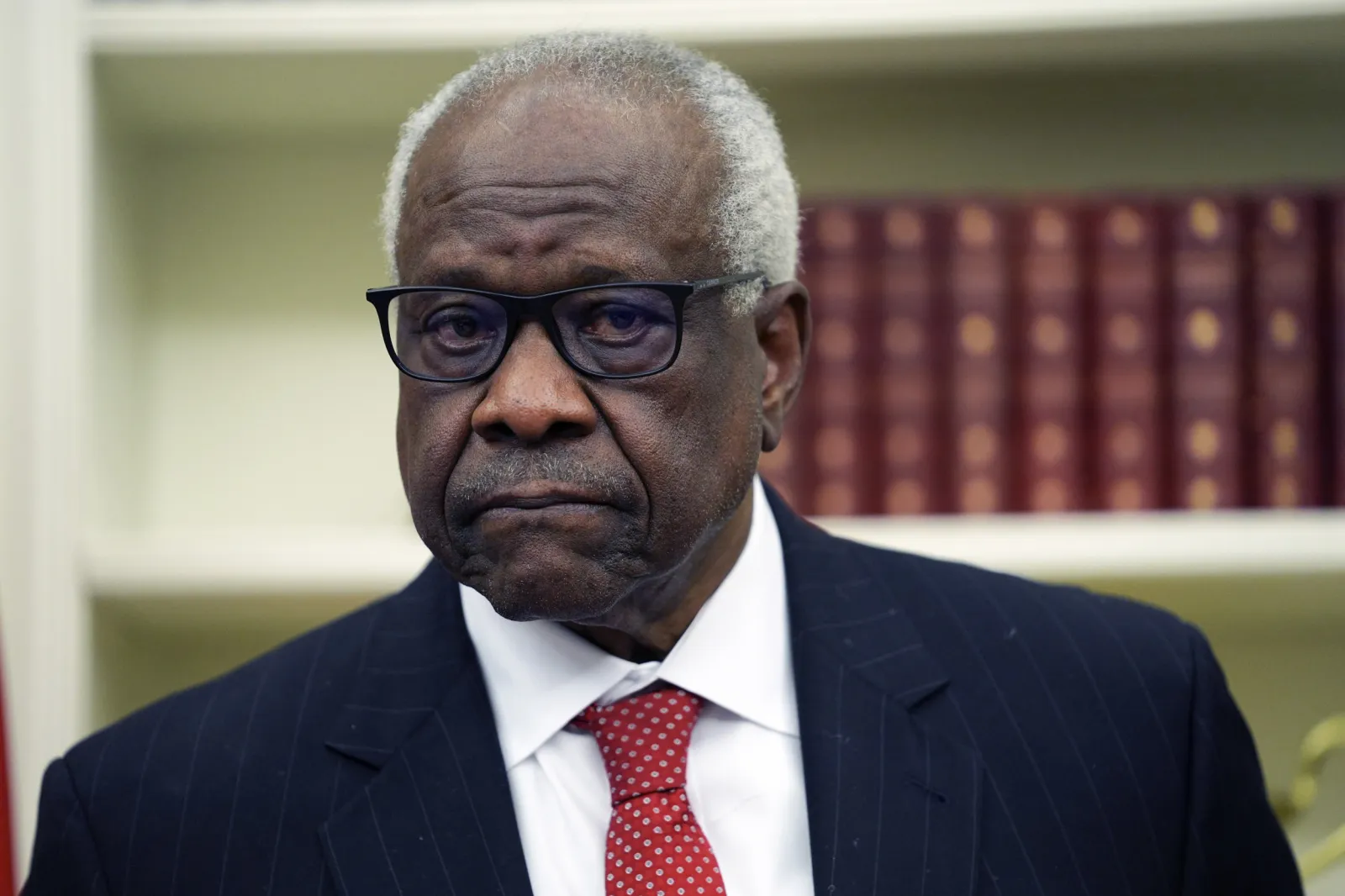
Supreme Court Justice Clarence Thomas expressed an interest in the High Court revisiting a case it decided over 50 years ago.
In a dissenting opinion published on Monday and joined by Justice Neil Gorsuch, Thomas voiced disapproval of the Supreme Court's decision to not hear a case about the firing of a California fire chief.
Why It Matters
Thomas said that the Supreme Court deciding to hear the California case would allow it to revisit McDonnell Douglas Corp. v. Green, a 1973 Court decision that set the framework for employment discrimination cases.
Read More
How Trump’s 200 Percent Tariff Threat Would Hit a Billionaire Ally5 min read

Thousands Sign Christian Petition to Boycott ‘Trump-Backing’ Corporations4 min read

Republican Lawmakers Block Push to End Same-Sex Marriage Via Supreme Court5 min read

Thomas said McDonnell Douglas causes "confusion" and revisiting it could help "offer clear guidance."
...
What To Know
Ronald Hittle sued the city of Stockton, California, after he was removed from his position as fire chief in 2011 over alleged misconduct. He filed a lawsuit after the removal arguing that he was fired due to his religion.
Hittle is described as a "devout Christian" in the dissent. He served as fire chief of Stockton from 2005 to 2011.
During his tenure, Hittle was instructed by a supervisor to select a leadership training program. He faced criticism after choosing a program with religious ties.
The city hired an outside investigator who questioned Hittle "at length" about his religion. The investigator found that Hittle had committed misconduct.
Hittle's lawsuit was analyzed by a federal district court in California under the McDonnell Douglas framework. The court sided with the city, allowing the firing, because Hittle had "not shown sufficient evidence of pretext." The 9th Circuit Court of Appeals affirmed the lower court's decision.
Under McDonnell Douglas, a plaintiff can only prevail in a lawsuit if they can prove that the employer's justification for a move is a pretext for behavior motivated by discrimination.
"I would have taken this opportunity to revisit McDonnell Douglas and decide whether its burden-shifting framework remains a workable and useful evidentiary tool," Thomas said.
Thomas said the precedent has created "confusion" for some courts.
"Given the widespread confusion caused by McDonnell Douglas, and given the frequency with which courts encounter Title VII cases, it behooves us to revisit McDonnell Douglas and offer clear guidance on how to determine whether a Title VII claim survives summary judgment," Thomas said.
The Supreme Court has the power to overturn legal precedents through its judgments, but must have "strong grounds" to do so, according to a 2018 Congressional Research Service report.
"In recent decades, the Supreme Court has often stated that a decision to overrule
precedent must be based on some special justification—or, at least 'strong grounds'—that extends beyond the Court's mere disagreement with the merits of the prior decision's reasoning," the report stated.
Who Appointed Supreme Court Justice Clarence Thomas?
Thomas was appointed by President George H.W. Bush in 1991. He was preceded by Thurgood Marshall.
He was narrowly confirmed in a 52-48 Senate vote after facing accusations of sexual harassment.
What People Are Saying
Thomas, in a dissent joined by Gorsuch, said of McDonnell Douglas: "I am not aware of many precedents that have caused more confusion than this one."
What Happens Next
The McDonnell Douglas framework will remain in place after the High Court declined to hear Hittle's case.
Do you have a story Newsweek should be covering? Do you have any questions about this story? Contact LiveNews@newsweek.com
View 0 Comments
Submit Correction
View Editorial & AI Guidelines