...

By Amanda Castro
Associate News Editor
0
Share
Newsweek is a Trust Project member
See more of our trusted coverage when you search.Prefer Newsweek on Googleto see more of our trusted coverage when you search.
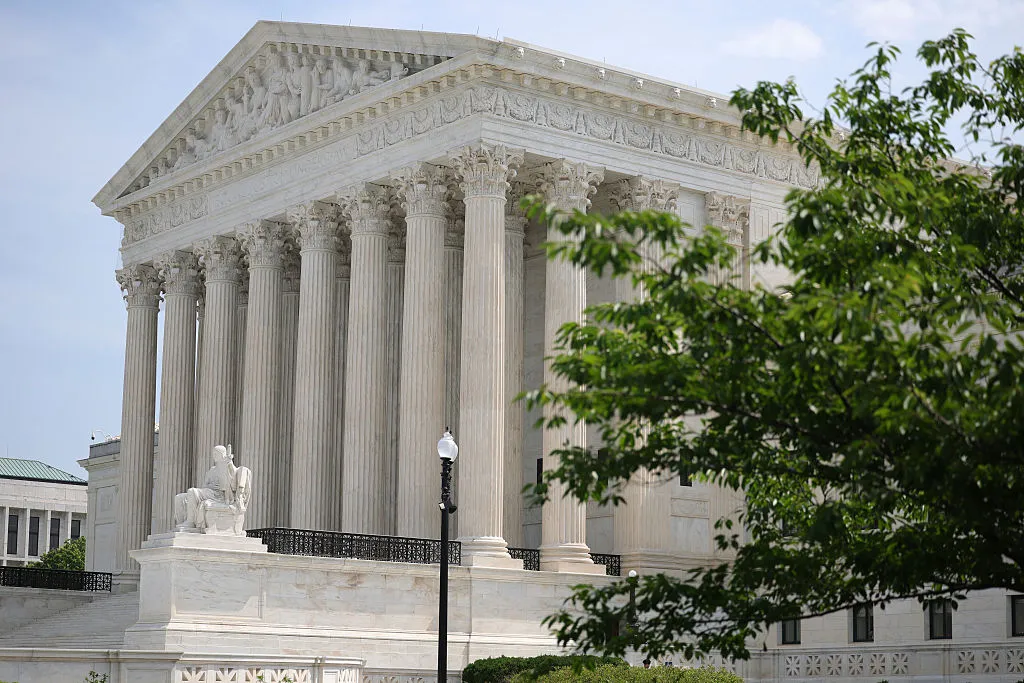
The U.S. Supreme Court on Monday declined to revive Carter Page’s lawsuit against former FBI officials, with Justice Ketanji Brown Jackson notably recusing herself from the decision.
The ruling effectively ends Page’s attempt to hold individual FBI leaders liable for surveillance errors tied to the investigation into alleged Russian interference in the 2016 presidential election. The outcome leaves Page without further legal avenues, closes the case against former officials, including former FBI Director James Comey, and cements a lower‑court ruling that his claims were filed too late.
The justices issued a brief, unsigned order rejecting Page’s appeal, leaving intact a federal appeals court decision that a three‑year statute of limitations barred his claims. Page argued that the clock should have started in 2019, when a Justice Department inspector general found serious flaws in the FBI’s surveillance process. He sued in 2020, but courts disagreed. Jackson did not participate, and the Court offered no explanation for her recusal, as is customary.
Read More on News
...
What Was the Carter Page Lawsuit?
The lawsuit stemmed from the FBI’s decision to monitor Page during the 2016 election under the Foreign Intelligence Surveillance Act (FISA). Investigators sought the warrant because of Page’s past contacts with Russian intelligence officers and his 2016 trip to Moscow, where he met with Kremlin‑linked figures and criticized U.S. policy toward Russia.
Page claimed that the surveillance violated his constitutional rights and damaged his reputation. A Justice Department inspector general later found that the FBI’s FISA applications contained significant omissions and inaccuracies, prompting more than 40 internal reforms. Page, who was never charged, argued that the flawed process amounted to unlawful spying.
His 2020 lawsuit sought $75 million in damages from the U.S. government and from individual FBI and Justice Department officials. Lower courts dismissed the claims against individuals, ruling that Page waited too long to sue and that the law did not allow the type of personal liability he sought.
When Did Carter Page Settle With the U.S.?
Page reached a $1.25 million settlement with the federal government in April 2026, resolving his claims against the United States. The agreement did not cover his separate claims against former officials, which continued on appeal.
The settlement followed a similar payout to former National Security Adviser Michael Flynn, who received roughly $1.2 million after alleging misconduct in the Russia investigation. Both settlements were paid from the Treasury’s Judgment Fund, which covers federal legal liabilities.
With the Supreme Court declining to intervene, Page’s remaining claims against individual officials are closed.
What Did James Comey Allegedly Do?
Comey, who led the FBI from 2013 until his dismissal by President Donald Trump in 2017, approved the early stages of the Russia investigation and signed off on the initial FISA warrant targeting Page. The inspector general later concluded that the warrant process suffered from serious procedural failures, though it did not find political bias.
Comey has since faced his own legal challenges. He was indicted in 2025 on charges of making false statements and obstruction of justice related to his 2020 Senate testimony, and again in 2026 on allegations of threatening the president through a social media post. He has denied wrongdoing in both cases.
Former FBI leaders involved in the Page surveillance have said they would not have approved the warrants had they known the extent of the errors. Despite those problems, investigators and special counsel Robert Mueller's report concluded that Page’s surveillance represented only a narrow part of the broader Russia inquiry, which found that Russia interfered in the 2016 election but did not establish a criminal conspiracy with the Trump campaign.
View 0 Comments
Submit Correction
View Editorial & AI Guidelines