...

By Faisal Kutty
Lawyer and Law Professor
0
Share
Newsweek is a Trust Project member
See more of our trusted coverage when you search.Prefer Newsweek on Googleto see more of our trusted coverage when you search.
“Look at all this work. Look at this genocide,” a fighter shouts as he films himself driving past dead bodies in Sudan’s El Fasher.
The video, verified by BBC News, shows Rapid Support Forces (RSF) fighters—descendants of the militias behind the Darfur genocide—celebrating after what officials estimate was the massacre of more than 2,000 civilians.
...
Read More on Opinion
In late October, RSF fighters stormed the Saudi Maternity Hospital in El Fasher, killing more than 460 patients, health workers and displacing hundreds. The World Health Organization condemned the atrocity as one of the worst assaults on medical care in modern history. Weeks earlier, the same forces launched a drone strike on a mosque during morning prayers, killing at least 78 worshippers. Medics now accuse the RSF of burning and burying bodies to conceal evidence. Satellite imagery analyzed by a Yale University research lab shows blood-stained streets and mass graves visible from space.
This is not just chaos. It is a systematic campaign of extermination—a genocide.
The violence is often framed as a civil war—but in truth, it is a power struggle between two generals who once ruled together after toppling Sudan’s transitional government in 2021: RSF commander Mohamed Hamdan Dagalo (Hemedti), whose forces evolved from the Janjaweed militias, and General Abdel Fattah al-Burhan of the Sudan Armed Forces (SAF). Their partnership collapsed in April 2023, unleashing a war that has displaced over 10 million people and driven half the country into acute hunger.
And this is no longer just Sudan’s war—it is being armed, financed and prolonged by global players protecting their own interests.
The United Arab Emirates (UAE) has emerged as the RSF’s most important backer, according to investigations by Reuters, PBS News, Amnesty International and the U.N. Panel of Experts on Sudan. Routed through Chad, Emirati supply chains have delivered Chinese-made bombs, drones and armored vehicles to Hemedti’s forces—a clear breach of the U.N. arms embargo.
Why take the risk? Because the RSF controls much of Sudan’s gold sector, a pillar of the UAE’s bullion market. Emirati state-linked networks also hold major interests in Sudanese gold, agriculture and logistics. As CNN reported, this is as much about protecting gold and farmland as it is about projecting regional dominance.
Russia’s Wagner-linked networks have also supplied the RSF with training and weapons, while mercenaries from Ethiopia and Chad are believed to have joined the fighting for pay.
Not to be outdone, Burhan’s SAF has its own patrons, including Iran, Qatar, Turkey, Egypt and Russia. Just this fall, the U.S. sanctioned a Sudanese Islamist militia with links to Iran, accusing it of undermining ceasefire efforts. Analysts, including the Soufan Center, now warn that Sudan risks becoming a Red Sea proxy battleground for Iran, Russia, Gulf States and Western powers.
Western governments have denounced the killings, but rhetoric without consequences rings hollow. Canada continues to export roughly $7 million in military goods to the UAE annually, despite U.N. findings that these weapons are reaching the RSF. Canadians for Justice and Peace in the Middle East (CJPME) has documented that Canadian-made Streit armored vehicles were seen in RSF convoys during the siege in El Fasher.
The U.S. and the European Union (EU) have avoided confronting the UAE directly, relying on quiet diplomacy rather than real consequences. By allowing business as usual, they have become complicit.
This is not a crisis that diplomacy can gloss over. It demands the kind of coordinated response the world once vowed after Rwanda and Darfur: an immediate halt to arms transfers to any state supplying or laundering weapons for the RSF, and targeted sanctions on both RSF and SAF commanders implicated in mass atrocities. The U.N. must enforce a full arms embargo, and the International Criminal Court should open cases against Hemedti and Burhan for war crimes and crimes against humanity.
Humanitarian corridors and ceasefire monitoring under U.N. or African Union oversight are urgently needed to protect those still trapped in El Fasher. And the U.S.—working with neutral African partners—must lead a renewed diplomatic push to stop the killings.
The West’s selective moral clarity—swift for some wars, hesitant for others—has never been starker. Sudanese families across the diaspora say they feel abandoned as refugee pathways crawl while arms deals sprint.
The world vowed “never again” after Darfur in 2003. Yet two decades later, the same perpetrators—rebranded, rearmed and bankrolled by foreign sponsors—are carrying out mass murder in the same region.
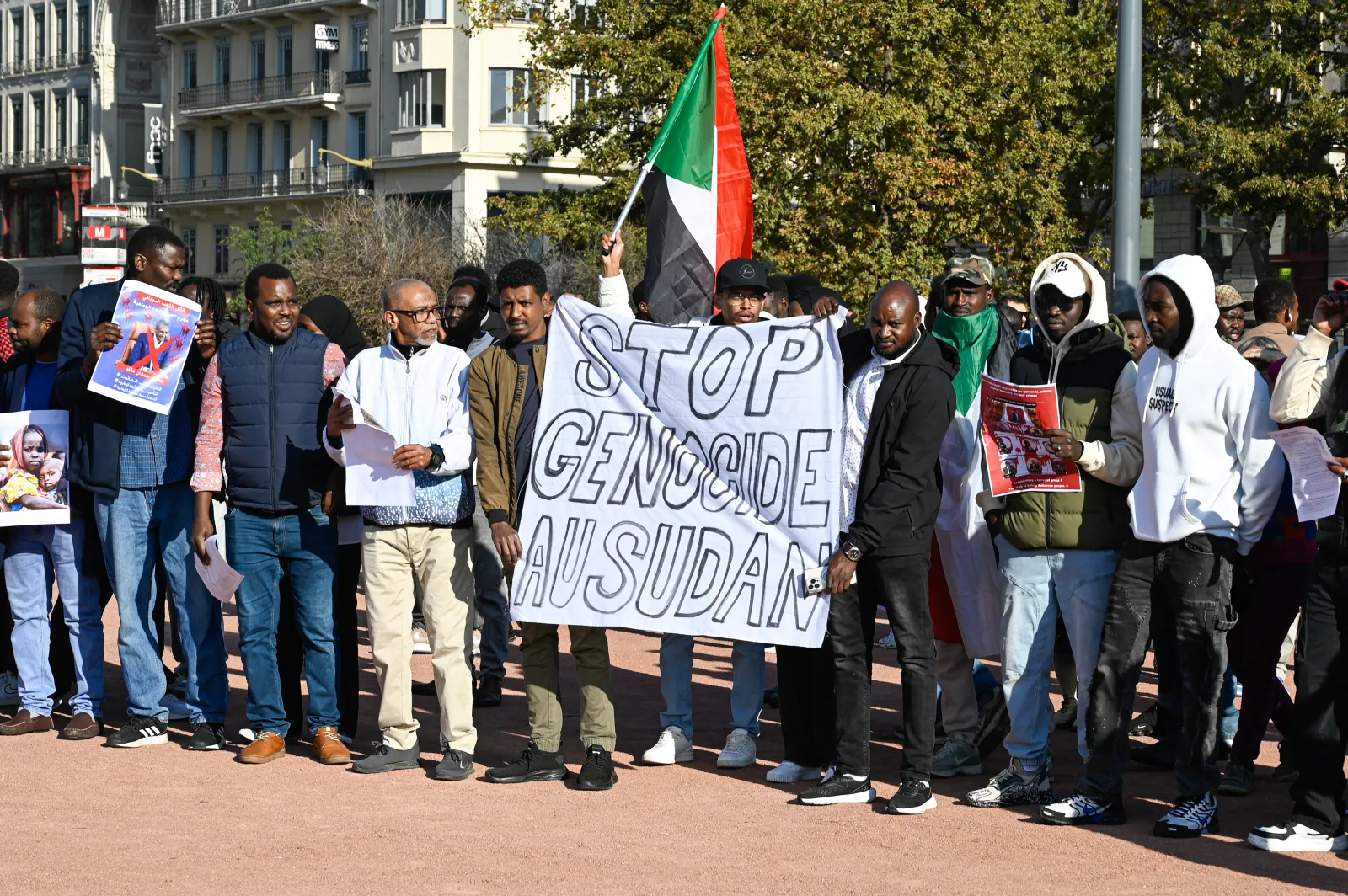
If the international community means what it says about “never again,” it must act now. Sudan’s genocide is unfolding in plain sight—visible from space, livestreamed by its perpetrators and ignored by those with the power to stop it.
Faisal Kutty is a Toronto-based lawyer, law professor and frequent contributor to The Toronto Star*.*
The views expressed in this article are the writer's own.
View 0 Comments
Submit Correction
View Editorial & AI Guidelines