...

By Gabe Whisnant
News Editor
0
Share
Newsweek is a Trust Project member
See more of our trusted coverage when you search.Prefer Newsweek on Googleto see more of our trusted coverage when you search.
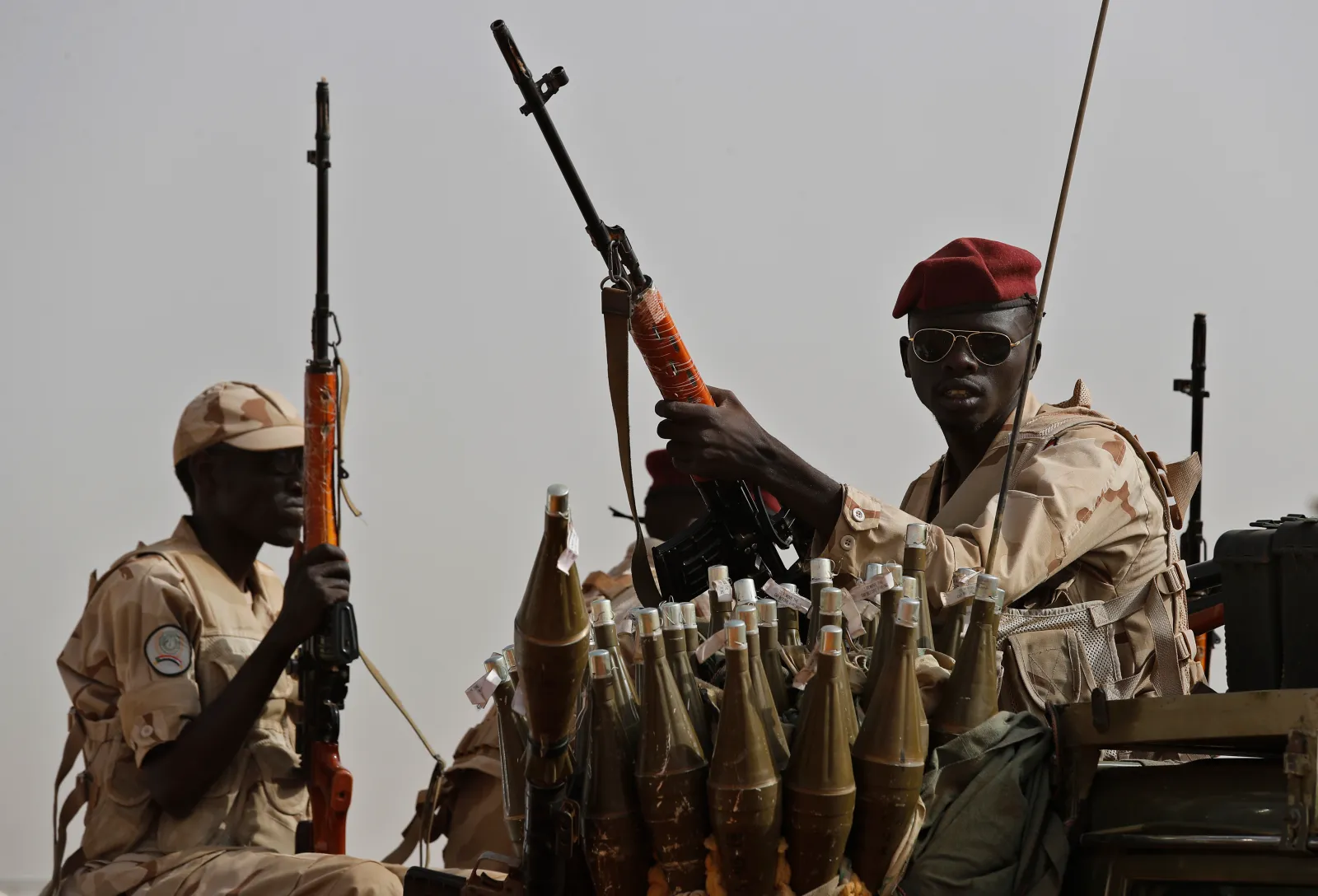
Sudan’s paramilitary Rapid Support Forces killed hundreds of people, including patients inside a hospital, after seizing control of the city of el-Fasher in the western Darfur region over the weekend, according to the United Nations, aid workers and displaced residents who described scenes of horror and mass killings.
What Is Happening In Sudan Right Now?
World Health Organization Director-General Tedros Adhanom Ghebreyesus said in a statement that about 460 patients and their companions were reportedly killed at the Saudi Maternity Hospital in el-Fasher, the capital of North Darfur. He said the WHO was “appalled and deeply shocked” by reports of mass executions inside the facility. The Sudan Doctors Network, a medical group tracking the conflict, said RSF fighters “cold-bloodedly killed everyone they found inside the hospital,” including patients, family members and staff.
Read More on World
...
Darfur’s regional governor, Mini Minawi, shared a video that appeared to show bodies lying in pools of blood inside the hospital. One fighter is seen firing a rifle at a wounded man as others step over bodies. The Associated Press could not independently verify the footage or its location.
Witnesses and aid groups said the assault followed a 500-day siege of el-Fasher, the army’s final stronghold in Darfur, as the RSF battles to take control of Africa’s third-largest country. “The Janjaweed showed no mercy,” said Umm Amena, a mother of four who fled the city on Monday, using a term long associated with the militia’s brutality in Darfur.
RSF commander Gen. Mohammed Hamdan Dagalo acknowledged “abuses” by his forces and said an investigation had been opened but provided no details. The RSF has been accused of repeated atrocities during the 18-month conflict, including a 2023 massacre in Geneina that left hundreds dead.
Survivors described el-Fasher as a “killing field.” Amena said she and three dozen others, mostly women and children, were detained in an abandoned house near the hospital. “Bodies everywhere and people bleeding, and no one to help them,” said another survivor, Tajal-Rahman, who fled to the nearby town of Tawila. Both said RSF fighters beat, tortured and sexually assaulted detainees before shooting several of them.
The U.N. migration agency said around 35,000 people have fled el-Fasher since Sunday. Jacqueline Wilma Parlevliet of the U.N. refugee agency said witnesses reported “widespread ethnic and politically motivated killings,” including of people with disabilities who could not flee.
Doctors Without Borders staff in Tawila said they had treated dozens of bombing and gunshot victims and received an influx of malnourished, orphaned and dehydrated children. Pediatrician Giulia Chiopris said three siblings, the youngest only 40 days old, were brought in after their family was killed. “We are seeing a lot of trauma and a huge number of orphans,” she said.
Satellite imagery reviewed by Yale University’s Humanitarian Research Lab confirmed widespread killings near the Saudi Maternity Hospital and other sites in el-Fasher. The lab said RSF fighters carried out “systematic executions” and attacks on hospitals and aid workers that amount to war crimes. “It is highly likely that any estimates of the total number of people the RSF has killed are undercounted,” the report said.
International outrage grew as video of the killings circulated online. France, Germany, the U.K. and the European Union condemned the atrocities, while Human Rights Watch said the footage showed the RSF acting “with little fear of consequences.” U.S. Sen. Jim Risch, the top Republican on the Senate Foreign Relations Committee, called for the RSF to be designated a foreign terrorist organization, saying the group has “waged terror and committed genocide against the Sudanese people.”
Two years of fighting for control of Sudan have killed more than 40,000 people — a number human rights groups say is likely a significant undercount — and displaced more than 14 million, creating what the United Nations calls the world’s worst humanitarian crisis. The fall of el-Fasher to the powerful Arab-led Rapid Support Forces has raised fears that Sudan could once again fracture, nearly 15 years after oil-rich South Sudan gained independence following decades of civil war.
Before the latest assault, at least 1,850 civilians had been killed in North Darfur this year, including 1,350 in el-Fasher alone, according to U.N. figures. Aid groups warn that the full death toll from the hospital massacre and wider attack may never be known amid a near-total communications blackout.
Who Are the Lost Boys of Sudan?
The Lost Boys of Sudan were more than 20,000 children, mostly boys, who were displaced or orphaned during Sudan’s brutal civil war that began in the late 1980s. Many fled their villages to escape violence, walking hundreds of miles across harsh terrain to reach refugee camps in Ethiopia and Kenya. Thousands died from hunger, disease, and attacks along the way, but those who survived became symbols of resilience and hope. In the early 2000s, about 3,800 of them were resettled in the United States, where they built new lives while continuing to advocate for peace and humanitarian aid in their homeland.
This article includes reporting by the Associated Press.
Updates: 10/29/25, 2:28 p.m. ET: This article was updated with new information and remarks.
Updates: 10/29/25, 6:08 p.m. ET: This article was updated with new information and remarks.
View 0 Comments
Submit Correction
View Editorial & AI Guidelines