...

By Lydia Patrick
Life & Trends Reporter
0
Share
Newsweek is a Trust Project member
See more of our trusted coverage when you search.Prefer Newsweek on Googleto see more of our trusted coverage when you search.
You have probably heard the words "Coldplay 'cheating' scandal" more over the past two days than the band's hit single "Yellow" at family gatherings.
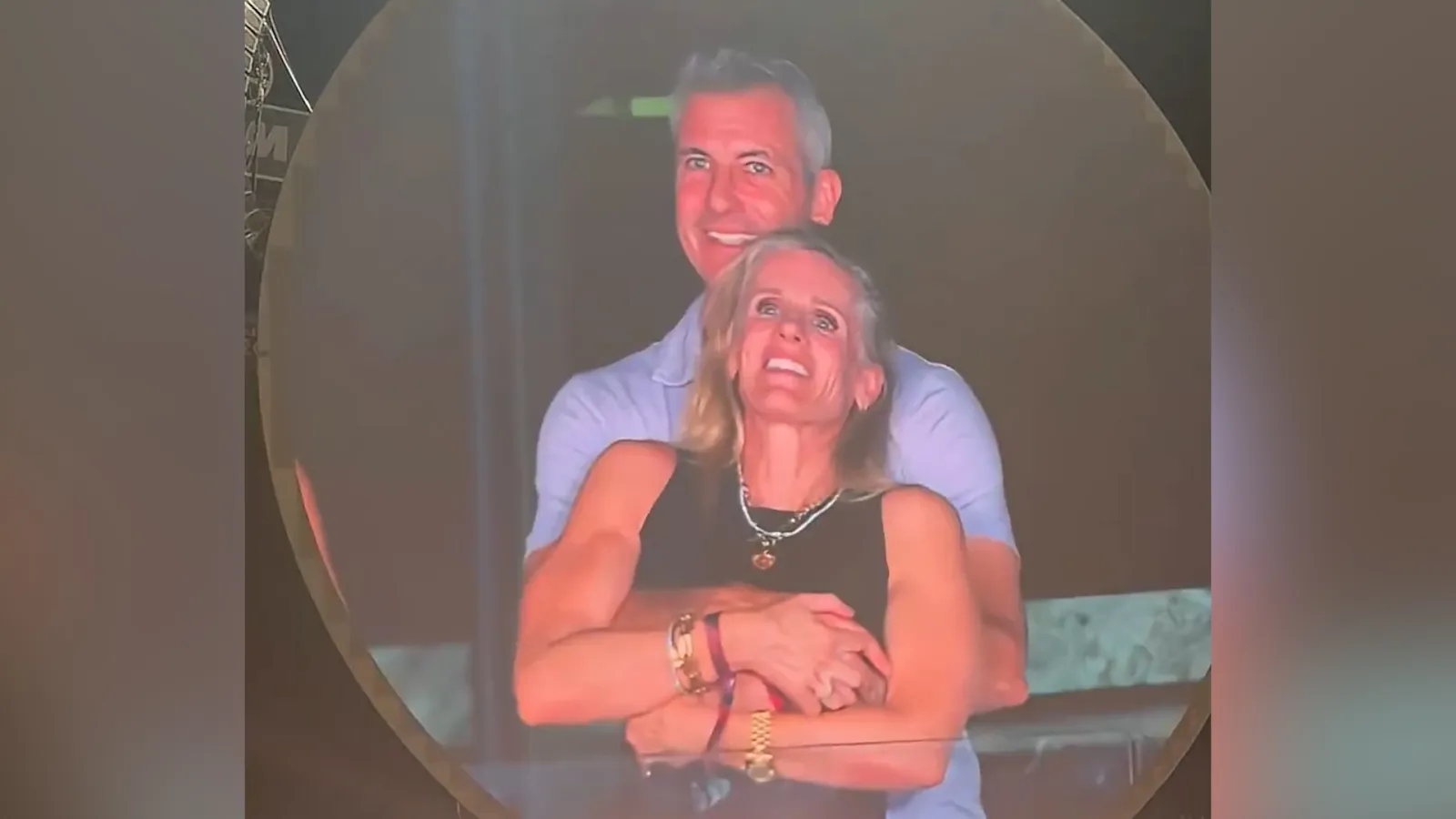
The now-viral incident unfolded at a Coldplay concert at Gillette Stadium, Foxborough, Massachusetts, on July 16. The CEO of Astronomer, Andy Byron, was caught on the stadium's kiss cam in a romantic embrace with his company's chief people officer, Kristin Cabot, who immediately covered her face. Byron's expression shifted from affectionate to panicked.
The pair fled the scene and have become the subject of intense public scrutiny due to their alleged infidelity. Newsweek reached out to the Astronomer press team for comment via email.
Read More on Life
"Either they're having an affair, or they're just very shy," Coldplay frontman Chris Martin said as the moment unraveled in plain sight.
...
Within hours, a video of the scene posted to TikTok racked up more than 5.2 million likes and nearly 50 million views. Commenters swiftly turned sleuths and comedians, identifying the couple and transforming the scandal into memes.
"CEO Andy Byron's wife said she didn't see any red flags about him going to that concert. They were all yellow," wrote @jayrivhahaha on Threads.
Another user added on the platform: "Can you imagine 63-year-old Susan from accounting who's not really online going in today and innocently asking, 'How was the Coldplay concert?' Like maybe Susan doesn't even check Slack."
Why Cheating Scandals Hit So Hard
Daren Banarsë, senior psychotherapist at IN Therapy, told Newsweek that infidelity stories resonate because they touch deep psychological nerves.
"Cheating scandals hit us where it hurts—they activate primal fears around betrayal, abandonment, and broken trust," Banarsë said. "Watching that raw, panicked reaction bypasses our usual filters. It feels real—and that authenticity is magnetic in a culture saturated with performance."
Banarsë added that we use these stories to process collective anxieties around love and loyalty.
And when it comes to public judgment, we are quick to assign moral roles. "We flatten real people into characters to avoid confronting the ambiguity of human relationships," Banarsë said.
The shift from celebrity to civilian scandal also adds to the impact. "When it's a regular couple at a concert, it taps into the voyeuristic thrill of unfiltered humanity," Banarsë added.
A Perfect Storm for Virality
Natalie Trice, publicist and founder of Natalie Trice Publicity, told Newsweek that this wasn't just a kiss-cam mishap.
"This isn't some random 'kiss-cam' slip; it's high-profile theater on a global stage," Trice said. "When the big screen caught Andy Byron, CEO of the billion-dollar AI company Astronomer, alongside HR chief Kristin Cabot, the damage was immediate and public."
Trice added that the moment had all the ingredients of a modern scandal. "What makes the perfect viral moment in 2025 is the trifecta: emotional charge and status drama and ambiguity," she said.
Byron and Cabot's silence only fueled speculation. Trice said: "This moment had just enough mystery—Byron's silence, Cabot's shield, no statement from Astronomer—to keep users piecing it together. Fake apology tweets and parody posts only fueled the fire."
Meme-Ready Moments and the Algorithm
Ekaterina Voskoboynikova, senior global PR manager at 25/8 PR agency, told Newsweek that it wasn't just the act that went viral—it was the visual panic.
"What made the 'CEO cheating at Coldplay' moment go viral wasn't just the act—it was the reaction," Voskoboynikova said. "Their panicked attempts to hide, the man's sudden shift in demeanor, and the woman's awkward hand movements created a visual story that begged to be interpreted. It was meme-ready in seconds."
Voskoboynikova added that modern virality thrives on ambiguity. She argued it is less about cheating and more about how digital narratives are created from raw and emotive moments.
Authenticity and the New Rules of Reputation
Marketing expert Charlotte Sheridan, director at Quokka Agency UK, said that the story gained traction because it hit several social-media sweet spots.
"It blends a lot of our favorite things—a meme-able image, a touch of schadenfreude, and, because of the senior positions of both parties involved, it makes people feel that they're not 'punching down,'" Sheridan told Newsweek.
In today's online culture, dishonesty gets amplified. "In 2025, one of the biggest 'online crimes' seems to be not being honest and authentic," she said.
"Cheating by definition is dishonest, so it's a big dog-whistle to social-media users," Sheridan added.
View 0 Comments
Submit Correction
View Editorial & AI Guidelines