...

By Alpo Rusi
Diplomat
0
Share
Newsweek is a Trust Project member
See more of our trusted coverage when you search.Prefer Newsweek on Googleto see more of our trusted coverage when you search.
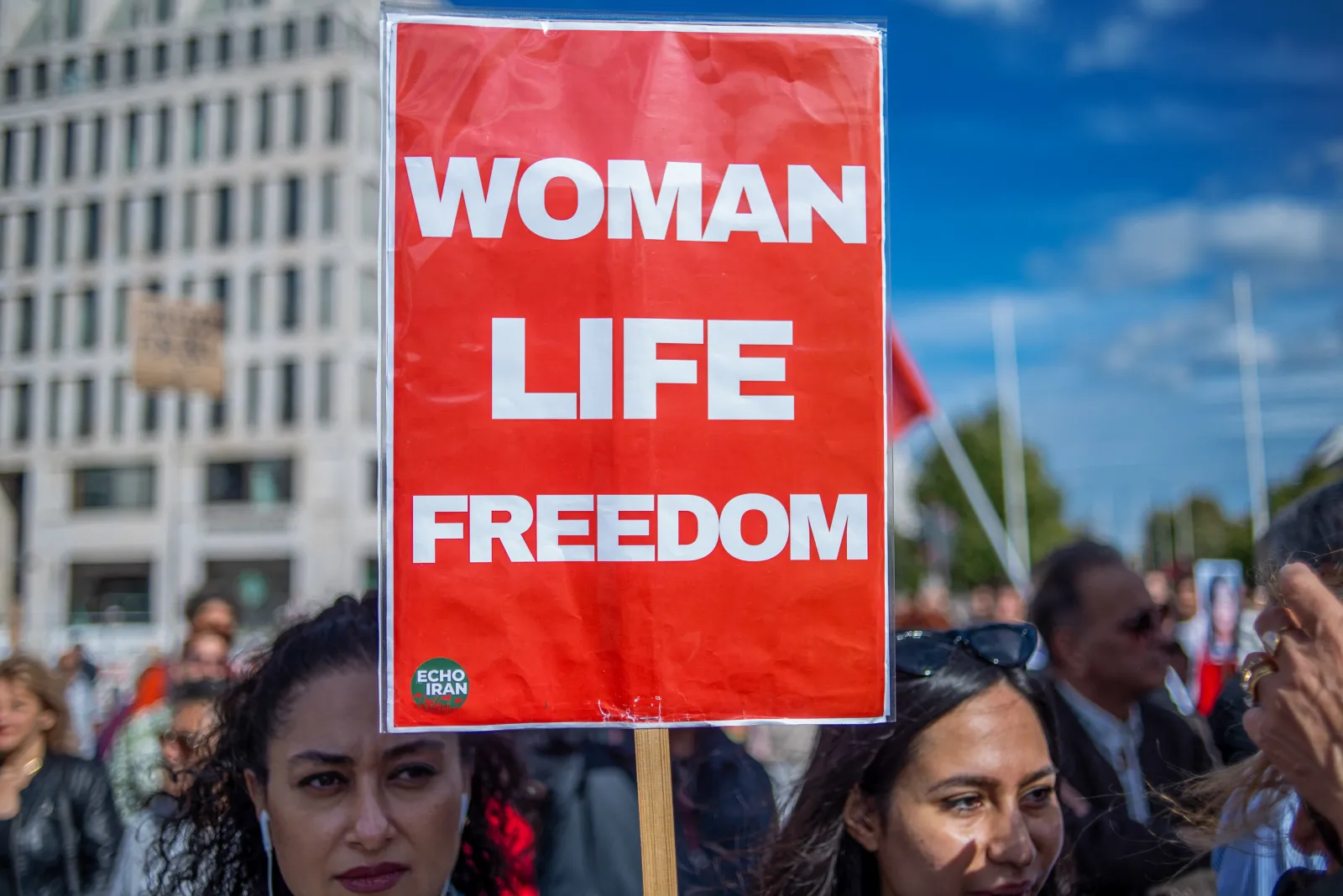
As the European Union (EU) ramps up sanctions against Russia for its brutal invasion of Ukraine, Iran's regime brazenly supplies Moscow with drones and missiles, fueling the very war Europe condemns. Yet, amid deadly protests in Tehran, sparked by economic collapse and repression, with reports of thousands killed since late December 2025, the EU's response to its Iranian enabler remains tepid. This hypocrisy is unsustainable. For too long, the EU has allowed Iran to act with impunity through inconsistent policies and failed diplomacy. Given Iran's alliance with Russia, this leniency betrays European values and security. The EU must reject any nuclear deal, unequivocally back protesters and ensure the regime's downfall, as any accommodation perpetuates tyranny and global threats.
The EU's history of leniency toward Iran has emboldened the regime, prioritizing engagement over confrontation despite egregious violations. Post-2015 JCPOA, the EU clung to diplomacy after the U.S. withdrawal in 2018, failing to enforce measures effectively. Reasons included economic interests in energy trade and internal divisions favoring dialogue to avoid escalation. Recent sanctions for Iran's aid to Russia, extended to 2026, are piecemeal, not crippling. This directly impacts Europe, exacerbating migration from instability and threats from regime plots.
...
Read More on Opinion
Key figures exemplify this inconsistency, condemning Iran now but enabling its survival through inaction. Finnish President Alexander Stubb, despite Finland's anti-Russia stance, met Iranian President Masoud Pezeshkian in September 2025, framing it as "frank" dialogue rather than isolation. Stubb even invited Iran’s ambassador to the annual Independence Day reception, something his predecessor had not done.
European Commission President Ursula von der Leyen expressed solidarity with Iranian protesters in January 2026, proposing sanctions on repressors, yet her very own commission failed to designate the IRGC as terrorists despite calls. As of today, only a handful of politicians in Brussels have voiced their support to designate IRGC as a terrorist organization.
EU High Representative Kaja Kallas threatened tougher sanctions in January 2026, but delayed U.N. snapback, allowing Iran-Russia evasion. German Chancellor Friedrich Merz called the Iranian regime "weak" in its "final days" recently while ignoring JCPOA lapses. French President Emmanuel Macron condemned "state violence" in joint statements but emphasized dialogue post-strikes, normalizing repression.
Iran's role as Russia's key ally, supplying drones and missiles since 2022, exposes the EU's double standard: fierce opposition to Russia, tacit tolerance of Iran. Since October 2021, Iran has sold $2.7 billion in missiles to Russia, including hundreds of Fath-360 short-range ballistic missiles, nearly 500 others, and 200 surface-to-air missiles, plus $1.75 billion for Shahed-136 drones and production tech. Sanctions on this support, broadened in 2024, remain less severe than on Russia, with no full energy embargo. Inertia from fear of escalation and U.S. reliance post-JCPOA allows Iran to negotiate with Russia and China. This undermines EU credibility, emboldens autocrats and betrays Ukraine while ignoring protesters.
Sanctions on this support, broadened in 2024, remain less severe than on Russia, with no full energy embargo. Inertia from fear of escalation and U.S. reliance post-JCPOA allows Iran to negotiate with Russia and China. This undermines EU credibility, emboldens autocrats and betrays Ukraine while ignoring protesters.
Reviving deals like the JCPOA repeats mistakes, enriching the regime without curbing abuses or aggression. The 2015 deal failed to halt ballistic missiles or rights violations; post-withdrawal, Iran enriched uranium unchecked. Amid 2025 talks, agreements signal weakness, especially with Iran's warnings. Sanctions relief benefits the IRGC elite, fueling unrest. Appeasement fails historically.
Ending leniency and backing protesters aligns with EU values, countering the Russia-Iran axis. Moral commitments demand escalation beyond rhetoric; strategic benefits include disrupting Russia's supplies and easing migration. "All the way" means ramped sanctions, diplomatic isolation, tech support for protesters and opposition recognition. Precedents like Eastern Bloc support hastened Soviet decline.
The EU's leniency is a blunder amid the Iran-Russia alliance; no deal redeems a repressive regime. Figures like Stubb, von der Leyen, Kallas, Merz and Macron embody this, strong on Russia, soft on Iran, delaying support. Failure risks a nuclear Iran and eroded influence; success dismantles autocratic networks. EU leaders must resolve inconsistencies, prioritize protesters and lead regime change.
As an Iranian protester declared, "This is our moment for freedom." Europe must stand with them. The fall of Iran's revolutionary Islamic regime would reshape the emerging world order. It could hasten the erosion of Vladimir Putin's authoritarian empire, increasingly isolate China and weaken Xi Jinping's “controlcracy."
Dr. Alpo Rusi is a distinguished diplomat who served as Finland's ambassador to Switzerland, Liechtenstein, and the Holy See and who is also a recognized scholar in international relations and Finnish history, with several publications in Finland, the United States and Great Britain. You can follow him on X here.
The views expressed in this article are the writer's own.
View 0 Comments
Submit Correction
View Editorial & AI Guidelines