10
Loading video...

By Aristos Georgiou
Science and Health Reporter
0
Share
Newsweek is a Trust Project member
See more of our trusted coverage when you search.Prefer Newsweek on Googleto see more of our trusted coverage when you search.
Archaeologists have found more than a dozen stone knives in an ancient Maya city near a sacrificial altar.
Researchers made the find in the pre-Hispanic settlement of Kulubá, in the southern Mexican state of Yucatán.
Excavations at the site uncovered 16 knives—three made from flint and 13 from obsidian—that were intended as some form of offering, researchers with the Mexican National Institute of Anthropology and History (INAH) told Spanish news agency EFE.
Read More
Lost Maya City With Pyramids Discovered Hidden Deep in the Jungle3 min read

Four-Hundred-Year-Old Boat That Sailed After the Aztec Empire’s Fall Found3 min read

The Mystery of the Ancient Maya City That Looks Like a Crocodile9 min read

The Kulubá archaeological site contains several structures, including residences, a central plaza, and a palace measuring 20 feet tall, 180 foot long and 49 feet wide that was in use between around 600-1050 AD, according to INAH.
...
The Maya civilization dominated what is now southeastern Mexico, Guatemala, Belize, and the western areas of El Salvador and Honduras for more than 3,000 years until the era of Spanish colonization.
They were notable for creating the only fully developed writing system in pre-Columbian America, their striking architecture and art, as well as their advanced calendar, mathematics, and astronomical system.
The knives that have recently been uncovered at the site were found to the southwest of Kulubá's central square.
"The importance of the offering is its ritual character," Alfredo Barrera Rubio, a researcher with INAH, told EFE. "These types of knives were used for sacrifices."
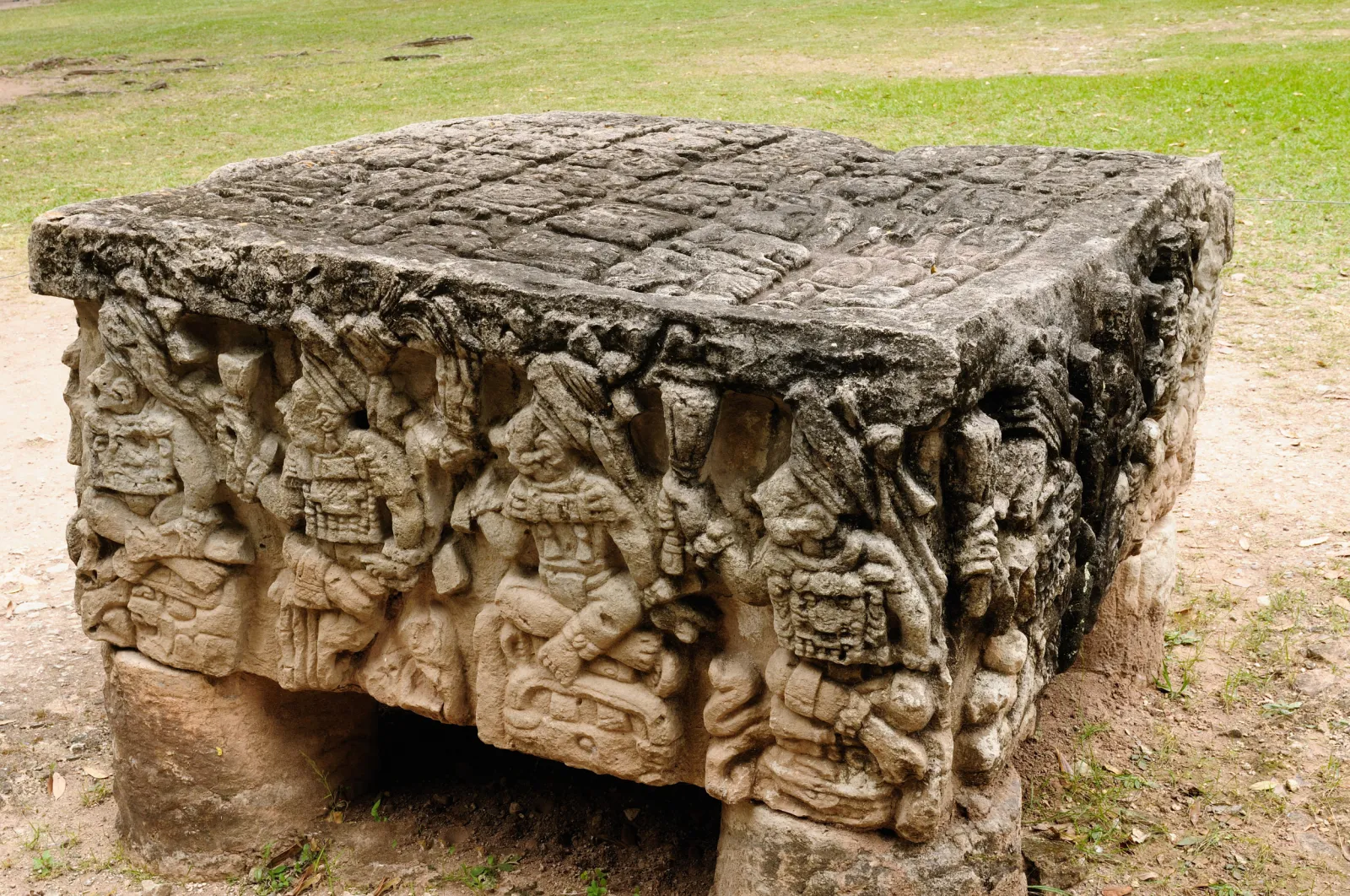
The knives were found near a stone slab that may have been used for sacrifices—both human and animal—as well as for offerings to the gods.
Analysis of the knives in question though revealed that they were never used, archaeologist Cristian Hernández González, who has been conducting research at the site, told EFE.
Nevertheless, the researcher highlighted the importance of the offerings, noting the significance of the materials involved.
"The offering is made up of 16 pieces: three of flint and 13 of obsidian, materials that are not available in the Yucatán peninsula, brought from faraway places, such as Guatemala and central Mexico," he said.
Last month, INAH announced that archaeologists had discovered an ancient Maya city hidden in the jungles of southern Mexico.
The site is located in the Balamkú ecological reserve in the central part of Campeche state and contains several large pyramidal structures.
It was likely an important center in the region during the Classic period of the Maya civilization (around 250-1000 AD), according to archaeologists.
Newsweek has contacted INAH for comment.
View 0 Comments
Submit Correction
View Editorial & AI Guidelines