10
Loading video...

By Amanda Greenwood
Associate News Editor
0
Share
Newsweek is a Trust Project member
See more of our trusted coverage when you search.Prefer Newsweek on Googleto see more of our trusted coverage when you search.
Data centers are placing unprecedented demands on the U.S. electricity system. This is prompting Congress and a growing number of states to confront a sensitive question: who should pay for the power plants, substations, and transmission lines needed to serve them?
Should the costs be swallowed by the companies driving the AI boom, such as Meta, Google, and Microsoft, along with the data center developers building the infrastructure? Or should they be shouldered by the households and small businesses that receive electricity from the same grid?
House Passes Bill To Shield Ratepayers From Data Center Costs
The House overwhelmingly passed the bipartisan Ratepayer Protection Act on September 16 by a 417-3 vote. The legislation would establish a federal standard intended to prevent households and small businesses from effectively paying for the electricity infrastructure that has been built for exceptionally large power users, such as data centers.
Read More on News
Michele Nellenbach, vice president of federal affairs at Data Center Coalition (DCC), which represents major data center operators, told Newsweek that the DCC "supports the underlying goal of the Ratepayer Protection Act" and welcomes an opportunity to work with lawmakers "to ensure all large-load customers and stakeholders pay their own costs for grid upgrades and related infrastructure."
What Is the Ratepayer Protection Act?
Introduced by Republican Representative Gabe Evans of Colorado and Democratic Representative Kathy Castor of Florida, the Ratepayer Protection Act would amend the Public Utility Regulatory Policies Act of 1978.
The new bill applies to businesses or organizations that use a huge amount of electricity at one location, specifically 100 megawatts or more, which is enough to power tens of thousands of homes at once.
The proposed federal standard would require those large electricity users to pay the full cost of any new power plants, transmission lines, or grid upgrades needed to serve them. Power companies would also need guarantees from these large energy users that they will help pay for the upgrades before the work begins.
One important distinction to note here is that the bill would require state utility regulators to review the new standard and decide whether or not to adopt it, but it would leave the final decision to the states rather than imposing a single federal rule. It wouldn’t automatically replace existing state systems for setting electricity rates.
In plain terms, the goal is to make sure data centers pay for the infrastructure they need, rather than leaving households and small businesses to pick up part of the bill.
Nellenbach said its coalition members support that principle. "The DCC and our members have been consistent in our commitment to paying the full cost of the energy and infrastructure attributable to their development and to ensuring that those costs are not passed on to residential ratepayers," she said.
The debate over who should pick up the costs associated with data centers has become increasingly pressing as the large-scale facilities are consuming more and more of the nation's electricity.
For instance, in a 2024 report, the Department of Energy's Lawrence Berkeley National Laboratory estimated that U.S. data centers used about 176 terawatt-hours of electricity in 2023, accounting for 4.4 percent of total U.S. power consumption. The report projected that consumption could rise to between 325 and 580 terawatt-hours by 2028, representing between 6.7 percent and 12 percent of U.S. electricity demand.
The Electric Power Research Institute also said in February that its analysis had found that data centers could consume "9%-17% of U.S. electricity generation by 2030—more than double current use."
It added: "In 2024, U.S. data centers are estimated to use about 177–192 terawatt-hours of electricity. By 2030, that could rise to roughly 380–790 TWh, depending on how many planned projects are actually built and how quickly they ramp up."
To meet that growing demand, utilities may have to spend millions or even billions of dollars on new power lines, substations, and other grid upgrades. Supporters of the legislation argue that if a major data center project is delayed, scaled back, or uses less electricity than expected, utilities could attempt to recover some of those costs from their broader customer base through higher electricity rates. The bill seeks to reduce that risk by requiring large power users to bear the full cost of infrastructure built specifically to serve them.
But several states are already moving in that direction.
For example, Florida, Oregon, Virginia, Texas, Alabama, Nebraska and South Dakota have all already adopted certain approaches to allocating the costs and financial risks created by data centers and other large-load power customers.
Nellenbach said the industry is "actively investing hundreds of billions of dollars in the U.S., driving manufacturing and supply chain growth, creating millions of high-wage jobs, and generating tax revenue that helps fund schools, transportation, public safety, tax relief, and other local priorities."
Florida Requires Large Loads To Bear Their Full Cost
Florida has adopted one of the country’s most explicit statewide protections.
The law applies to very large electricity users, such as data centers, that expect to draw at least 50 megawatts of power at one site, based on their peak usage level.
Utility tariffs must "reasonably ensure" that each qualifying customer bears the full cost of service and that those expenses are not shifted to other ratepayers.
The statute recognizes that large electricity users (like data centers) can create bigger financial risks than typical customers, and those risks could end up affecting their broader base of consumers. Electric companies in Florida must, therefore, submit new rate plans and rules to the Florida Public Service Commission showing how they will put these customer-protection requirements into effect by October 1, 2026.
A proposed rate plan filed by Florida utility company Florida Power & Light (FPL) shows how those protections could work in practice. Under the proposal, new large-load customers would need to sign long-term contracts, provide financial guarantees, meet minimum power-purchase commitments, and potentially pay exit fees if they reduce demand or terminate their service early.
Oregon Creates a Separate Class for Data Centers
...
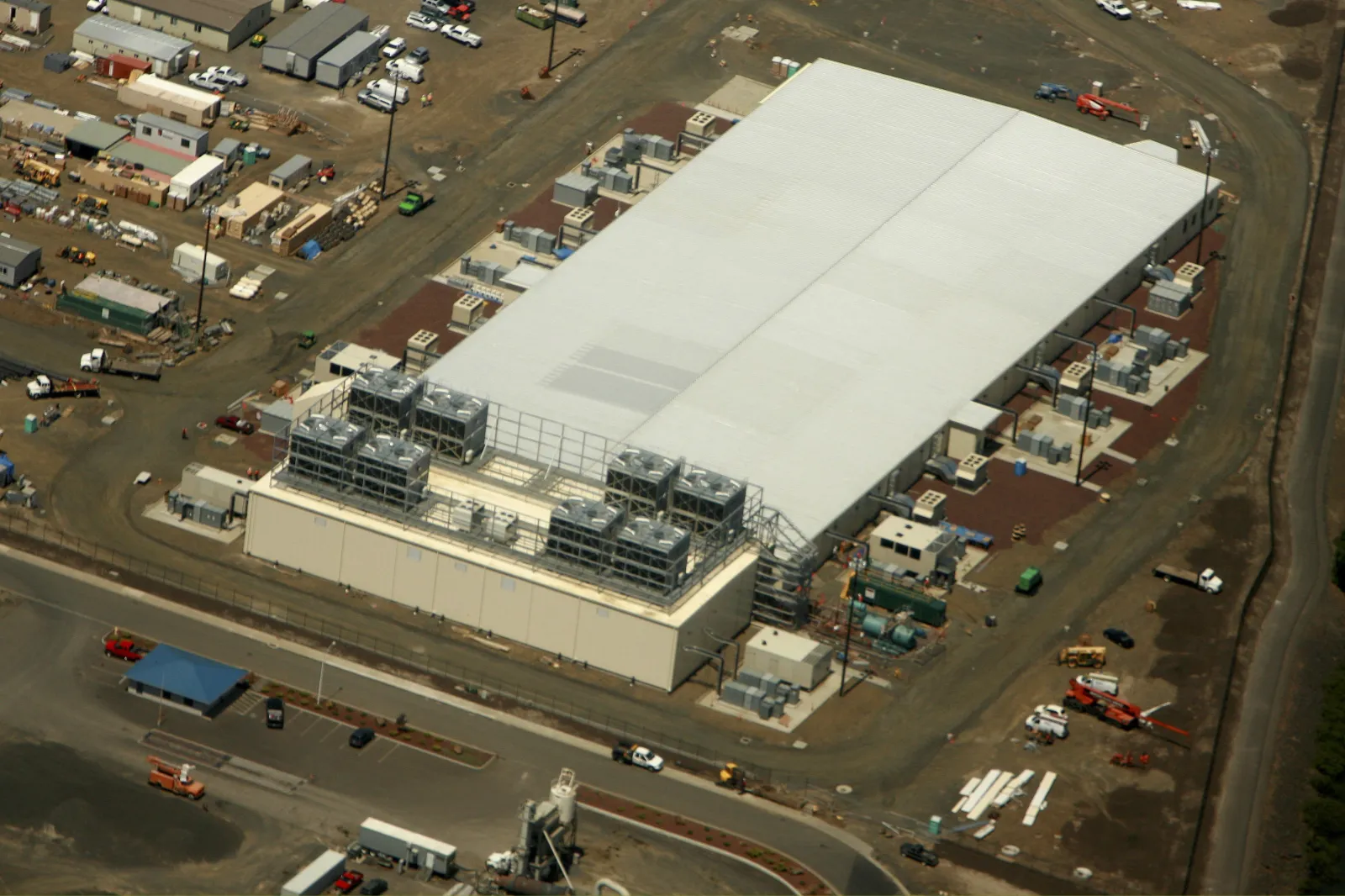
Oregon’s 2025 Protecting Oregonians With Energy Responsibility (POWER) Act was designed to help the Oregon Public Utility Commission (PUC) manage the costs and risks created by the rapid expansion of data centers and other large electricity users.
The law applies to large facilities that use at least 20 megawatts of electricity and is designed to make sure that the costs of serving those facilities are paid for by the facilities themselves, not other customers.
In September 2026, the Oregon PUC approved Schedule 96 for large-load customers served by Portland General Electric (PGE). The commission said that the framework would ensure that data-center bills reflect the specific costs of serving them while protecting households and businesses from subsidizing related infrastructure.
"Oregonians should not bear the costs of explosive data center growth," the Chair of PUC Letha Tawney said, adding that Schedule 96 "ensures the largest energy users in PGE’s service area pay their fair share."
Under the approved plan, customers using at least 100 megawatts of power will pay an extra one cent per kilowatt-hour, with the additional revenue going toward residential customer programs.
Virginia Regulators Acted Without New Legislation

...
Virginia took a regulatory rather than legislative route.
In November 2025, the State Corporation Commission (SCC) approved a new electricity rate category for very large power users, including facilities that require at least 25 megawatts of power. The new rate class will take effect next year, on January 1, 2027.
Qualifying customers must pay for most of the electricity infrastructure and power capacity reserved for them, even if they ultimately use less power than expected.
South Dakota Makes Data Centers Responsible
South Dakota’s approach is to make large data centers largely responsible for the electricity costs they create, rather than shifting those costs to other utility customers.
Under legislation enacted in 2026, data centers with peak demand of at least 10 MW must have separate electric-service terms requiring them to reimburse utilities for costs fairly attributed to their demand and consumption, including certain costs that could arise if the facility later reduces or leaves the system.
The framework is intended to address both direct power costs and the risk of stranded infrastructure investments.
Texas Targets Interconnection Costs
Texas Senate Bill 6 requires large-load electricity users to help pay for the cost of connecting their facilities to the power grid.
The law generally applies to new power users requiring 75 megawatts or more of electricity in the Electric Reliability Council of Texas (ERCOT) region and aims to make sure that the costs of new grid infrastructure are managed without compromising reliability or business growth.
The demand is enormous, which is rapidly increasing pressure on the grid: In an October 2025 filing, ERCOT said it had about 205 gigawatts of large power projects seeking grid connections, roughly 70 percent of them data centers, which was cited by international law firm Sidley.
Alabama Reviews Contracts for the Largest Data Centers
Alabama’s Senate Bill 270 applies to data centers that expect to use at least 150 megawatts of electricity across one or more adjoining sites.
The law requires the Alabama Public Service Commission to determine whether qualifying data centers are actually paying the full additional costs they create for utilities. Those costs can include power generation, transmission lines, local grid upgrades, fuel, and taxes.
The bill, therefore, relies on contract-by-contract regulatory scrutiny rather than creating one uniform state tariff.
It takes effect on October 1, 2026.
Nebraska Allows Financial Commitments and Special Rates
Nebraska’s "Large Load Customer Regulation Act" covers new or expanded loads exceeding 20 megawatts at a single site.
The measure allows public power suppliers to create interconnection standards and allows them to establish customer-specific rates, charges, and operating conditions. Large-load customers may also be required to prove they have the right to use the land, pay for engineering and planning studies to determine whether the grid can handle the new demand, and make financial commitments toward generation and transmission infrastructure needed to serve them.
The legislation was approved by the governor in April 2026.
California Has Ordered a Study, Not Direct Cost Allocation
California, in the meantime, offers a counterexample to the states that have imposed or authorized direct cost protections.
Senate Bill 57 directs the California Public Utilities Commission to just look at how data-center growth affects the grid and whether associated costs are being shifted to other customers. It doesn’t require data centers to absorb those costs directly or establish a separate mandatory tariff for them.
"California families are already struggling with rising utility bills as it is," Democratic State Senator Steve Padilla said when the measure was signed. "We need to better understand what the impacts of these energy and resource hungry data centers will be on our grids and our energy bills."
California data-center developers have requested approximately 18.7 gigawatts of electricity capacity, according to figures attributed to the California Energy Commission. Yet the state’s current law remains an information-gathering measure rather than a requirement that forces developers to cover the infrastructure costs their projects create.
Key Takeaway
The emerging state-by-state patchwork shows that lawmakers broadly recognize the financial risks created by enormous new electricity loads, but haven’t yet settled on a single solution.
Florida and Oregon have gone further by establishing direct cost-allocation principles, while Virginia has demonstrated that utility regulators can act even without a new statute. Texas, Alabama, Nebraska and South Dakota have adopted narrower safeguards suited to their own electricity markets.
What they share is the principle at the heart of The Ratepayer Protection Act: If an AI data center requires billions of dollars in new electricity infrastructure, ordinary customers shouldn’t automatically be left paying for it.
Newsweek has contacted the Electric Power Research Institute (EPRI), to ascertain the scale of data-center electricity demand and infrastructure requirements, by email, for comment.
Newsweek’s reporters and editors used Martyn, our AI assistant, to produce this story. Learn more about Martyn here.
Contact Newsweek editors on this story: Ben Kelly and James Debens
Update, 09/17/2026 10:21 a.m. ET: this article was updated with comment from Michele Nellenbach.
Update, 09/18/2026 10.21 a.m. ET: This article was updated with comment from the Electric Power Research Institute.
View 0 Comments
Submit Correction
View Editorial & AI Guidelines