
...

By Khaleda Rahman
National Correspondent
0
Share
Newsweek is a Trust Project member
See more of our trusted coverage when you search.Prefer Newsweek on Googleto see more of our trusted coverage when you search.
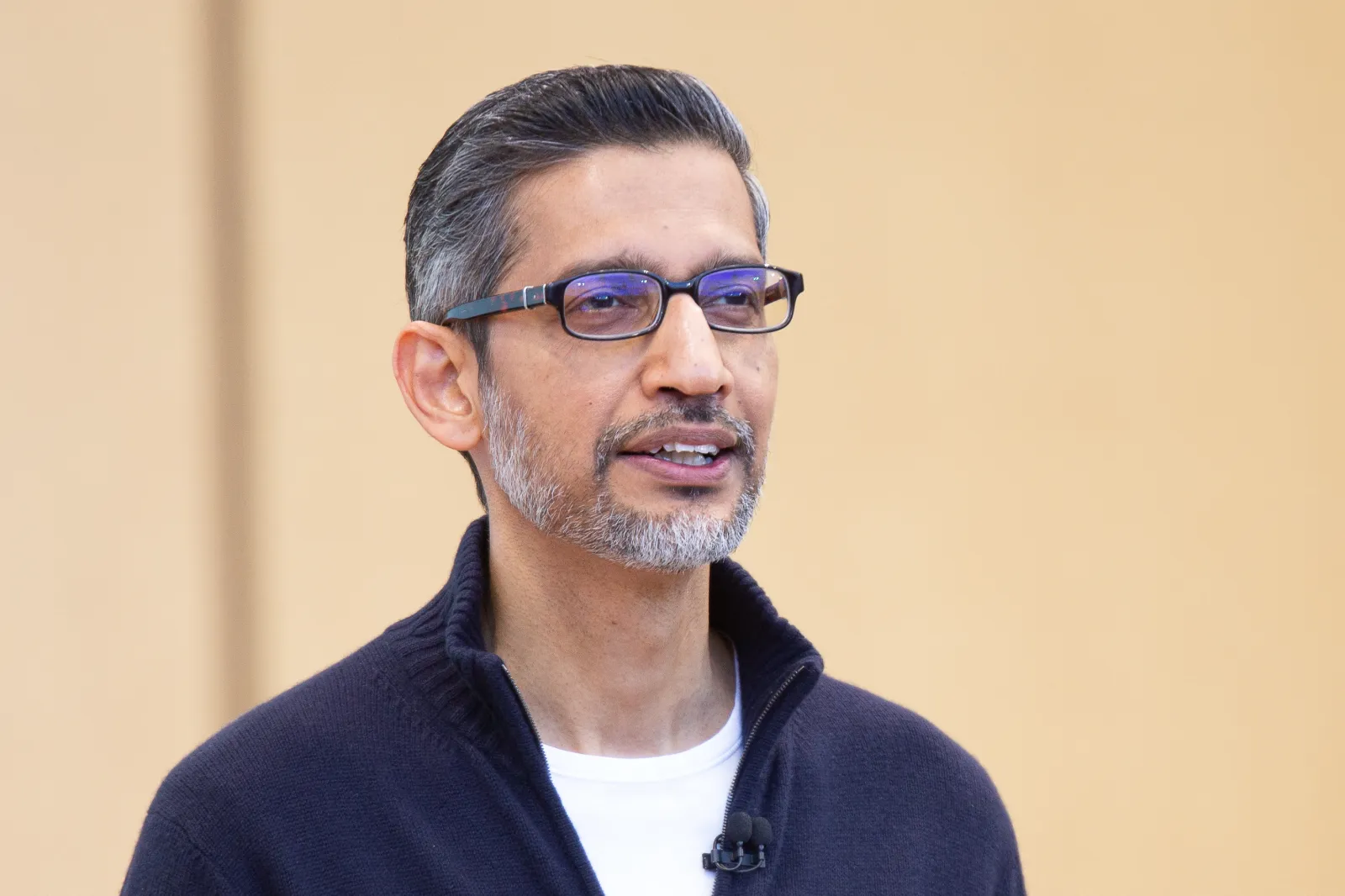
Numerous Stanford University students reportedly walked out of their graduation ceremony as Google CEO Sundar Pichai took the stage to deliver a keynote address.
Around 200 students walked out as Pichai took the stage during Sunday's event, SFGate reported.
The walkout was organized by Students for Justice in Palestine and other groups to protest Google’s ties to Israel, U.S. Immigration and Customs Enforcement (ICE) and other companies. Videos posted on social media showed some of the students walking out were carrying Palestinian flags, while others displayed banners reading “Genocide Runs on Google” and “ICE spies with Google AI.”
Read More on News
“Pichai was met with the sight of hundreds of students who showed they could not be allured anymore with the talk of a dollar or rapidly expanding AI. We know about the crimes of Google in collaborating with Israel, ICE, and companies like Palantir,” the Stanford chapter of Students for Justice in Palestine (SJP), a pro-Palestinian student organization. said on Instagram, alongside clips of the walkout.
“Nothing that was done today could have been done without the students, faculty, and community members who spread the word and who showed up. We congratulate the graduates as they continue on to their next step beyond Stanford. To the graduates of today who joined us. May your future steps to the future continue to be guided towards doing whats right.”
Since Hamas’ October 7, 2023, attack on Israel and the ensuing war in Gaza, U.S. college campuses have become a focal point for sustained pro‑Palestinian activism, with demonstrations, encampments, walkouts and building occupations unfolding at hundreds of institutions. Research from the Crowd Counting Consortium has recorded more than 3,700 days of protest activity across over 500 schools, including encampments at more than 130 campuses.
The movement surged in the spring of 2024, when protests that began at Columbia University spread nationwide and helped trigger more than 3,000 arrests, as well as disciplinary crackdowns by universities.
While many demonstrations were peaceful, the scale and persistence of the activism have often disrupted campus operations and high‑profile events, including commencement ceremonies, invited speeches and official gatherings, prompting institutions to tighten protest rules and increase security.
Newsweek has contacted Stanford University and Google for comment via email.
...
What Pichai Said
Pichai’s remarks drew from his own life experiences as he urged students to focus on optimism, tackling difficult challenges, and pursuing what excites them.
"You have thousands of moments ahead of you. The important thing isn’t to get them all right; it’s to find a way to keep moving forward,” he said.
“You already have the California optimism to see life’s golden hills, and a Stanford diploma proving you can do hard things. Now, go out and set your heart ablaze!"
What Is Project Nimbus?
Pro-Palestinian protesters have criticized the deal Google has with the Israeli government and military, under “Project Nimbus,” to provide cloud computing and AI services.
The $1.2 billion contract was signed in 2021, when Israel first tested out its in-house AI-powered targeting systems.
Google has repeatedly denied that its technology would play a role in Israel’s war in Gaza, saying in a statement that the contract “is not directed at highly sensitive, classified, or military workloads relevant to weapons or intelligence services.”
But Google officials had worried the deal would harm the company’s reputation and that its services could be used for the “facilitation of human rights violations,” The New York Times reported in 2024, citing documents that were prepared for executives.
Earlier in the year, some employees protested the deal with sit-ins at two Google offices. Google later fired around 50 workers for taking part in the protests, according to The New York Times.
Students Hold Alternative Event
As it did last year, the Stanford SJP held an alternative commencement ceremony called “The People’s Commencement.”
Mahmoud Khalil, a Palestinian activist who has become a symbol of the Trump administration’s crackdown on campus protests, was a speaker at this year’s event.
Khalil “missed his graduation. On Sunday, he’s coming to celebrate ours,” the Stanford SJP wrote on Instagram announcing him as a speaker.
“A year ago this spring, Khalil was supposed to walk at Columbia. Instead he was in an ICE detention center in Louisiana. 104 days. No criminal charge. His son was born while he was inside. His classmates graduated without him. His offense was speaking up for Palestine, and his case is now headed to the Supreme Court.”
Khalil, who was an outspoken leader of pro-Palestinian protests at Columbia University, is fighting the Trump administration’s efforts to deport him.
Khalil, a legal permanent resident in the U.S, was arrested at a Columbia University-owned residence in March 2025, related to his participation in a Gaza solidarity encampment organized by students in 2024.
He was held for more than 100 days in a federal immigration detention center in Louisiana before being released in June following a federal district court judge's ruling.
Former Google CEO Booed by Students
In his speech, Pichai steered clear of mentioning AI, which has drawn jeers from students who view it as a threat to their job prospects at these types of events.
Former Google CEO Eric Schmidt was booed by students as he delivered a speech during a graduation ceremony at the University of Arizona in May.
Schmidt was met with boos several times as he spoke about the rise of AI during his speech, NBC News reported.
"I know what many of you are feeling about that. I can hear you," Schmidt said, as students booed as he compared today's AI boom to the rise of computers decades ago.
“There is a fear in your generation that the future has already been written, that the machines are coming, that the jobs are evaporating, that the climate is breaking, that politics is fractured, and that you are inheriting a mess that you did not create, and I understand that fear.”
Record executive Scott Borchetta also faced boos from graduates at Middle Tennessee State University when he spoke about how AI was rewriting the rules in May.
That same month, students at the University of Central Florida booed speaker Gloria Caulfield, the vice president of real estate firm Strategic Alliances for Tavistock Development Compnay, who hailed AI as the “next Industrial Revolution.”
Other graduation speakers have gotten cheers for their comments about AI. Apple cofounder Steve Wozniak garnered cheers and applause after telling students during Grand Valley State University's graduation ceremony in May that they “have AI—actual intelligence.”
View 0 Comments
Submit Correction
View Editorial & AI Guidelines