...

By Rowan Fisher-Shotton
0
Share
Newsweek is a Trust Project member
See more of our trusted coverage when you search.Prefer Newsweek on Googleto see more of our trusted coverage when you search.
Indiana sits atop the College Football Playoff field as the No. 1 seed, with the bracket advancing to a national championship matchup between No. 1 Indiana and No. 10 Miami at Hard Rock Stadium on Monday, January 19.
The semifinals that set the stage for that matchup saw Indiana dominate No. 5 Oregon in a 56–22 blowout, while the Hurricanes edged No. 6 Ole Miss 31–27.
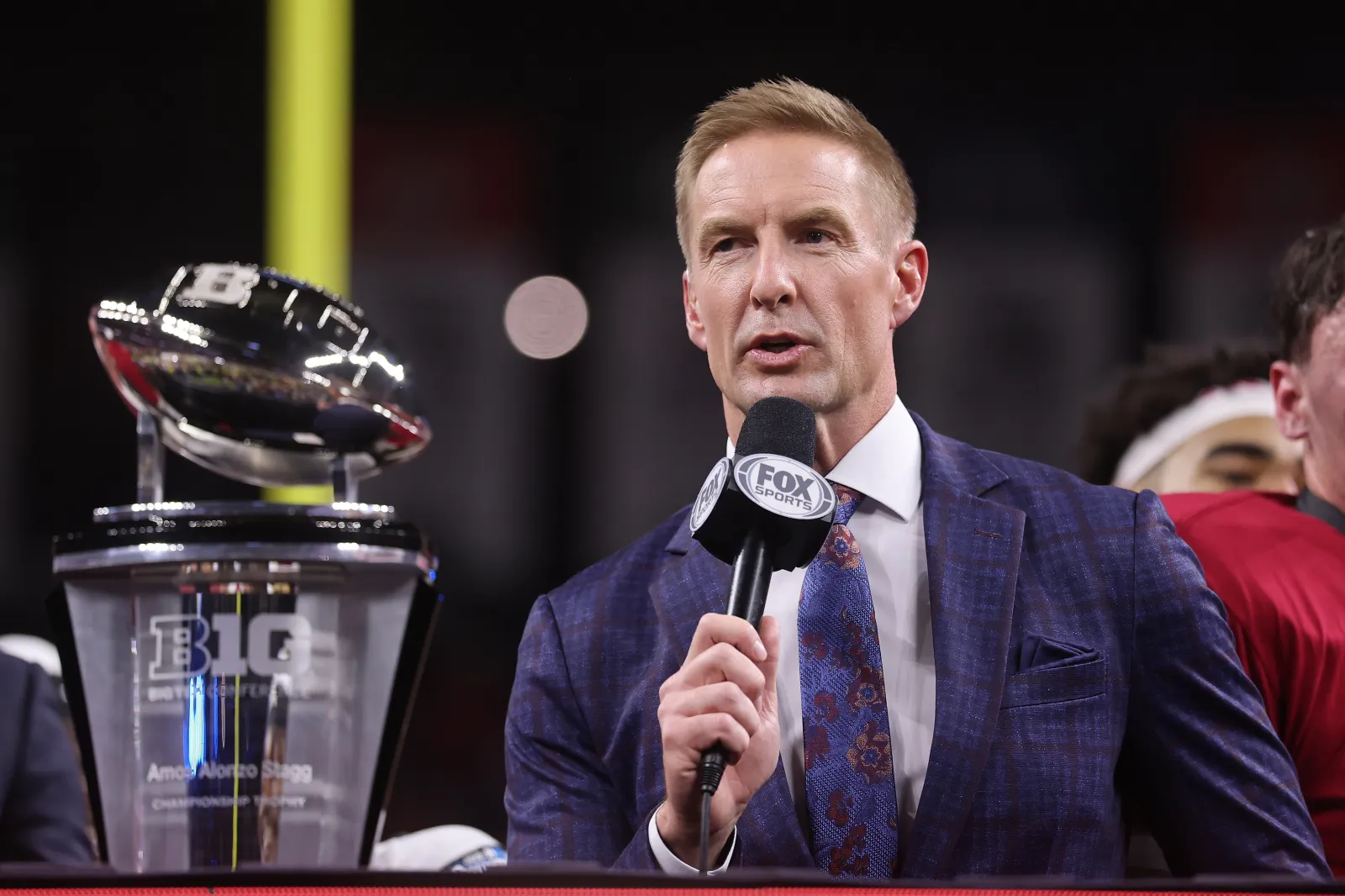
As both programs prepare for the national title game, and as roster turnover continues to accelerate across college football due to the NCAA transfer portal, Joel Klatt weighed in on what he sees as one of the sport’s most pressing structural issues.
Read More on NCAA
On Tuesday’s episode of "The Joel Klatt Show," he critiqued the CFP calendar and argued that the current model, in which players can transfer freely year to year while the postseason stretches deep into January, is unsustainable.
“The hardest part about this is that every single player is a free agent every single year. You can’t do that,” Klatt said. “Someone needs to have enough courage to step up and say these players are employees. We can get to a CBA, a collectively bargained agreement, but only once somebody has the brass to step in and have the fight and say, ‘These are employees.’”
Klatt also pointed to the transfer portal and postseason timing as interconnected problems.
“I would have the transfer portal in a different timeframe, and that brings us to the second fix,” Klatt said. “One is to label them employees. The other is to fix the calendar. One of the challenges is the playoff and its structure — how we schedule the playoff deep into January versus trying to finish the college football season by at the latest January 1st or January 5th.”
Klatt argued that attempts to preserve outdated structures have only made the sport harder to manage.
“We are bending ourselves like a pretzel in college football and making things very difficult on ourselves, and our coaches more specifically, by trying to save amateurism, save the postseason schedule, and save spring football,” Klatt said. “All of that stuff is archaic. We need to have a modern lens on all of those things. If we don’t do this, I think it spells doom for college football.”
The NCAA recently adopted a single winter transfer window for FBS players running Jan. 2–16, 2026, eliminating the spring transfer window for football and concentrating all inbound and outbound movement into a short period.
That compressed timeline sparked a surge of activity in early January, with more than 4,500 Division I players reportedly entering the transfer portal on the first day alone.
The result has been rapid roster churn across the sport, fueling a wave of high-profile transactions and heightened instability.
Read More: Lane Kiffin Convinces 4-Star LSU RB to Make Surprising Career Decision
...
Read More: Ohio State, Ryan Day Land All-ACC Safety to Replace Caleb Downs
In line with Klatt’s CBA perspective, Athletes.org released a draft model collective bargaining agreement in December 2025, proposing frameworks for wages, multi-year protections, grievance processes, and other collective-bargaining mechanisms aimed at college sports.
The draft is designed to spark negotiation and debate around replacing ad hoc NIL arrangements with enforceable labor terms.
While discussions are ongoing, significant institution-level and legal hurdles remain, including state laws, conference governance structures, NCAA rulemaking, and potential antitrust litigation.
View 0 Comments
Submit Correction
View Editorial & AI Guidelines