
By Joe Kozlowski
Sports Team Lead
0
Share
Newsweek is a Trust Project member
See more of our trusted coverage when you search.Prefer Newsweek on Googleto see more of our trusted coverage when you search.
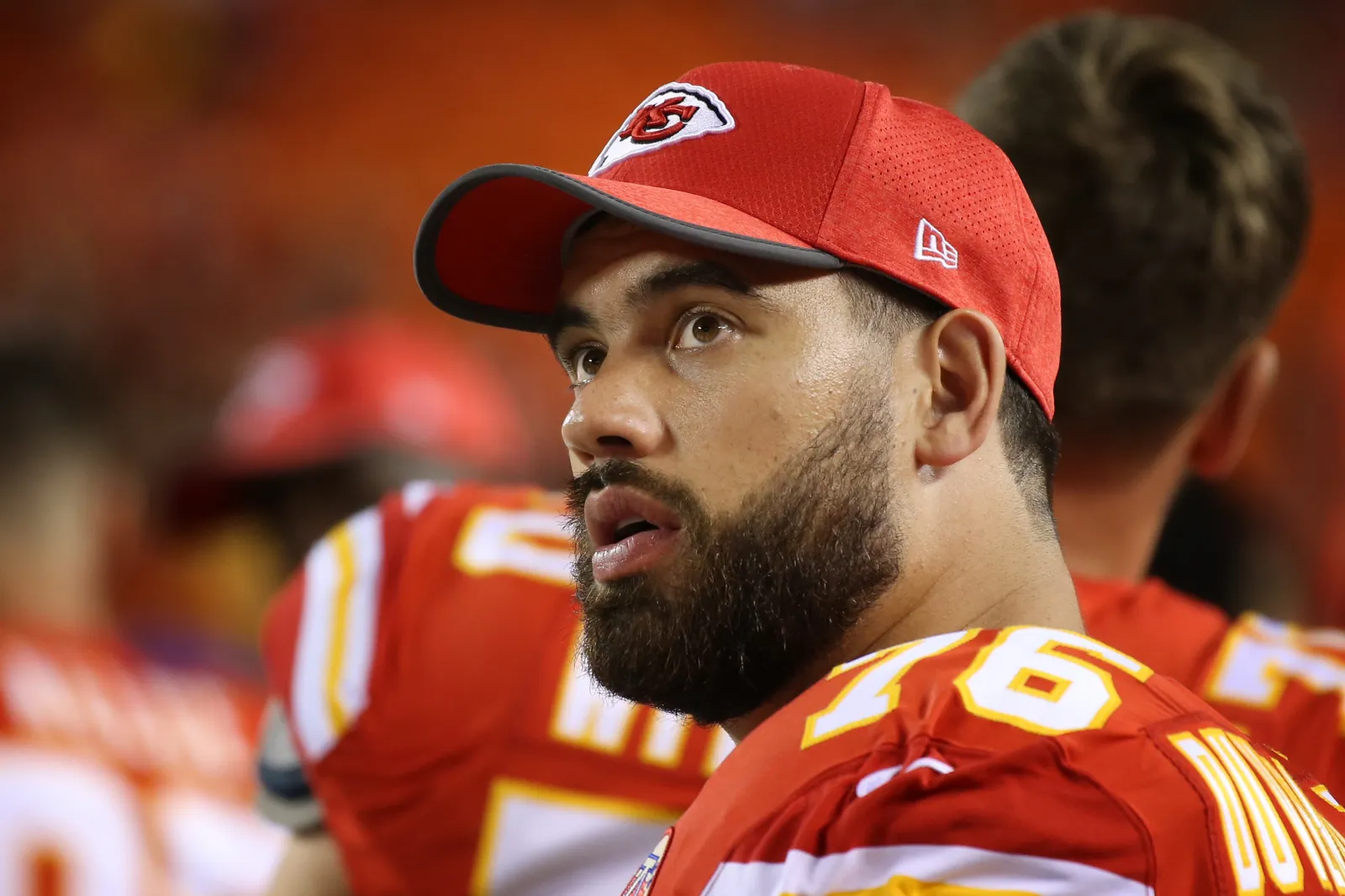
When the Kansas City Chiefs lifted the Lombardi Trophy in February 2020, it seemed like a crowning moment. The franchise had won a championship for the first time in 50 years, thanks in large part to the decision to draft Patrick Mahomes in 2017.
Offensive lineman Laurent Duvernay-Tardif was part of the team celebrating in Miami. Winning the Super Bowl is an impressive feat for any player, let alone one who grew up in Canada and came to football comparatively late in life.
But, in what felt like a blink of an eye, everything changed. COVID-19 shut down North American life. Duvernay-Tardif, who earned his medical degree while playing football, knew what he had to do.
Read More on Sports
...
“Initially after winning the Super Bowl, I was pretty frustrated about COVID, like almost in an egocentric way,” he told Newsweek. “It was my year, my offseason.... And then at some point it was like, ‘OK, well, this is not about me.’”
“There was a lot of stuff happening in [the] hospital setting, but also in long-term care facilities,” he continued. “In Quebec, those establishments were devastated by COVID because of the frail population and the elderlies. And the government asked for people with a medical background to go back and help. And I raised my hand, and I was a part of that movement. A month and a half after winning the Super Bowl, I was doing my first shift in a long-term care facility in a red zone with my mask, my visor, my gloves.”
A Tale of Two Passions
Now a doctor nearing the end of his residency, Duvernay-Tardif—who earned his medical degree in 2018—began his balancing act well before COVID. Consider, for example, his NFL draft process. While most big-time prospects follow a standard path through college ball, the Scouting Combine and the draft-night greenroom, the lineman’s road to the pros was a bit different. DVDs were sent out, and he had his own pro day in Canada. That garnered some attention, but it also raised its own challenges.
“I was working at the children’s hospital here in Montreal, and [friend and agent] Sasha [Ghavami] was just giving me calls saying, like, ‘Hey, you gotta go to meet Coach [Andy] Reid in Kansas City, you gotta go to Green Bay, you gotta go to Buffalo.’ I ended up visiting like 10 teams in the span of two weeks. It was pretty nuts,” Duvernay-Tardif said. “And I was going to the hospital with my passport in my back pocket and I was doing Zoom calls with offensive coordinators, breaking down like cover-two [defenses] and the whole thing, sitting on the toilet with my lab coat and my stethoscope.”
The schedule didn’t any get easier when the draft rolled around. “I was leaving to go to watch the draft with family and friends, and then all of a sudden, I got a page saying there’s an emergency C-section going on for twins. And I was a learner, I was a medical student, and the doctor was like, ‘Hey, do you want to come in?’ And of course, you don’t say no to those opportunities,” Duvernay-Tardif explained. “So, I just hand my phone to the nurse and I was like, ‘If somebody calls as I was scrubbing in, please just say yes.’”
The call didn’t come that night, but he was drafted in the sixth round of the 2014 draft, joining the Kansas City Chiefs.
All About Teamwork
Going pro wasn’t the end of Duvernay- Tardif’s medical career, though. He embarked on a unique schedule, focusing on football during the NFL campaign and medicine during the offseason.
COVID, of course, changed that plan and thrust the recent Super Bowl champion onto the front lines. That provided a crash course in the differences between academia and a life-and-death pandemic. “I went in there with the mindset of a medical student, like I was trying to optimize everything: blood pressure, medication, diabetes and so on. And I remember a nurse pulled me aside at some point and she was like, ‘Laurent, those people are not going back home,’” Duvernay-Tardif recalled.
“So what matters, you know? And the answer was comfort, it was dignity, it was the little things—and realizing that those people that you were spending time with, your patients, you were the only human being that they were seeing because they were quarantined in their own rooms. So, how can you show humanity and empathy through those difficult moments? It really transformed me.”
Duvernay-Tardif did return to the NFL for the 2021 and 2022 seasons with the New York Jets, an experience that allowed the lineman to leave football on his own terms.
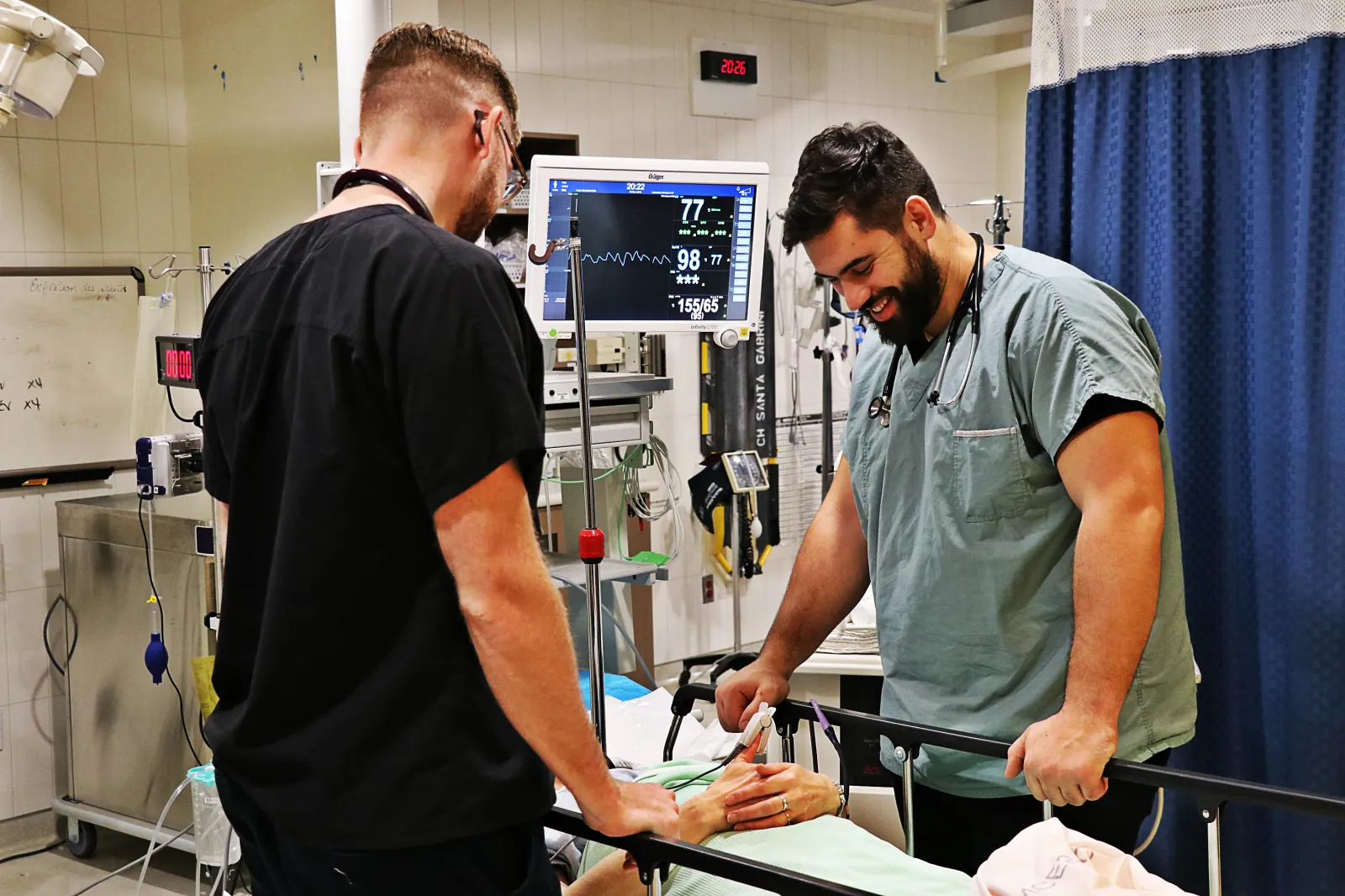
The lessons from the gridiron, however, haven’t been left in the past. Connecting with people from different backgrounds to work toward a common goal—which Duvernay-Tardif describes as the most interesting part of playing football at a high level—is also important in a hospital.
...
“It’s all about teamwork,” he said. “In some ways, practicing football for nine years in the NFL helped me communicate better. Making better, rational decisions in stressful environments, being able to execute clearly and communicate clearly with one another, that all comes from football.”
The New Playbook
As an emergency medicine resident, that ability to slot into new situations and become part of the team has been especially important. During the summer of 2025, for example, he worked in Gaspé, Quebec, a city roughly 10 hours by car away from Montreal on the shores of the Gulf of St. Lawrence; a location that provided experience managing acute patients and working with plane transfers to larger cities. That was followed by a residency at Montreal’s Jewish General Hospital, where the focus is more on flow and efficiently providing care.
“That’s great because that helps you make better decisions about what you want to do in the future.... Hopefully I’ll do a fellowship in emergency medicine. And within a year I should be done,” Duvernay-Tardif said. “I think [emergency medicine is] the closest I can be to a football field without being on a football field and without any risk of injuries in terms of like stress management, and in terms of making rational decisions in stressful environments, working as a team,” he explained.
“It’s really rewarding, emergency medicine. I think it’s a place where you can always question yourself about how you could be better. Better in terms of the medicine, but also in terms of the management of the flow of the emergency, about working with your colleague, creating that sense of like, ‘OK, we gotta move,’ but at the same time creating a space where people are comfortable sharing their own observation[s] about a patient. It’s really a multifaceted role being an ER physician. And, yeah, I really enjoy it.”
Despite the NFL being in the rearview mirror, the former lineman still has other irons in the fire. He’s slated to head to Italy to cover the Olympics for Radio- Canada, the French-language branch of the Canadian Broadcasting Company.
And he set up the Fondation Laurent Duvernay-Tardif, which, fittingly, focuses on a balance between sports and arts.
...
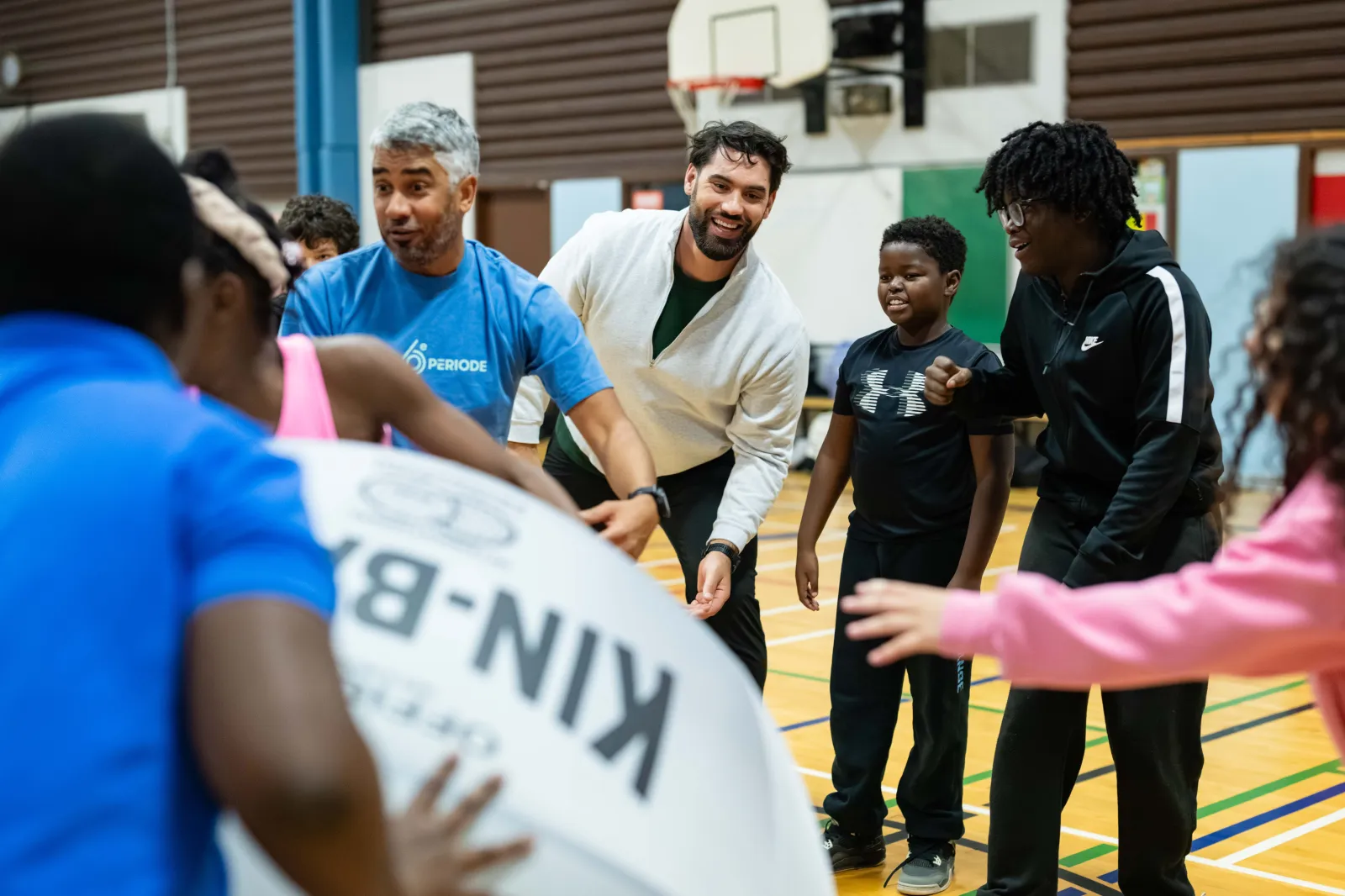
“The whole idea, we started—my girlfriend and I, Florence [-Agathe Dubé-Moreau an independent art curator]—back in 2017 while I was still playing, it was after I signed my extension with the Chiefs,” he said. “And I think that the question we had was how we’re gonna use our platform from football to accomplish something in our community.”
“The whole mission that we have at the foundation is to create an after-school program to...make school a nice place to hang out. We do all kinds of artistic and athletic activities and the whole point is that kids don’t get to choose. So, if you’re interested in sports, you’re gonna end up doing sport, but you’re also gonna work with clay, you’re gonna do sculpture, you’re gonna do all kinds of different practices that are inspired by contemporary art here in Canada.
“And the whole point is that we believe that the balance between the two is really what can create a sense of motivation and purpose toward school.... We have programs running in like 55 schools now in Quebec, soon 70 schools. And [we] take a lot of pride in that because when you see a kid that learns something new in one of those programs, creates that spark…it’s a special thing. I was blessed to have parents who got me involved in all kinds of different activities, but in those underserved communities, they don’t have access. And to be able to be there and be kind of that safe space for after school or during lunchtime, to go there, create, move, be active, it’s a really cool thing.”
Duvernay-Tardif has racked up myriad accomplishments in addition to those efforts and his Super Bowl title. He was a 2020 Sports Illustrated Sportsperson of the Year, took home the 2021 Muhammad Ali Sports Humanitarian Award and is a Knight of the National Order of Quebec. Yet he hopes that his lasting legacy goes beyond all that.
“I hope that they’re gonna say that I’m doing things for the right reason,” he said. “And they’re gonna understand the nuances of, like, it’s all about the human experience and the curiosity and football. It was all about working as a team and the human aspect, same thing with medicine, same thing with the philanthropy.
“It was never about the money or the fame. It was about the underlying relationship that you can build with amazing people.”
View 0 Comments
Submit Correction
View Editorial & AI Guidelines