- U.S.
- World
- Science
- Health
- Life
- Rankings
- Opinion
- Entertainment
- Fact Check
- My Turn
- Education
- EventsSportsPodcastsBetter PlanetBetter WorkplacesMightierAutosNewslettersUnconventionalVantageExpertsLeadershipDev Pragad
- Subscribe

- Login
×
Subscribe Login
- U.S.
- World
- Science
- Health
- Life
- Rankings
- Opinion
- Entertainment
- Fact Check
- My Turn
- Education
- Events
- Sports
- Podcasts
- Better Planet
- Better Workplaces
- Mightier
- Autos
- Newsletters
- Unconventional
- Vantage
- Experts
- Leadership
- Dev Pragad
Regional Revitalization and Innovative Solutions in Japanese Agriculture
By Louise George Kittaka
 Newsweek Is A Trust Project Member
Advertiser Content
Supplied by an entity that has paid the news provider for its placement; not impartial journalism.
Share
Copy Link
✓ Link copied to clipboard!
Listen
Translate
- English (Original)
- Español
- 中国人
- Français
- Deutsch
- Portuguese
- हिन्दी
Newsweek AI is in beta. Translations may contain inaccuracies—please refer to the original content.
Read original
Speed: 0.5xSpeed: 1xSpeed: 1.5xSpeed: 2x
🎙️ Voice is AI-generated. Inconsistencies may occur.
✖
In association with

In Japan, new solutions are emerging to mitigate the problems facing agriculture—such as aging farmers, abandoned farmland and climate uncertainty—bringing fresh perspectives to local economies and redefining the future of regional revitalization. Here, we introduce two dynamic companies at the forefront of this movement.
Supporting Farmers with Sustainable Shiitake
Sugimoto Co., Ltd., a family-run wholesaler in Takachiho, Miyazaki Prefecture, has been supporting local shiitake farmers since 1954. Unlike most regions, where agricultural cooperatives act as middlemen, the company buys every mushroom outright and handles selection, packing and sales. This guarantees farmers a stable livelihood and allows them to focus on cultivation.

The Takachiho region is known for its spectacular sea of clouds. Credit: Sugimoto Co., Ltd. The Takachiho region is known for its spectacular sea of clouds. Credit: Sugimoto Co., Ltd.
Today, the company works with about 600 producers specializing in forest-grown shiitake cultivated on sawtooth oak logs in northern Miyazaki and eastern Kumamoto Prefectures. Records show that shiitake cultivation in the region dates back to at least 1614.
"Most mushrooms sold in supermarkets are grown indoors, but our forest-grown shiitake are valued for their firm texture, nutritional value and deep umami," says President Kazuhide Sugimoto.

Shiitake growing on sawtooth oak logs. Credit: Sugimoto Co., Ltd. Shiitake growing on sawtooth oak logs. Credit: Sugimoto Co., Ltd.
Because log-grown shiitake stay fresh for only a few days, drying is the best way to preserve quality and enable nationwide distribution. However, domestic demand for dried shiitake has been declining in recent years, as supermarkets tend to favor factory-grown fresh mushrooms, which are cheaper, and consumers perceive the soaking required for dried shiitake preparation as too time-consuming.
"We promised to buy everything our farmers produce, but shrinking domestic demand risked making that commitment impossible," Sugimoto explains. "We couldn't suddenly ask our elderly growers to change their farming methods, so we sought new markets."
Taking Forest-Grown Shiitake Worldwide
From 2016 the company began to shift its focus to the United States and Europe, where joining a major global e-commerce platform provided a new path forward. Forest-grown shiitake soon found success among discerning customers who value high-quality, natural ingredients. From there, the products began appearing in major U.S. retailers' online stores, expanding visibility.
Trade shows in Europe brought marketing breakthroughs, highlighting shiitake's unique qualities and showing that log cultivation is sustainable, since oak trees regenerate naturally within 16 years. "For the first time, we realized that what we had always considered normal farming practice was in fact a form of sustainable agriculture," Sugimoto recalls.
The company also discovered that customers cared less about price and more about the story behind the mushrooms. "Once we found that posts about the farmers or the environment resonated with our followers much more than recipes, we rethought our social media strategy," says Sugimoto.
Rising global demand for diverse cuisine has created further opportunities. Shiitake offer both umami and a satisfying texture, qualities rare in plant-based foods. At food events in New York, the company showcased dishes such as shiitake sushi, appealing to vegan and vegetarian audiences.
Even as the company expands its global outreach, Sugimoto continues to remind his team of the importance of their local roots. "Some of our farmers are quite isolated, living deep in the mountains. When they drive in to bring us shiitake, it's not just a matter of handing over their payment. We check in and ask them how they've been."
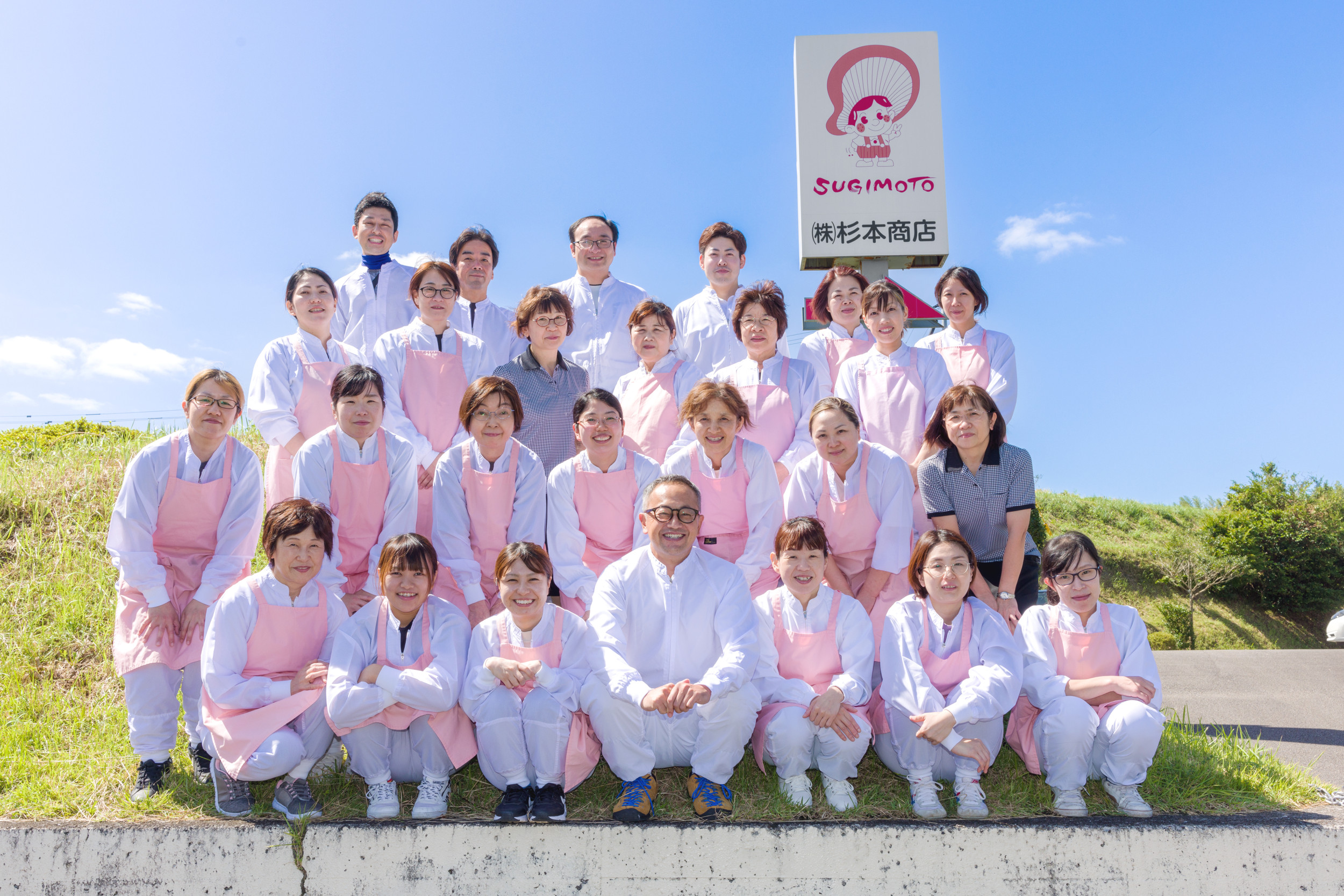
The staff at the company's facility in Takachiho, Miyazaki. President Sugimoto is seated in the center, front row. Credit: Sugimoto Co., Ltd. The staff at the company's facility in Takachiho, Miyazaki. President Sugimoto is seated in the center, front row. Credit: Sugimoto Co., Ltd.
"Our biggest goal is to be recognized as the authentic home of forest-grown shiitake, built on sustainability," Sugimoto says with pride. "When people love our products, we can create new markets and help to sustain the community."
Harnessing Technology for Smarter Agriculture
Founded in 2018 in Tamba, Hyogo Prefecture, Sagri Co., Ltd. uses satellite imagery, AI and local partnerships to help farmers and policymakers manage farmland, improve food security and adapt to climate change.
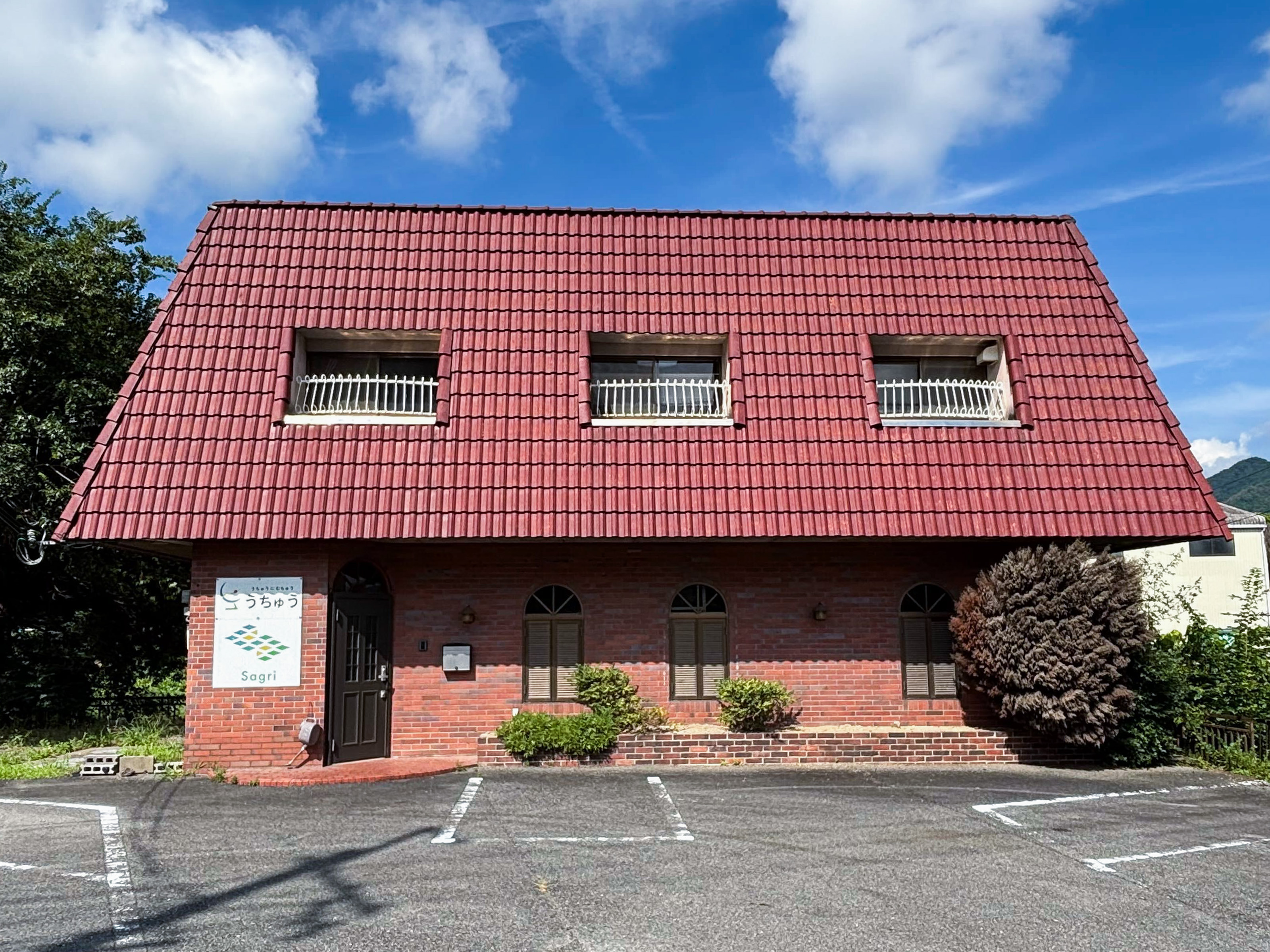
New solutions emerged at the company’s headquarters in Tamba, Hyogo Prefecture. Credit: Sagri Co., Ltd. New solutions emerged at the company’s headquarters in Tamba, Hyogo Prefecture. Credit: Sagri Co., Ltd.
The business model was inspired when Shunsuke Tsuboi, the founder and CEO, worked with schoolchildren in Rwanda who saw no future beyond subsistence farming. Determined to change that outlook, the engineering graduate set out to find solutions that could make agriculture more profitable and appealing.
"I didn't intend to 'become an entrepreneur' as such; I simply chose entrepreneurship as the way to address the challenges I was seeing," he says. His company is now exploring how technology can serve both humanity and environmental sustainability.
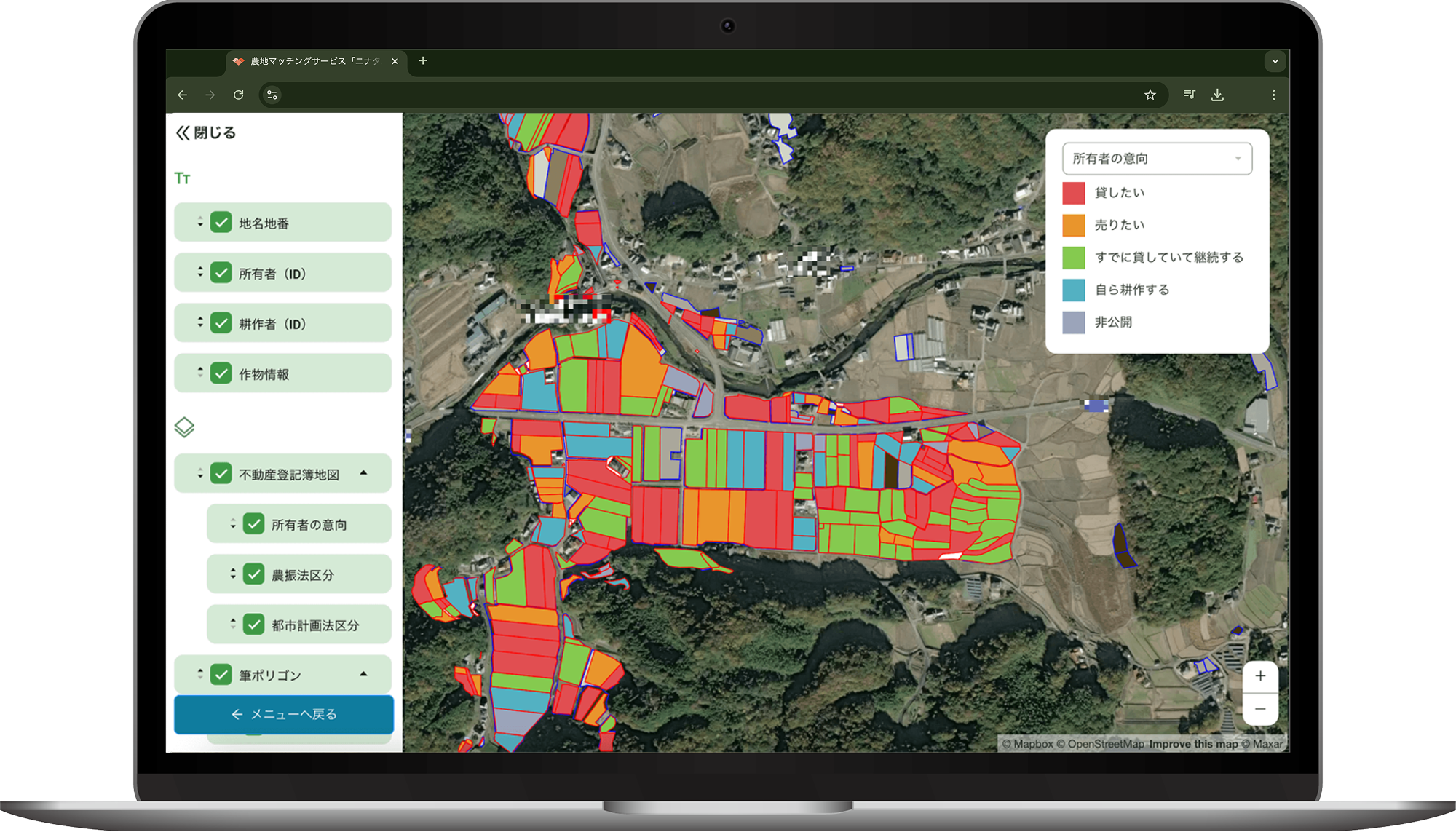
Sagri offers a trio of distinct yet complementary services that can be tailored to the needs of local governments, from detecting abandoned farmland to supporting crop surveys and land-use management. Utilizing satellite imagery, the system makes it possible to see whether fields are actively cultivated or lying idle. Over time, this builds up a digital record, helping municipalities to strengthen farmland management.
Credit: Sagri Co., Ltd. Credit: Sagri Co., Ltd.
Rural municipalities have traditionally confirmed plantings using paper ledgers, a time-consuming process that often requires multiple visits to the same fields. Tamba City—known for crops such as black soybeans and azuki beans—was one of the first in Japan to adopt Sagri's technology. There, crop types are estimated by AI from satellite imagery and recorded digitally, greatly reducing the effort needed for inspections.
As the average age of farmers and local agricultural representatives in Japan continues to rise, Sagri's system has been designed to be user-friendly, allowing those who are familiar with smartphones to adapt with relative ease.
In the city of Gero in Gifu Prefecture, another municipality that has embraced the technology, preparation of maps that once took up to two months can now be done in a single day. Agricultural committee members, who undertake the work on the city's behalf, say they feel assured of consistent and objective results backed by AI.
Once unused farmland is identified and accurately mapped, it becomes much easier to match with prospective operators, such as external agricultural corporations looking for land. "This technology doesn't replace the role of officials; it supports them, saving considerable time, effort and cost," explains Tsuboi.
Offering New Solutions for Farmers
Sagri now operates in more than ten countries across Asia, Africa and Central and South America. In August, Tsuboi shared perspectives as a session leader at the TICAD Business Expo 2025 held in Yokohama, part of the 9th Tokyo International Conference on African Development (TICAD).
The company is exploring carbon credit initiatives, using farmland soil's ability to store carbon as a potential income source for farmers. Carbon credits allow farmers to earn by adopting sustainable practices that reduce or capture greenhouse gases. Sagri is currently focusing on project development in this field in Southeast Asia but hopes to bring expertise back to Japan to enhance agricultural profitability through corporate decarbonization, generating new value for rural communities.
As part of measures to support farming and fishing communities, Japan's Ministry of Agriculture, Forestry and Fisheries (MAFF) has selected the firm as a solution provider for a nationwide program. The initiative backs projects that tackle challenges in rural areas by creating social and environmental impact. Tsuboi believes that startups can make a major contribution to regional revitalization, bringing lower risk and greater agility than traditional industry players.
Credit: Sagri Co., Ltd. Credit: Sagri Co., Ltd.
Technology can be a valuable partner in agriculture, but Tsuboi emphasizes that human connections remain the most important asset. "It's not just about data, but about people—working closely with local governments and farming communities. Farmers won't adopt new systems just because they're high-tech; you need to build trust and relationships," he says with conviction.
This report has been paid for by a third party. The views and opinions expressed are not those of Newsweek and are not an endorsement of the products, services or persons mentioned.


U.S.WorldScienceHealthRankingsOpinionEntertainmentFact CheckMy TurnEducationEventsSportsPodcastsBetter PlanetBetter WorkplacesMightierAutosNewslettersUnconventionalVantageExpertsLeadershipDev Pragad
Trending
Israel at War Vladimir Putin Russia-Ukraine War Donald Trump
Subscriptions
Membership Monthly $4.99 Membership Yearly $49.00 Membership+Print Monthly $9.99 Membership+Print Yearly $99
Newsletters in your inbox See all
The Bulletin (Daily)See Sample
The Gist of It (Daily)
Geoscape (Twice a Week)
The 1600 (Daily)
Inside Trump Policy (Weekly)
Newsweek AI (Weekly)
Sports Daily (Daily)
The Josh Hammer Report (Weekly)See Sample
For The Culture (Three Times a Week)See Sample
Discoveries (3 Times a Week)
Like & Subscribe (Daily)
Breaking News (As it Breaks)
The Debate (Twice a Week)
Pawsitively (Daily)
Better Planet (Weekly)
The Good Life (Weekly)
Newsweek Pulse (2x3 Times a Month)
Sign up now
You can unsubscribe at any time. By signing up you are agreeing to our Terms of Service and Privacy Policy
In The Magazine  September 19
2025 Issue
Company
About UsMastheadDiversityAnnouncementsArchivePolicies and StandardsMission StatementLeadershipNewslettersPress Center
Editions:
Contact
AdvertiseCareersContact UsCorrections
Terms of Use
Cookie PolicyCopyrightPrivacy PolicyTerms & ConditionsTerms of Sale Privacy Settings
© 2026 NEWSWEEK DIGITAL LLC